Asia

Flooding in Nepal and Tibet caused by a glacier collapse: 160 bodies recovered, hundreds missing

Tajani: “As far as we are aware, only two Italians were involved: they are in good health”

from our correspondent Marco Masciaga

aggiornato alle 20:20

Aggiungi Il Sole 24 Ore
ai preferiti su Google
Nepal, le acque di piena travolgono il distretto di Rasuwa

6' min read

Translated by AI
Versione italiana

6' min read

Translated by AI
Versione italiana

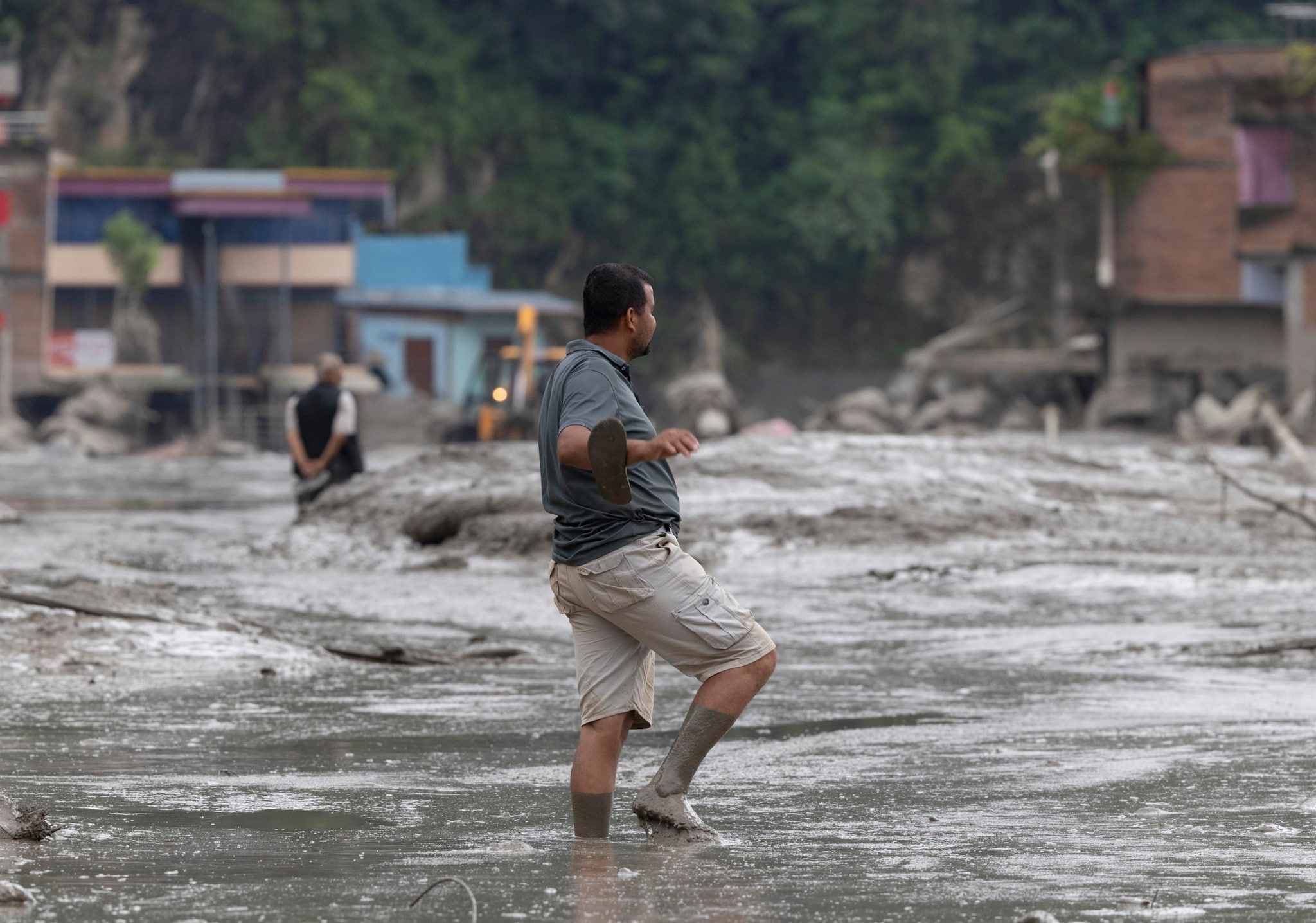
NEW DELHI – The Himalayan regions on the border between Nepal and Chinese Tibet were hit on Wednesday 26 August 2026 by a devastating flood which claimed at least 157 lives in Nepal (including 3 in Rasuwa, 13 in Nuwakot, 27 in Dhading, 64 in Chitwan, 19 in Gorkha, 9 in Tanahun and 22 in Nawalpur) – and 49 injured – plus three in Tibet – due to a landslide in the Gyirong area – destroying roads, bridges and power stations. Among the dead was a Portuguese woman.

The extent of the damage visible in the video footage and the accounts of the survivors leave little doubt that the death toll is set to rise.

Loading...

According to a provisional list drawn up by the Nepal Tourism Board, 884 travellers are missing: 579 in Nepal, of whom 466 are foreigners from 26 countries, over a hundred Indians on a pilgrimage, and a further 265 missing in the Tibet region.

Among those missing are also nationals from the United States (3), the United Kingdom (12), the Netherlands, Australia, Canada, Malaysia, Ukraine, Singapore, South Africa, New Zealand, Japan, Germany, France, Russia, Spain and Ireland.

The Italians listed on the “Dove siamo nel mondo” portal as being in Nepal and throughout the Tibetan region – an area far larger than that affected by the flooding – number “around 90 ”, according to the Foreign Ministry.
“As far as we are aware, only two Italians were caught up in the incident: they are in good health and are being looked after by our Embassy in New Delhi and our consulates in India. We will do everything necessary to bring them home as soon as possible.” This was the statement made by the Foreign Minister and Deputy Prime Minister, Antonio Tajani, regarding the landslide between Nepal and Tibet. “As far as we are aware,” he added, “there are no Italian citizens amongst the other missing persons. In any case, we are constantly monitoring the situation through our Foreign Ministry’s Crisis Unit, in constant contact with our Embassy in New Delhi,” concluded Tajani.

Inondazioni in Nepal, i soccorsi tra le case sommerse dal fango
In Nepal violente inondazioni, morti e dispersi

The cause of the floods in Nepal and Tibet

The Nepalese Foreign Minister Shisir Khanal reported on the disaster in Parliament, explaining that, according to preliminary information which is still being verified, the flooding in Rasuwa district may have been caused by an avalanche triggered by an earthquake that struck Tibet on Wednesday morning. At 8.22 am local time, the US Geological Survey recorded an earthquake measuring 4.4 on the Richter scale just a few kilometres from the border with Nepal. The earthquake may have caused a section of a glacier to break away and fall downstream. This hypothesis was later refuted by the USGS itself (see below), which turned the facts on their head.

However, according to a subsequent study by the United States Geological Survey (USGS), no earthquake occurred prior to the flood on the border between Nepal and Tibet. “This event was initially reported as a magnitude 4.4 earthquake,” reads the update on the USGS website, “but further analysis of long-period seismic waves indicates that the seismic energy was instead generated by a landslide”.

In Nepal, houses and roads have been swept away by a flash flood on the Bhote Koshi River, whilst on the other side of the border, Tibetan officials have said they fear ‘significant loss of life’, with several people reported missing in Gyirong County.

epa13193006 Le acque alluvionali travolgono Trishuli Bazar in seguito a un'inondazione improvvisa, nel distretto di Nuwakot, in Nepal, il 26 agosto 2026. EPA/NARENDRA SHRESTHA

The Nepalese authorities have reported that rescue helicopters were unable to land in the affected areas of Syapru Besi and Timure, in the mountainous district of Rasuwa – which has a population of around 50,000 – as the river was flowing well above its normal level.

Loading...

Footage broadcast on TV channels shows collapsed houses being swept away by the floodwaters, cars adrift and a massive metal bridge over the Trishuli River swept away by the flood. According to some witnesses quoted by Reuters, entire villages have reportedly been submerged by the floodwaters. Others claim to have seen the current sweep away ‘eight or nine lorries, along with houses and people’.

“There could be many casualties or significant material damage,” said Nepalese district administrator Narendra Pariyar, urging villagers living on the banks of the Bhote Koshi river to move to higher ground.

“There is devastation wherever we look,” explains Tula Bahadur BK, a healthcare worker from Rasuwa. “The settlements near the river have been completely swept away. Five of my relatives are missing.” According to the Nepalese army spokesperson Raja Ram Basnet, rescue helicopters will not be able to land in the affected areas until the waters recede.

Chinese President Xi Jinping

Chinese President Xi Jinping has called for every possible effort to be made to search for and rescue those missing, to evacuate and rehouse residents threatened by the disaster, and to speed up treatment for the injured, with the aim of minimising the number of casualties. He also ordered that monitoring and early warning systems be strengthened, that rescue operations be carried out in accordance with scientific principles, and that the occurrence of secondary disasters be prevented.

Chinese Premier Li Qiang has, in turn, asked the Ministry of Foreign Affairs to strengthen communication and coordination with the countries concerned and to share information promptly so that rescue operations can be managed jointly. On the instructions of Xi and Li, Deputy Prime Minister Zhang Guoqing travelled to the scene with the heads of the relevant departments to lead the rescue and emergency management operations. The Tibetan authorities have mobilised forces for search and rescue operations at the disaster site.

The Himalayan region is particularly prone to heavy rainfall, flooding and landslides because it is warming more rapidly than the rest of the world as a result of climate change. Research shows that in this part of the world, extreme weather events – including heatwaves and exceptional rainfall, as well as glacier melt – have become more frequent.

Two Italians tell their story: ‘Stuck on a bus for 8 hours

“We were stuck on the bus for eight hours. No one had any news until the first reports and videos began to circulate.” This is the account given on Tg1 by Giovanni Fassini and Marco Lombardi, two Italians who were stranded on a bus bound for Kathmandu airport whilst floods swept through Nepal.

According to the news programme, the two were finishing a trekking holiday and were due to catch a flight to Milan. “The bus stopped because the road was blocked, and at first we didn’t understand why. Eventually we realised that the river alongside us was rising, rising and rising. Fortunately, it didn’t reach our vehicle”, they said.

For hours, the two Italians were left in the dark as to what was happening around them, with no way of moving forward or turning back.

“We couldn’t go further upstream because the road had been closed by the authorities, whilst behind us the river had also burst its banks,” they explained. In the end, they managed to get to safety: “We were lucky; thank goodness we’re here to tell the tale.”

Adventures Around the World: two of our groups were in the area on Monday, no problems

“We had two groups, each comprising around ten people, who passed through the affected area on Monday without incident. One group is on its way back to Italia, whilst the other is still in Nepal. We spoke to them today and there are no problems.”

Paolo Nugari, co-founder of Avventure nel Mondo, spoke to LaPresse about the floods that hit the area of Nepal bordering Tibet. “In total,” he adds, “around 10 or 11 of our groups have travelled through that area over the course of the season.” Around 1,500 people rely on Avventure nel Mondo every year for trips to Nepal.

CNR: It was an earthquake

It was not torrential rain, but an earthquake high in the mountains that caused the flash flood which swept through numerous villages over a stretch of up to 50 km. This is the view of Tommaso Torrigiani, a climatologist at the Lamma-CNR Consortium, speaking to ANSA. “Flash floods,” he emphasises, “generally affect minor watercourses and can be dangerous because they are unexpected. They often affect areas where not a single drop of rain has fallen: in this case, it was a 4.4-magnitude earthquake that caused it”.

According to the expert, the mass of debris and mud that formed “initially swept through the settlements along the Bhote-Koshi River, reaching as far as the villages situated at an altitude of 500 metres”.

In short, Torrigiani continues, “the landslide triggered by the earthquake on the border between Nepal and China, in the Tibetan mountains, poured into the watercourse and caused mudflows mixed with debris that swept away bridges and flooded villages, which became increasingly densely populated as they lay at lower altitudes. Essentially, a natural dam was created, which then gave way”.

According to Torrigiani, “flash floods could theoretically occur in Italia too, particularly in mountainous areas: unlike the flooding seen, for example, on the Arno or the Po, these could occur suddenly and in extremely localised areas, affecting smaller watercourses”.

According to Torrigiani, what has happened is not linked to climate change, “which, on the other hand, is certainly linked to flooding caused by torrential rain”. Regarding the event, as reported by Marina Baldi, another climatologist at the CNR, “the climatologists most experienced in this field – namely those at the International Centre for Integrated Mountain Development (ICIMOD) – have not yet issued any official statement.”

Copyright reserved ©
Loading...

Brand connect

Loading...

Newsletter

Notizie e approfondimenti sugli avvenimenti politici, economici e finanziari.

Iscriviti