Asia

Floods in Tibet and Nepal: at least 621 dead and over 2,400 missing

There is still no news of the three Italians reported missing

from our correspondent Marco Masciaga

aggiornato alle 20:20

Aggiungi Il Sole 24 Ore
ai preferiti su Google
Giornalista dell'Ansa in Nepal: "Situazione complicata già da giorni"

4' min read

Translated by AI
Versione italiana

4' min read

Translated by AI
Versione italiana

NEW DELHI – The death toll from the flooding between Tibet and Nepal, which is constantly being updated due to the rapidly changing situation on the ground, stands at 621, with over 2,400 people missing. According to figures released by local authorities, there have been 616 fatalities in Nepal, whilst 5 have been reported on the Chinese side. As for those missing, 1,924 have been confirmed in Nepal, including over 500 foreigners. In Tibet, at least 558 people are unaccounted for, including 260 travellers who are currently untraceable.

Meanwhile, there is still no news of the three Italians reported missing in the devastating flood that struck the Himalayan regions on Wednesday along the border between Nepal and Tibet. Rescue operations are being hampered by bad weather, to the extent that the Chinese authorities have decided to suspend them for fear that a dam formed by the landslide that triggered the disaster might collapse and cause further flooding. According to reports on Beijing’s state television, water has already begun to overflow from the reservoir.

Loading...

The rain that is hampering operations in Tibet is not the only obstacle. Although the missing include nationals from 30 different countries, the Nepalese government has made it clear that it is not interested in receiving rescue teams from abroad. India, China, the United States, the United Kingdom, Japan, South Korea, Sri Lanka and Bangladesh have all asked to send their specialists to the Himalayan nation, but the government led by Balendra Shah, a 36-year-old former rapper who emerged victorious from last March’s elections, has not given the go-ahead.

Rescue operations in Nepal

Meanwhile, the Nepalese army has rescued 350 workers and residents who were trapped in the tunnel of the Upper Trishuli Hydropower Project, in Rasuwa district. This has been reported by Nepal News and Radio Nepal, which state that rescue operations are continuing to reach over 100 people still trapped inside the tunnel. The army reported that it had rescued a total of 883 workers and residents in the affected areas of Rasuwa on Thursday alone. The operation inside the tunnel is being made particularly difficult by adverse weather conditions and the high flow of the river.

Sources at the Farnesina have indicated that investigations are under way into the three Italians whom the Nepalese authorities have been unable to trace. The first is Marco Ratto, who was travelling from Nepal to Tibet. The Chinese travel agency that was due to take charge of the group has confirmed that it lost contact with them at the border crossing. This information has also been confirmed by the Nepalese agency directly to the family. Then there is an Italian-Swiss couple travelling from Tibet to Nepal. The Ministry of Foreign Affairs explains that there are no details of the travel agency and there is still no confirmation that they have crossed the border.
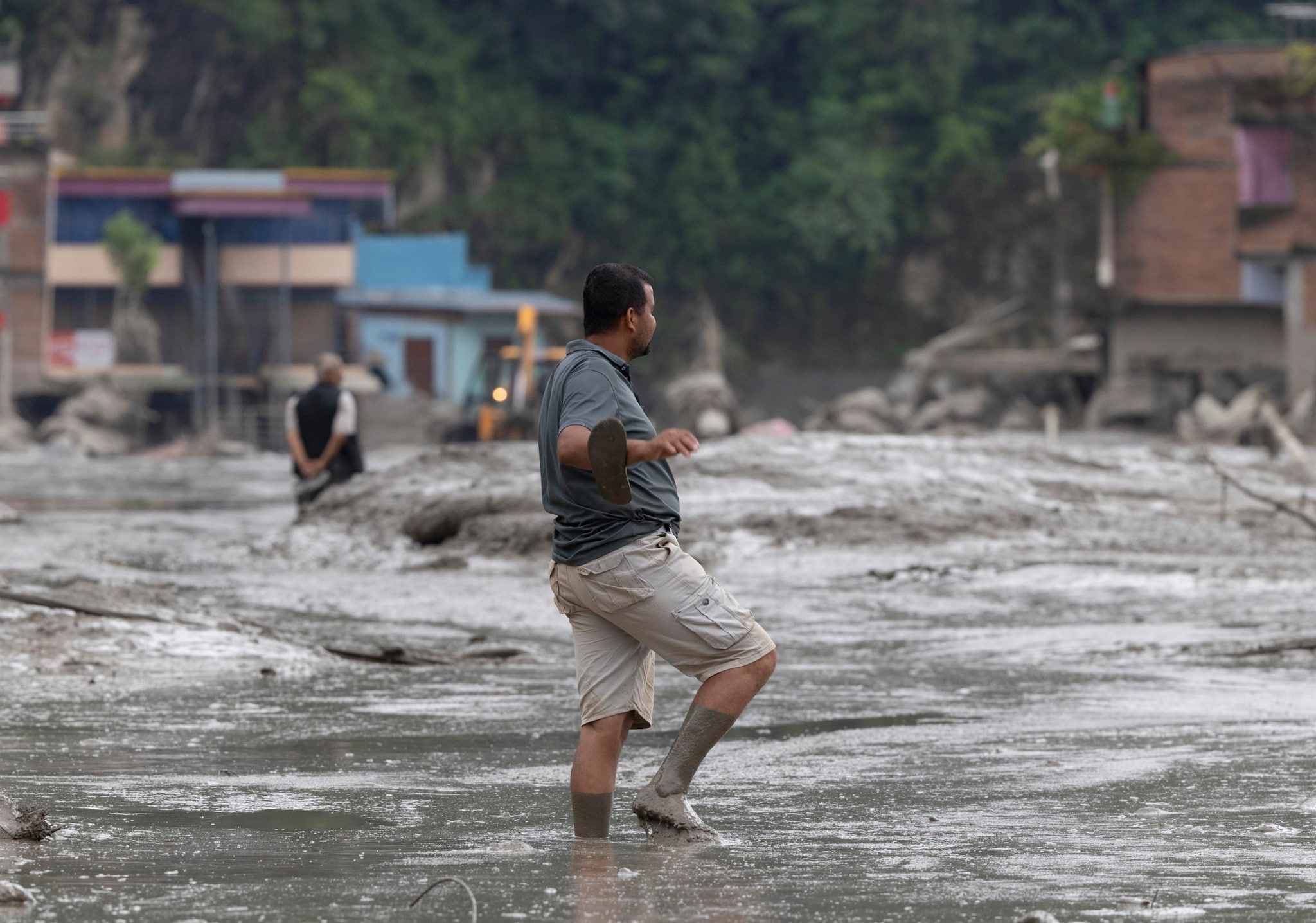
Inondazioni in Nepal, i soccorsi tra le case sommerse dal fango
In Nepal violente inondazioni, morti e dispersi

The cause of the floods in Nepal and Tibet

Initially, the flooding in the Nepalese district of Rasuwa was attributed to an avalanche triggered by an earthquake that struck on Wednesday morning in Tibet. However, a subsequent analysis by the US Geological Survey (USGS) established that no earthquake had occurred prior to the detachment of a section of glacier on the border between Nepal and Tibet, which triggered the tragedy. ‘This event was initially reported as a magnitude 4.4 earthquake,’ reads the update on the USGS website, ‘but further analysis of long-period seismic waves indicates that the seismic energy was instead generated by a landslide.’

The Himalayan region is particularly prone to heavy rainfall, flooding and landslides, partly because it is warming more rapidly than the rest of the world due to climate change. Research shows that in this part of the world, extreme weather events – including heatwaves and exceptional rainfall, as well as glacial melt – have become more frequent and intense over the years.

Le acque alluvionali travolgono Trishuli Bazar in seguito a un'inondazione improvvisa, nel distretto di Nuwakot, in Nepal, il 26 agosto 2026. EPA/NARENDRA SHRESTHA

The international response

On Thursday, the first pledges of aid arrived for Nepal, a country that ranks 45th out of 50 in Asia in terms of per capita income. The United Kingdom has allocated £5 million in aid; the United States, with an economy eight times larger than that of the UK, has pledged $500,000 – less than a thirteenth of that amount. The European Union, meanwhile, has allocated 2 million euros in humanitarian aid to support the affected communities, whilst the Italian Buddhist Union has allocated 500,000 euros from the ‘8xmille’ funds to the emergency.

The Indian Foreign Minister, S. Jaishankar announced on Thursday that New Delhi had sent a second tranche of aid to flood-hit Nepal with “a second flight carrying 37.5 tonnes of humanitarian and disaster relief supplies, medicines and food rations”. A flight carrying “10 tonnes of humanitarian aid and essential medicines” had already departed on Wednesday.

The International Federation of Red Cross and Red Crescent Societies has launched an emergency appeal for 25 million Swiss francs, equivalent to approximately 26.7 million euros, for emergency relief and reconstruction following the flash floods that have struck Nepal and Tibet. The appeal follows the allocation of one million Swiss francs to support initial life-saving operations and will be used to fund the emergency response and medium- to long-term recovery over the next two years.

Loading...

Unicef estimates that at least 17,000 children have been affected by the devastating floods that have ravaged the Nepalese districts of Rasuwa, Nuwakot and Dhading

Copyright reserved ©
Loading...

Brand connect

Loading...

Newsletter

Notizie e approfondimenti sugli avvenimenti politici, economici e finanziari.

Iscriviti