
Nestlé shares under pressure following the seizure of its Russian assets
Moscow has placed the Swiss multinational’s local operations under administration. The company: “We will take all necessary measures.”
Giuliana Licini
 Aggiungi Il Sole 24 Ore
ai preferiti su Google
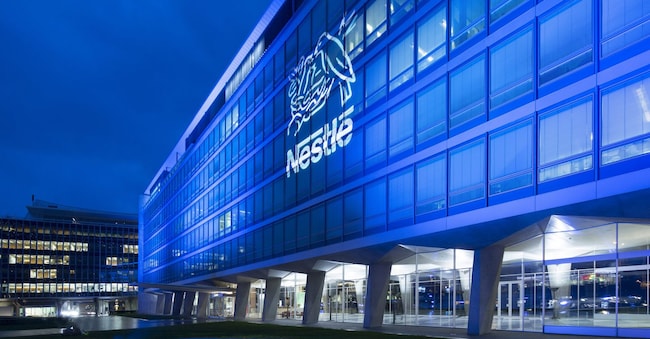
(Il Sole 24 Ore Radiocor) - Nestlé is under pressure on the Zurich Stock Exchange after Russia placed the Swiss multinational’s local assets under receivership by means of a presidential decree. The decree, signed by President Vladimir Putin and published on the Russian government’s website, has placed the local operations under receivership, including the two operating companies, Nestlé Russia and Nestlé Kuban, which will henceforth be managed by the Russian firm L.E.V. Management. Although Nestlé remains the owner, for the time being it will no longer be able to dispose of its shareholdings. The same presidential decree has also placed the French supermarket chain Auchan under the supervision of the same administrator.
Nestlé has responded by announcing that it will take ‘all necessary measures’ to protect its rights in Russia and ensure the continuity of its operations. As stated in a press release, the company has ‘taken note of the Russian presidential decree’ concerning its operations in the country and is ‘assessing the situation and the options’ available to it. Back in August, the Russian firm Ks Logistika had asked Putin to place five of Nestlé’s Russian companies under receivership. At the time, the Swiss giant stated that it had not been contacted by the state authorities and that a withdrawal from Russia was not under consideration.
In Russia, Nestlé generates around 2 per cent of the group’s turnover, according to the latest available figures. The company has six factories in Russia that produce coffee, pet food and infant formula. In 2021, the most recent year for which figures have been published, it generated turnover of around 2 billion Swiss francs in Russia and employs around 7,000 people. Analysts, however, believe that Russia’s contribution to Nestlé’s revenue has declined. According to experts at Bank Vontobel, Russia now accounts for around 1 per cent of the group’s turnover. “Although this (the presidential decree, ed.) is negative for market sentiment and increases the likelihood of a write-down or a disposal of assets, we expect the financial impact to be marginal, given Russia’s limited contribution to the group’s turnover,” said the analysts at Vontobel.
The potential sale of Nestlé’s Russian operations appears more uncertain following Moscow’s decision to place the company under temporary administration, according to a note from JP Morgan, which notes that the situation appears similar to that faced by Danone before the French food company sold its Russian dairy and plant-based products division for around €180 million, incurring a loss of €1.2 billion. “This move further calls into question the value that could be realised from a forced sale of the company’s Russian assets,” JP Morgan adds, commenting on the Russian presidential decision. Citing the Danone case and the similar situation at Carlsberg, analysts at Kepler Cheuvreux note that these experiences do not bode well for Nestlé. “Ultimately, Nestlé could end up losing these assets – around 2 per cent of its turnover and cash tied up in Russia – for an indefinite period, and it is unlikely that any compensation would make up for this loss,” they said. Following the Russian attack on Ukraine in 2022, Nestlé had decided, despite criticism, not to completely cease its operations in Russia. The group justified this decision by explaining that, as a food manufacturer, it intended to continue ensuring the supply of essential goods to the population, even in conflict-affected regions.

