
Netanyahu in Trump's court: face-to-face on Iran and tariffs
From the Israeli premier plan to contain Tehran and its allies. On technology Israel fears the backlash of US tariffs, its leading trading partner

3' min read
3' min read
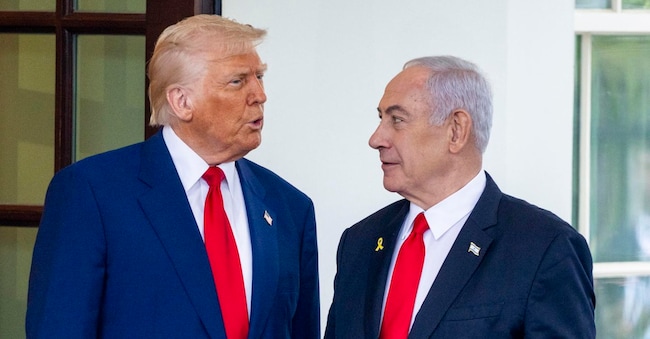
They also discussed trade tariffs, but in the meeting at the White House, Donald Trump and Benjamin Netanyahu focused mainly on Iran, the war in Gaza, and tensions in the Middle East.
The Israeli PM again sought Trump's support, on economic issues as on the war against Hamas and Iran-backed armed groups. "There is a special personal bond between us, just as there is a special bond between the United States and Israel, which is even more vital at this time," Netanyahu said, stressing that he was the first world leader to meet Trump in person after the US tariffs announcement.
Eighteen months after the start of military operations in Gaza, and while protests against the government are multiplying in the Israeli squares, the two leaders spoke again about the possibilities of reaching a truce in the Strip, to facilitate the release of the hostages still in the hands of Hamas. "We will certainly talk about the hostages, the completion of the victory in Gaza and, of course, the tariff regime that has been imposed on Israel. I hope to make a contribution in this matter. That is the intention,' Netanyahu said before boarding the state plane to Washington.
Trump is also using tariffs as a negotiating weapon with Israel, beyond trade. And before meeting the Israeli premier, the US president had a joint phone call with French President Macron, who is visiting Cairo, Egyptian President Al-Sisi and Jordan's King Abdullah.
In the Oval Office, the Israeli leader presented the US president with his plan to reach 'a good deal with Iran': Netanyahu supports an agreement that should lead to 'the complete dismantling of the Iranian nuclear programme, as happened in Libya', Israeli government officials said. Before seeing Trump, Netanyahu had a face-to-face meeting with the US special envoy for the Middle East, Steve Witkoff, at Blair House in Washington. To Witkoff himself and Trump, Netanyahu also raised the possibility that after razing Gaza, Israel might go so far as to annex areas of the occupied West Bank, despite the fact that the Palestinians consider the West Bank to be a central part of their future independent state.


