
The Netherlands, the government splits over sanctions on Israel. Foreign Minister resigns
The other members of the New Social Contract also quit, accentuating the fragility of the Schoof government two months before the vote
3' min read
Key points
3' min read
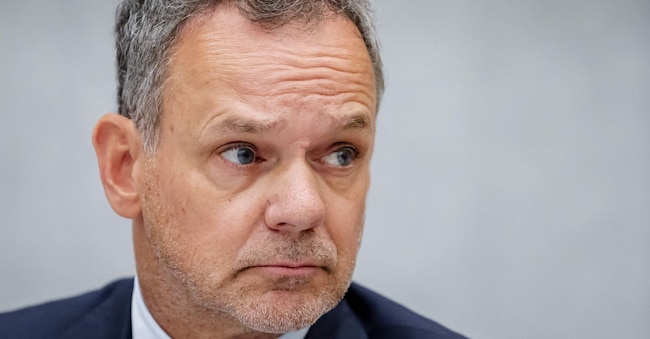
An armchair is worth less than a principle. Dutch Foreign MinisterCaspar Veldkamp resigned after his government, already in caretaker version - resigning, remaining in office only to handle business as usual until new elections and the formation of a new executive - again rejected the idea of sanctions against Israel. "I have encountered resistance in the Council of Ministers for additional measures", said Veldkamp, 61, a former ambassador to Israel, explaining that he was "unable to take significant measures" in response to the war in Gaza and new settlement plans in the West Bank. With him, the other ministers of the New Social Contract (NSC) also left the executive, exacerbating the fragility of the interim government led by Dick Schoof, in anticipation of the early elections on 29 October.
The Spark
.The break comes on the heels of a joint statement signed by the foreign ministers of more than 20 Western countries (including the UK, France, Italy, Canada, Japan and, indeed, the Netherlands) that condemned "in the strongest terms" the Israeli approval of the E1 project: 3,400 new homes between Ma'ale Adumim and East Jerusalem, a building corridor that critics said would "break the West Bank in two", compromising the territorial contiguity of a Palestinian state. The Hague was among the signatories.
Veldkamp's (failed) plan
In the government debate Veldkamp had advocated a package of national measures, starting with the import ban on products from settlements in occupied territories. However, the proposal, the Associated Press reports, failed to pass the scrutiny of the coalition partners, forcing him to resign. 'I feel that I can no longer chart the course that I consider necessary,' was his sentence.
The cracks in the coalition and the caretaker factor
.After the exit in June of Geert Wilders' Party for Freedom (PVV) - far-right, nationalist and populist - the Schoof executive was left standing in business as usual with VVD (liberals), NSC (centrists) and BBB (agrarianists). A demissionary government avoids major choices, which is one of the reasons why - apart from cross-vetoes - the sanctions dossier has not found an outlet. The first rift, caused by the tug-of-war over migration policies, has already led to the calling of early elections for 29 October. Veldkamp's resignation and the exit of the NSC ministers increase the rift, leaving the executive even more exposed until the vote.
The moves (already made) towards Israel
In recent weeks, The Hague had however tightened its posture: in July an entry ban was imposed on the extreme right-wing Israeli ministers Itamar Ben-Gvir and Bezalel Smotrich, a move coordinated with other European countries. Diplomatically, the Schoof executive also joined the declaration against E1. However, the most incisive measures - such as the ban on settlement goods - stalled at the Council of Ministers table.


