Tesr drive

New Audi Q3, what the third generation of the German SUV looks and feels like. Diesel version confirmed

Sporty design and a high-tech interior characterise the new generation of the four-ring compact SUV. Extensive engine range from launch with 150 to 272 hp
by Giulia Paganoni

4' min read

Translated by AI
Versione italiana

4' min read

Translated by AI
Versione italiana

On the strength of more than two million units sold worldwide, Audi presents the third generation of the Q3, the best-selling suv in Italy which, in its new guise, adds a touch of sportiness to its typical style and lots of on-board technology. The list price starts at 42,500 thousand euro and the first deliveries are scheduled for the end of October.

We went to Palermo, in the Sicilian capital, to road test the new Q3 in the Mild Hybrid and Diesel versions, both 150 hp and equipped with automatic transmission. But it was also an opportunity to see the Sportback version up close, arriving by the end of the year at a list price starting at 44,500 euro.

Loading...


New Audi Q3, size and style

.


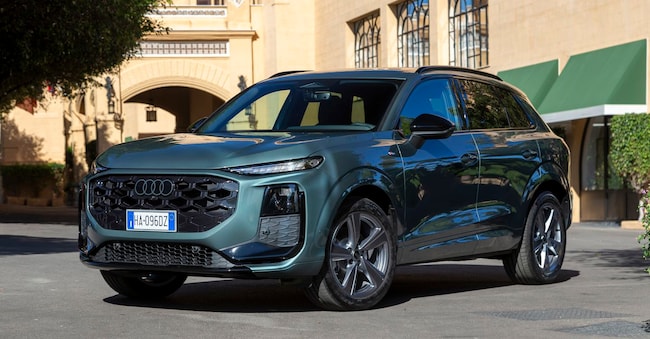
The third generation of the Audi Q3 has been developed by combining styling innovations with some of the suv's identifying features, making it suitable for all driving styles.

The dimensions have changed very little: 4.53 metres (+4.7 cm compared to the previous generation), the width has remained unchanged at 1.86 metres and the height has decreased by 1.5 cm, stopping at 1.60 metres to lower the vehicle's centre of gravity and make it more pleasant and comfortable to drive.

Audi Q3, tutte le foto della terza generazione

Photogallery38 foto

At first glance, its sportier and more dynamic styling stands out, with a larger and more elevated single frame at the front compared to the second series. The size of the air intakes has also been increased, to better cool the mechanical parts but also to increase the model's aggressiveness as well as aerodynamics.

The rear is characterised by clean lines, a sporty extractor and a new light strip that seamlessly connects the light clusters. A further innovation is the logo lighting, shared in the range with the full electric Audi A6 e-tron.


New Audi Q3, interiors and technologies


Also new is the interior design emphasised by the new 'softwrap' material, a soft-touch, visually pleasing coating used for the door panels and dashboard.

Borrowed from the Q6 e-tron is, on the other hand, the digital composition that includes the 11.9-inch digital dashboard and the 12.8-inch touchscreen to which the optional head-up display is added.

The third generation of the Audi Q3 is the first model from the four rings to adopt the new graphic interface of the infotainment system: the revised digital dashboard is now flanked by the indications provided by the driver assistance systems and the map display is accompanied by the new application icons, which are larger and more recognisable than in the past and the rest of the models in the Audi range.

Another new feature is the steering column, which incorporates a glossy black appendage with, for the first time, the gear selector on the right section and the light and wiper control functions on the left. This has left more space in the centre tunnel for new storage compartments.

Similar to Audi's higher-end models, the infotainment system of the new Audi Q3 adopts the Android Automotive OS, lacking the full suite of Google services but equipped with a voice assistant that benefits from interaction with artificial intelligence, specifically ChatGPT.


New Audi Q3, what's new in Adas systems


The new Audi Q3 borrows its driver assistance technologies from Audi's premium class models. Standard equipment includes parking assist plus, lane keeping assist with emergency assist and automatic emergency braking based on radar and camera interaction to prevent impacts with other vehicles, pedestrians and cyclists. The same environmental sensing technologies support the collision avoidance assist, also standard, which assists the driver in avoiding an obstacle by identifying an alternative trajectory based on the distance, size and cross-traffic of the vehicle in front and complements the turn assistant: it helps the driver when starting or at low speed to avoid collisions when making left-hand turns.


New Audi Q3, new engines

.


Available in both front-wheel drive and all-wheel drive versions, the Audi Q3 offers a wide choice of engines right from the launch and they are all coupled to the 6- or 7-speed S tronic dual-clutch transmission. Versions are already available with the 1.5-litre plug-in hybrid engine with 272 hp and a claimed range of 119 kilometres (equipped with DC charging up to 50 kW), the 1.5-litre Tfsi Milf Hybrid with 150 hp, the 2.0-litre Tfsi with all-wheel drive in 204 and 265 hp and the 2.0 Tdi with 150 hp.

At a later stage, the range will be expanded with the introduction of the 2.0-litre Tdi with all-wheel drive and 193 hp, scheduled for the first half of 2026, and the 1.5-litre plug-in hybrid with 204 hp, coming in the second half of 2026.


Driving experience and sensations

.


The protagonists of our test were the Mild Hybrid and 150 hp Diesel versions with S tronic gearbox. In both cases, the car proved to be pleasant to drive, the raised seat facilitates the view and the compact dimensions make it agile in all contexts, even in urban traffic.

The 1.5-litre Mild Hybrid, as is usually the case with electrified cars, has pronounced regenerative braking that tends to slow the car down so you need to step on the accelerator harder to feel its cue. This is different for the 2.0-litre turbodiesel, which does not have regenerative braking (it is a 100 per cent combustion engine) and tends to be looser, and the diesel engine offers lower torque, so it has more cue when required.

In both cases, however, on-board comfort is guaranteed even on bumpy roads, thanks to the three trim variants: standard, which has been revised with respect to the past in order to enhance the car's dynamism; with sports suspension, which is lower than its predecessors; and, in addition, adaptive twin-valve dampers are available. In the latter case, the two-stage activation strategy sees the oil flow in the struts vary according to the parameters detected by multiple sensors, road surface conditions, driving style and the programme activated via the Audi drive select driving dynamics control.

Finally, in terms of interaction with the car, the controls are ergonomically positioned and the touchscreen graphics are clear and intuitive. Access to the main menus is immediate and avoids distractions.

Copyright reserved ©
Loading...

Brand connect

Loading...

Newsletter

Notizie e approfondimenti sugli avvenimenti politici, economici e finanziari.

Iscriviti