
New DS N°7, the second French made in Melfi debuts. It is electric or mild hybrid
The premium brand unveils the new generation of its best seller and this time it is built in Italia like its big sister N.8 and the Jeep compass

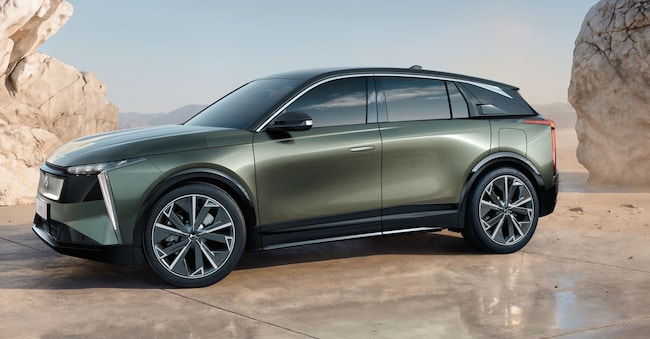
DS Automobiles continues on the difficult road to relaunch and does so for the second time starting from the Melfi plant. The premium brand of the Stellantis group has unveiled the DS N°7, the brand's second model after the DS N°8 which, developed on the STLA Medium platform, is produced in the Italia factory where the Jeep Compass is built, also on this multi-energy architecture. The second French company in Basilicata has a difficult task: to keep up a brand that is at risk of revision/survival despite rising volumes, now at 55,000 cars sold in 2025. Ceo Xavier Peugeot makes no secret of this, and everything will be clearer on 21 May when Stellantis' number one, Antonio Filosa, unveils the Franco-Italian-American group's long-awaited industrial plan.
But back to the new car. The DS N°7 replaces the company's best seller (accounting for around two thirds of total sales). Ideally born from a Citroën product line, but perhaps only in name, it harks back to the legendary DS, the Déesse, the 1955 car goddess of luxury and above all technology. The new model has a width of 1.90 m and a height of 1.63 m (unchanged dimensions compared to the old series based on EMP-2 architecture), while the length, slightly increased to 4.66 m with a difference of 7 cm compared to the previous model, corresponds to a 5 cm lengthening of the wheelbase to 2.79 m, to the benefit of space for rear passengers.
The new model is offered with either electric or mild hybrid powertrains, thanks to the versatility of the STLA Medium platform that debuted over two years ago in the Peugeot 3008 and is suitable for electric and ICE/hybrid powertrains (also plug-in). The latter, available from launch, offers, like its cousins Citroën C5 and Jeep Compass, a 145 hp 1.2-litre three-cylinder turbocharged petrol engine combined with a 48-volt electric unit that, integrated directly into the six-speed dual-clutch automatic transmission, delivers 21 kW (28 hp). Power is not much but emissions and consumption are low. The manufacturer claims CO2 emissions of 121 to 127 g/km and consumption of 5.4 l/100 km.
The DS N°7 E-TENSE, this is its full name, offers three electric variants with different power levels: 230 hp for the front-wheel drive version with a 73.7 kWh battery that guarantees a range of up to 543 km; 245 hp for the long range version that, again with front-wheel drive, promises up to 740 km of range in the WLTP cycle thanks to a 97.2 kWh battery; and 350 hp for the all-wheel drive version that combines neat finish, original styling and high performance with a 0 to 100 km/h sprint in 5.4 seconds, while the range is 679 km, again with the 97.2 kWh battery.
Fast charging can go from 20 per cent to 80 per cent capacity in 27 minutes (31 minutes with the 73.7 kWh battery) with battery pre-conditioning. This function is activated automatically if a destination is set on the navigation system, or manually via the central display. Recharging power remains at 160 kW between 20 per cent and 55 per cent charge, allowing a range of 190 km in 10 minutes. Energy management is enhanced by three-stage regenerative braking, adjustable via paddles behind the steering wheel. This is accompanied by the One Pedal function, which maximises energy recovery by releasing pressure on the accelerator pedal. In this mode, the brake pedal is only used during hard braking.


