
Tax on parcels worth less than 150 euros: why Liège is an indicator of the impact on e-commerce operators
European airports serve as an important barometer for gauging the impact of the measure: there is considerable uncertainty amongst operators, but no sharp slowdown in online transactions is expected
from our correspondent Beda Romano
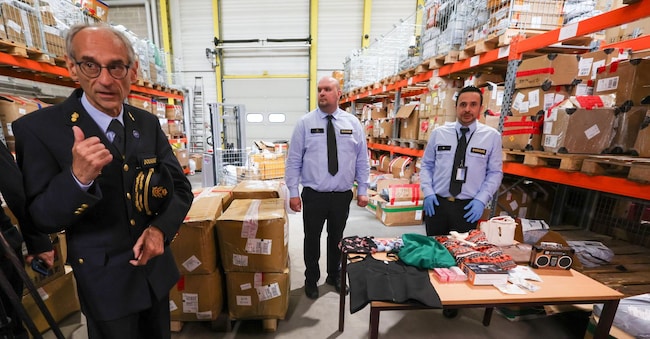
BRUSSELS – How significant will the impact be of the EU’s decision to introduce, with effect from today, a three-euro tariff on parcels worth less than 150 euros from third countries? The entire logistics sector, as well as online platforms, is on tenterhooks. Uncertainty prevails regarding the future balance between supply and demand. Liège Airport will serve as a key barometer for gauging the consequences of the measure – although an outright halt to online trade is not expected.
The European crossroads of e-commerce
In recent years, the Belgian airport has capitalised on its geographical location to become the European hub for e-commerce. Today, around 30 per cent of online purchases arriving in Europe by air – mainly from Asia – land in Liège. Spokesperson Christian Delcourt explains: ‘In 2025, we handled the arrival of 1.350 billion parcels. In 2017, the figure was just 300,000 (…) There is a great deal of uncertainty about what will happen from 1 July, with the introduction of the three-euro tariff.’
There is a fear in the sector that European consumer spending will fall, particularly as tariffs will affect the final price. “We have set up our own working group,” the spokesperson continues, “which has drawn up various scenarios. We will only understand the full impact of the measure in the coming weeks or months. No consensus emerged during a logistics trade fair held in Shanghai from 24 to 26 June. Many operators remain cautious. However, we do not expect a halt to e-commerce.”
Pending a more comprehensive reform
The new tariffs, which will be applied on a temporary basis pending a more comprehensive reform of the European customs system, bring an end to a long-standing exemption for parcels valued at less than 150 euros. The European Union’s aim is to tackle unfair competition from online platforms, particularly Chinese ones; to ensure greater equality of market access for European traders; and to counter the dramatic rise in the number of parcels arriving from third countries. Liège Airport currently handles an average of 3.6 million parcels a day.
Gerlach is one of Europe’s leading customs services companies. It operates in 11 countries and at over 70 sites. Commenting on the new European tariff, he explains: “The reform represents a structural change in cross-border e-commerce within the European Union. It will have a direct impact on non-EU online sellers, who will need to review their business models and pricing strategies to take account of the new tariffs applied to each item.”


