Basketball

New EuroLeague: the franchise deal is worth over 3 billion over five years

Napoli, Virtus and Roma are in the running for the 21 long-term licences. The new projects could generate investments in excess of 3.2 billion

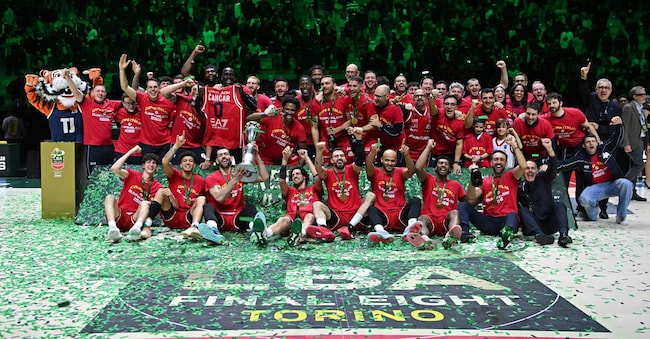
L'Olimpia Milano festeggia la vittoria al termine della partita delle Final Eight 2026 della LBA tra Olimpia Milano e Derthona, disputata all'Inalpi Arena, in Italia. (ANSA)

4' min read

Translated by AI
Versione italiana

4' min read

Translated by AI
Versione italiana

It is not just a reform of the sport. It is an industrial venture that could reshape the economic balance of European basketball and determine the balance of power with the emerging NBA Europe.

The EuroLeague is preparing for the most far-reaching transformation in its recent history: from the 2027–28 season, the competition is set to expand from 20 to 24 teams, with a system based on 21 stable, long-term licences, modelled on the major North American professional leagues. The process has now entered its decisive phase and directly involves Italia as well, with Virtus Bologna, Napoli Basket and Maxima Roma in the running to secure one of the available places.

Loading...

The final decision will be made by the end of September, when the shareholders of Euroleague Commercial Assets will be asked to vote on both the new structure of the competition and the names of the clubs set to join the 13 founding members in the new era of franchising.

The eleven clubs in the running

The market response exceeded even the expectations of the competition’s top management. Euroleague has announced that it has received over twenty expressions of interest from clubs already part of the Euroleague-EuroCup ecosystem and from new business ventures. Following an initial screening, eleven applications have been shortlisted for the due diligence phase.

These include: Virtus Bologna; Napoli Basket; Maxima Roma; Partizan Belgrade; Red Star; Valencia; Paris Basketball; London Lions; PAOK Thessaloniki; Hapoel Tel Aviv; Dubai Basketball.

A group that perfectly encapsulates the competition’s strategy: to consolidate European basketball’s traditional markets whilst, at the same time, opening the door to new commercial markets, from the United Kingdom to the Middle East.

The real figures behind the operation

When it comes to the figures, it is important to distinguish between official data and rumours. The only figure confirmed by Euroleague Basketball relates to the total value of the bids received: the eleven candidates are submitting binding proposals representing almost €700 million in franchise fees. According to Euroleague Basketball itself, these projects could generate investments in excess of €3.2 billion over the next five years.

These figures give an indication of what is at stake. However, there is no officially published price for the purchase of a permanent licence, at least for the time being. Estimates circulating amongst advisers, clubs and industry professionals suggest figures ranging from 50 to 80 million euros, depending on the club’s profile and the terms of the deal, but the Euroleague has never confirmed these amounts.

In the case of Virtus Bologna, chairman Massimo Zanetti has publicly referred to a commitment in the region of 50 million, to be spread over ten years. This figure, however, remains an estimate based on discussions with the club and is not an official figure from the organisation.

Why Naples and Rome are key

Interest in Naples and Rome should be viewed primarily from an economic and strategic perspective. The EuroLeague is seeking to expand its presence in major European metropolitan areas, where there is scope for growth in terms of commercial revenue, sponsorship and media rights.

Loading...

Naples is one of the most populous urban areas in Mediterranean Europe, whilst Rome offers unique potential on an international level thanks to the city’s size, the global visibility of its brand and its appeal to institutional investors. It is therefore not surprising that both cities are considered particularly valuable in the competition’s expansion strategy.

For Italian basketball, the entry of one or more of these clubs would mean strengthening its position within the future continental structure alongside Olimpia Milano, which already holds a long-term licence.

The new season

Whilst discussions about the future are ongoing, the organisational structure is already in place for the present. The 2026–27 season will officially kick off on 24 September with the traditional format of 20 teams and 38 matchdays in the regular season. It will, in fact, be the season that will see the EuroLeague make its final transition to the franchise system. The processes for assessing and awarding the new permanent licences will be completed during this year.

NBA Europe is making headway in the background

The EuroLeague’s push towards a more stable and financially structured model cannot be separated from the NBA factor. The American league continues to work with FIBA on the NBA Europe project, which, according to Commissioner Adam Silver, is set to launch in autumn 2027 with a structure comprising 16 clubs, of which 12 will be permanent franchises and 4 places will be allocated via a qualifying process.

Both Milan and Rome are among the cities identified as strategic markets. Furthermore, the NBA has reported that it has received bids for future European franchises ranging from 500 million to over a billion dollars in various target markets. These figures are on a completely different scale to those currently seen in European basketball.

From conflict to dialogue

Until a few months ago, there was talk of a possible all-out war between the EuroLeague and the NBA. Today, the picture appears less clear-cut. In April 2026, representatives from the NBA, FIBA and the EuroLeague met at FIBA’s headquarters in Mies, Switzerland. At the end of the summit, the parties issued a joint statement referring to ‘constructive discussions’ and confirming their intention to continue talks on possible forms of collaboration.

ECA leaders have also confirmed that they have been in contact with the NBA to explore joint strategic opportunities. For this reason, the race for franchises is not merely a selection process for clubs. It is the central piece in a much broader game concerning control of the European basketball market, the creation of value for investors and the role the continent will play in the future global balance of professional sport.

Copyright reserved ©
Loading...

Brand connect

Loading...

Newsletter

Notizie e approfondimenti sugli avvenimenti politici, economici e finanziari.

Iscriviti