The decree

New golden power over Pirelli, only 3 directors to the Chinese

The CNRC member is required to submit a list for the renewal of the Board of Directors - composed of 15 members in total - limited to three directors, two of whom are independent, and with no possibility of holding senior positions

by Marigia Mangano

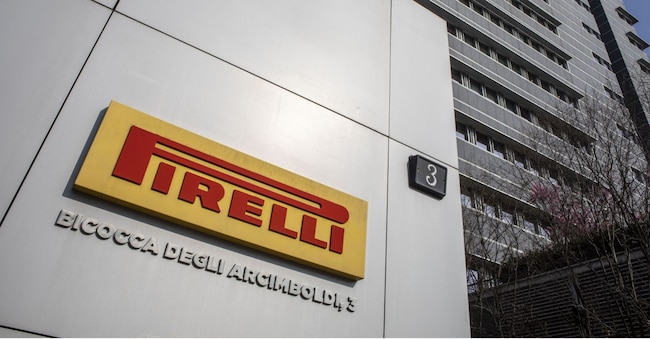
SEDE PIRELLI IMAGOECONOMICA

3' min read

Translated by AI
Versione italiana

3' min read

Translated by AI
Versione italiana

The Italia government has issued the new Golden Power decree on Pirelli, which effectively armour-plates the group's governance by limiting the roles and presence of Pirelli's first shareholder, Sinochem.

The limitations of Golden Power

Loading...

The measure was reportedly adopted at the Council of Ministers meeting held on Thursday 9 April and is aimed at protecting the Bicocca group's technologies once again, in particular Cyber Tyre. In order to limit its influence, the Chinese shareholder CNRC is required to submit a list for the renewal of the Board of Directors - made up of 15 members in total - limited to three directors, two of whom are independent, and without the possibility of holding top positions such as president or CEO.

The verdict comes after the Golden Power committee held talks in recent weeks with representatives of Pirelli and its major shareholders, China National Tire and Rubber Corp, the Sinochem subsidiary that holds 34.1% of the tyre group, and the Italian Camfin with its major shareholder Marco Tronchetti Provera. The issue was to find an arrangement that would protect Pirelli's technological development and autonomy. Cyber Tyre, the technology already considered strategic by Golden Power with the 2023 intervention, is at risk due to the introduction of US regulations on connected vehicles, which prohibit software and hardware from companies with significant Chinese shareholders. In the absence of an agreement between the parties, Palazzo Chigi's intervention thus redraws the internal balance of the group, substantially cutting the Chinese partner out of the governance. The extent to which these measures will be sufficient to avert possible restrictions on the American market will be understood shortly.

The tension after the Sinochem merger

The tension between the two shareholders is the result of ownership changes and governance evolutions that go back a long way. The internal balance recorded its first shake-up in 2023 when ChemChina, Camfin's original shareholder, public but independent of state control, was involved in the merger with Sinochem, a company totally dependent on the State Agency (Sasac). With the transfer of ownership came the first attempts by the Chinese shareholder to modify Pirelli's governance, which then resulted in the intervention of the golden power. With Pirelli's governance armoured and the Chinese group's share passing in the meantime from 46% to 34%, and Camfin's share rising from 14% to 25% (with the aim of reaching 29.9%), Sinochem subsequently lost control of the assembly and the board. This brings us to the most recent story, the knot of US regulations and the negotiations between the two shareholders aimed at reducing the weight of the Chinese partner for the purpose of the entry of the Bicocca's leading technology, Cyber Tyre, on the American market. Several agreement schemes were examined by the two partners. Last May, at the height of the tension with Camfin, Sinochem's representatives had revealed that they had submitted a proposal to the Golden Power Offices, a proposal not shared with Pirelli. According to what has been reconstructed by Il Sole 24 Ore , the document presented by the Chinese to Palazzo Chigi envisaged precisely the constitution of a trust or similar instruments, but 'in time': a sort of self-freezing of voting rights for three years, after which the shareholder Sinochem would return to full ownership. Again according to the same sources, this solution would in turn have been the subject of consultation with the US administration to see whether the time freeze might be sufficient to overcome the restrictions of the US regulations on connected vehicles, but the verification would have proved negative. Hence the encore plan, this time presented directly by Sinochem to Pirelli, on the spin-off of smart sensors into a new company, 100% controlled by Pirelli, but with governance that would have obscured the Chinese partner's visibility over the technology. This latter solution was structurally rejected by Camfin because it would destroy value and have a negative impact on Pirelli's integrated business model. The picture is completed by a third proposal that Camfin would have presented to the Chinese partner: the descent of the shareholder Sinochem from 34% to 10% as part of a placement operation with investors already identified. A solution that would have run aground, according to some reconstructions, on the exit price of Sinochem, which was determined to extract a majority premium in the context of a transaction that generally takes place at market prices.

Copyright reserved ©
  • Marigia Mangano

    Marigia Manganoinviato

    Luogo: Milano

    Lingue parlate: Italiano, Inglese

    Argomenti: Finanza, automotive, tlc, holding di famiglia, banche e assicurazioni

    Premi: Premio internazionale Amici di Milano per i giovani, 2007, categoria giornalista

Loading...

Brand connect

Loading...

Newsletter

Notizie e approfondimenti sugli avvenimenti politici, economici e finanziari.

Iscriviti