
New Highway Code: a missed opportunity for autonomous driving

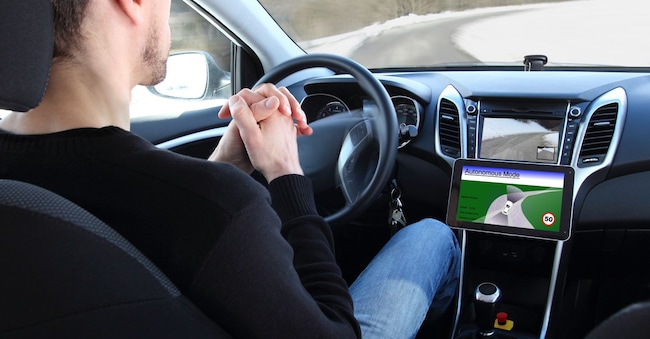
The future of autonomous driving looks decidedly complicated in Italia following the approval of the new Highway Code, which the Government adopted on 13 October. Rather than setting out a clear path to support the development of a technology that is already gaining ground in Europe, the rules laid down by the new Code leave little scope for envisaging a regulated and informed roll-out of a driving system that will represent a decisive industrial frontier for many sectors in the near future.
This is clearly explained by the president of Motus-E, the association that brings together industry players, the automotive supply chain and the academic world to promote the development of smart mobility: “The proposed legislation contains several critical issues,” explains Fabio Pressi, the association’s president, who cites, first and foremost, the regulatory requirement for a safety operator on board automated vehicles travelling on public roads, valid for at least three years from the new Highway Code coming into force: a rule that runs counter both to the benefits of automation and to initiatives already underway in Europe.
Another issue concerns the rules on liability, which the new Highway Code would attribute to the operator regardless of the occurrence of objective circumstances beyond their control. On this point, the draft legislation differs from that of other European Union Member States, where liability for damage caused by a malfunction is shared amongst the various parties involved in the operation of autonomous vehicles. Furthermore, these issues arise within a regulatory framework that is incapable of governing a constantly evolving sector: the reference here is to the 2018 ministerial decree to which the Government-approved Legislative Decree refers for the regulations governing the testing of automated vehicles. This reference is, in fact, now outdated, having been approved at a time when autonomous driving was still in its infancy.
But the issues do not end there. The Legislative Decree, in fact, did not include several other proposals that Motus-E had submitted to the Ministry of Infrastructure and Transport with the aim of achieving legislation in step with the times. As mentioned, the possibility of monitoring the movement of autonomous vehicles via a remote controller – capable of intervening immediately when necessary with clearly defined powers – has been ruled out.
Finally, the other requests put forward by the association – concerning more careful maintenance of road signs, the introduction of new and clearer signs indicating public charging facilities, and an increase from 2 to 4 tonnes in the additional weight allowance for electric vehicles – were also rejected. “With the right commitment, the text can be improved, averting the risk of condemning Italia to a dangerous lag in a technology that is crucial for the future,” adds Pressi.

