
New US investors in Cagliari between sport and real estate
A minority stake in the Sardinian club passes to a group of American entrepreneurs, led by Maurizio Fiori, CEO of Praxis Capital Management

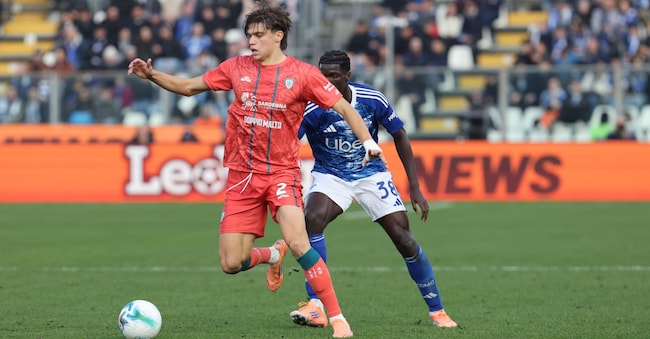
The long wave of foreign investment in Italian football shows no sign of abating and, after the big names of the North, it is now Sardinia's turn to become the scene of a financial operation that, albeit on a minority scale, confirms the trend of attracting US capital to Serie A clubs. What took place in Cagliari is not just a simple transfer of shares, but the umpteenth demonstration of how the tricolour football business is now considered an asset with interesting development prospects, not only in sport.
The financial logic of the operation
So, a group of American entrepreneurs, led by Maurizio Fiori, Sardinian by origin and managing director of Praxis Capital Management, through a recently established holding company - but with significant ramifications in the real estate development sector (real estate) - has formalised the purchase of a minority stake in Cagliari, the club chaired by Tommaso Giulini. Although the exact percentage and value of the transaction have not yet been officially disclosed, there is talk of a stake of between 30% and 40%, with the club valued at around 100 million net of debts.
The logic behind the investment, typical of US asset managers, transcends the sporting result. The primary interest, as is often the case, is closely linked to the infrastructure project of the new stadium. Italy, with its facility deficits, offers very high potential growth multiples as soon as a club is able to equip itself with a modern, owned facility. In this sense, the entry of partners with expertise in real estate and project financing is the real key.
Growth perspectives
The injection of fresh capital, albeit a minority one, is crucial to strengthen the club's capital solidity and, above all, to speed up the process of building the new stadium. The model that emerges is clear: the new shareholders do not aim, at least for now, at operational control, but intend to act as catalysts for the development of related assets, replicating successful schemes already seen in other European realities.
The Cagliari deal fits perfectly into the macroeconomic picture of Italian football: clubs with low debts, strong territorial roots, and upside potential linked to the modernisation of facilities. For Italy, the embrace of American capital represents a vital boost to bridge the competitive gap with leagues like the Premier League, where stadium and commercial revenues are structurally higher.


