
A major exhibition on Diego Rivera in Rome is proving a huge hit with visitors, offering a fresh take on ‘Mexican identity’
17,000 tickets have been sold in two months at Villa Caffarelli – Capitoline Museums – where the exhibition will remain open until 13 December. The great muralist, who married Frida Kahlo twice, engages in an imaginary dialogue with the leading figures of the Latin American art scene

Key points
Frida is not there to overshadow him with her desperate love and the imagery of her ordeal (or rather, she is there, but she does not steal the limelight). Diego Rivera bursts onto the scene in all his glory in the exhibition staged at Villa Caffarelli, within the Capitoline Museums in Rome.
Art returned to the people
Civil, social, popular: his art is always in search of roots, identity and the future. In the canvases of the artist – who married Frida Kahlo twice in Mexico City – there is a land that is both indigenous and cosmopolitan, modern and pre-Columbian. ‘Art returned to the people, to labour, to individuals and to their collective history’, emphasises Massimiliano Smeriglio, Rome’s Councillor for Culture. Within every painting, “there is a creative tension that fuels dialogue between different worlds”, explains Pietro Folena, president of MetaMorfosi, the organisation responsible for staging the event. Thus, Rivera’s work once again reveals itself to be public, political and educational.
Record number of visitors to the Capitoline Museums
Seventeen thousand visitors in two months is more or less a record: ‘Diego Rivera and the Development of Modern Art in Mexico in the 20th Century’ is a comprehensive retrospective in which the work of one of the 20th century’s greatest painters and muralists serves as a bridge between tradition and the future. It expresses a visual language that is both independent and distinctive to modern Mexican art.
Rivera and the others in the exhibition in Rome
Curated by Miguel Fernández Félix (director of the Kaluz Museum) and Alberto González Torres (director of the Robert Brady Museum), the exhibition brings together Rivera’s paintings with extraordinary masterpieces by José María Velasco, José Clemente Orozco, David Alfaro Siqueiros and María Izquierdo. And by Tamayo, Lozano, Dr Atl and Saturnino Herrán – in a project which, together with MetaMorfosi Eventi and Zètema Progetto Cultura, has involved the Kaluz Museum in Mexico City. The exhibition is sponsored by two organisations: the Instituto Nacional de Bellas Artes y Literatura de México and the Mexican Embassy in Italia.
All the styles of the Mexican artist
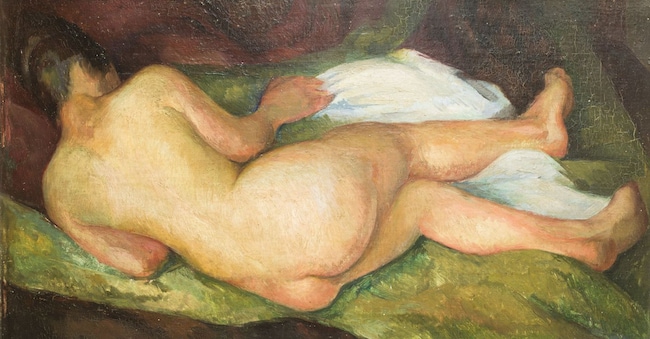
Places influence the artist’s style, and the avant-garde and Cubism alternate, for example, between France and Spain: Rivera’s Montparnasse has an augmented reality effect, Notre Dame is ethereal, Toledo is geometrically deconstructed, rugged and rocky, with only the blue of the River Tagus. When the style changes, so does the narrative: the brushstrokes are those of a great muralist in *The Peasant Boy* and *The Market of Petates* – the typical woven Mexican mats (watercolour and ink on paper mounted on Masonite, 1950). *Zapata on a White Horse* is the work inspired by the revolutionary who became the symbol of agrarian reform. A lithograph of a nude Frida stands out amongst the works in the ‘Mexican Cultural Renaissance’ section.

