
New Nissan Leaf, it's a whole new electric, but will it be enough?
It has been the best-selling electric car for years, not surprisingly selling over 700,000 units. The third generation, however, changes skin and relaunches itself with a renewed design, a new positioning and more connected technologies than ever before. And an almost impossible goal: to return to the centre of demand for sustainable cars.
2' min read
Key points
2' min read
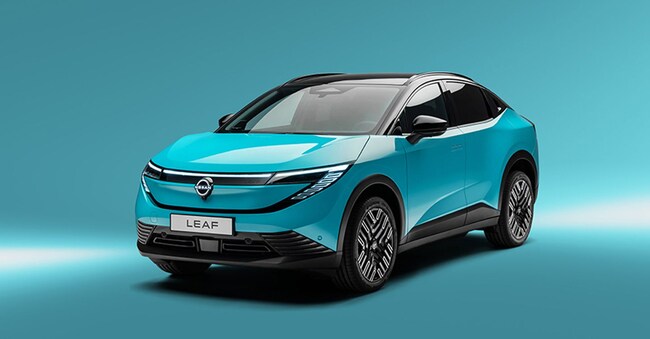
The Leaf was the forerunner of mass electric mobility, but then it had to contend with the success of another type of battery-powered car: swankier, almost elitist and of course more expensive. With the third generation, Nissan has decided to reposition the Leaf in a more contemporary context: it has become a crossover compared to the compact hatchback of previous generations. It adds a cx of 0.25, more sustainable performance, the maximum speed is 160 km/h, but increases the range from 436 to 604 km and adds a faster recharge: 417 km is recovered in 30 minutes.
Unprecedented energy management
.With two battery options, 52 and 75 kWh, the new Leaf offers a range of 436 or 604 km respectively. In addition, on motorway journeys with a constant cruising speed of 130 km/h, the Leaf has a maximum real-world range of 330 km, while the 150 kW DC fast-charger gives a range of up to 417 km in 30 minutes. Energy management is another innovative aspect. The intelligent thermal control system keeps battery performance constant in extreme conditions, in synergy with the Google Maps navigator.
Speed up charging procedures
.The Route Planner system not only suggests recharging points on the route, but also communicates with the car's system to prepare the battery at the optimum temperature to speed up the operation and optimise battery life. In terms of functionality, the new Leaf offers the possibility of powering external devices thanks to Vehicle-to-Load (V2L) technology: an adapter can deliver up to 3.6 kW and recharge household appliances, lights or outdoor equipment. In addition, compatibility with Vehicle-to-Grid (V2G) opens up the possibility of returning energy to the grid.
The platform is the same as Ariya
.On-road dynamics benefit from the CMF-EV modular platform shared with Ariya, with MacPherson suspension at the front and multilink at the rear. Backing it all up is a wealth of technology. The ProPILOT Assist system with Navi-link maintains the lane and adjusts the distance to those in front, but adapts speed to road limits or those detected by the navigator, intervening in bends or when exiting ramps. Driving can rely on e-Pedal Step and regenerative braking that can be adjusted manually from the steering wheel paddles or automatically with Intelligent Distance Control.
Selling from spring next year
Another plus of the Leaf 2026 is the new Around View Monitor with 3D function, which selects eight different views around the car for precise handling even in tight spaces. The front camera with a virtual projection shows the position of the front wheels. Finally, the safety package includes intelligent cruise control, lane keeping and driver attention. The new Leaf will be available for order in the autumn at prices to be determined for delivery in spring 2026. Production is still in Sunderland, UK.

