
New factories to be told demand new creative efforts

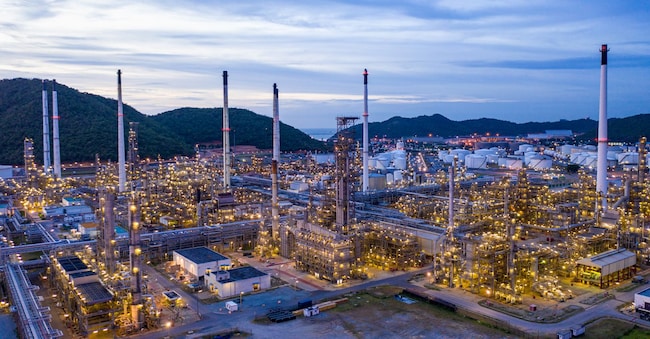
Despite having waned in its traditional meaning, the concept of the factory, its presence, its topicality continues to be at the centre of the country's discussion as a synonym of productivity, as the main engine of our entrepreneurial identity. It is true, in fact, that the twentieth century as the century of big industry seems very distant, yet its legacy, which continues to question us, does not seem so distant. For some time now, industrial fiction is no longer the space of the simple document, nor the theatre of ideological contrasts typical of the years of reconstruction. Rather, writers today feel the need to recount a metamorphosis: the one that has transformed the factory from a social and architectural icon into a mutable paradigm, no longer confined to saw-roofed warehouses, but extended to management corridors, multinationals, hybrid spaces in which precariousness, new professionalism, managerial crises and unprecedented forms of fatigue coexist. It is a season that has produced novels, reportages, films, plays and artistic works capable of reading in the folds of work not only economic changes, but above all anthropological changes.
And it is precisely this need for interpretation that makes a festival like the one in Parma necessary. We have entered a season in which the West, although immersed in the post-industrialisation phase, is experiencing a kind of unconscious nostalgia.
On the one hand, it has lost the historical places of production, the traditional factories, often disused or relocated. On the other hand, it continues to question what shape to give to terms worn out by the 20th century - for example, work, production, economic growth - and how to reconcile development, sustainability and shared responsibility at a time when the West seems to have lost its way and perhaps even is unable to offer viable proposals as it did in the years when much more defined social and economic models were contrasted: East/West, Soviet economy/capitalism.
The widespread impression is that the factory, the work of the hands, the production of concrete (and not virtual) objects have by no means disappeared. It is easier to say that the reference horizon has changed, that they have taken on different meanings, but they are still objects, methods, forms that are the offspring of a productive capacity that determines identity and future. The factory was and remains a workshop of materials, but also of ideas, creativity and passions, and in an Italy still deeply marked by craftsmanship, the story of industrial work continues to be a precious key to understanding who we are and, above all, what our destiny will be.
The narratives of the 20th century - from Ottieri to Volponi, from Levi to Parise - gave voice to workers, technicians, managers, showing how the tensions and dreams of an entire community were reflected in the workshops. Today those same themes re-emerge under new coordinates: the sense of loss, the fragility of professional paths, the need to rethink production models in the light of environmental and social challenges. Telling the story of industrial work therefore means questioning our past in order to orientate the future. The Parma Festival of Industrial Narrative was born precisely with this awareness.


