Special Watches

New year, time to re-tune rhythms and lifestyles

The seconds ticking away to the perpetual rhythm of the hands and the print that imprints, fixes and stops the moment. The art of papermaking, with the invitations and vintage lookbooks of fashion shows, meets the masterpieces of watchmaking. Two visions of time: as a precious movement and complication and as an icon that paper celebrates and narrates.

by Artwork by Fabrizia Monticelli. Texts by Paco Guarnaccia and Caterina Maconi
9' min read

Translated by AI
Versione italiana

9' min read

Translated by AI
Versione italiana

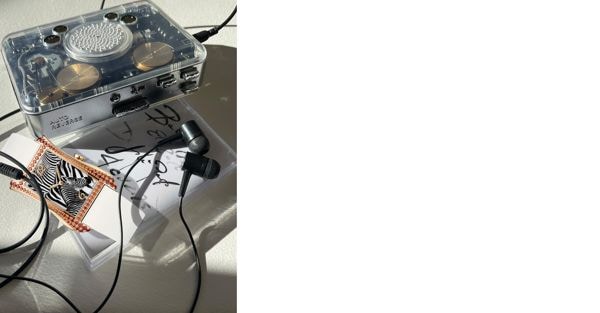
WITH THE WRIST The sapphire crystal dial of the Gondolo Serata Ref. 4962 features an animal-type motif, here zebra-striped. To achieve this, a special process was used to accentuate the reflections. Case in pink gold (28.6 x 40.85 mm) with 94 brilliant-cut spacers in two different colours (cognac and tangerine) totalling 2.02 carats. Quartz movement. PATEK PHILIPPE (€43,124).

On the background If paper originated in China in the 2nd century B.C. by Ts'ai Lun, a dignitary of the Chinese imperial court, it was not until two thousand years later that the written word found another medium to share meanings. The first magnetic tape saw the light of day in Germany in the 1930s; it was called Magnetophon K1. It was the first time that voice became a physical track, rewindable and infinitely playable. It was then in 1963 that Philips launched the audio cassette, the format that truly democratised recording and brought the spoken and sung word into backpack pockets. And the Tape Letters, in the 1970s, became a new and original way of communicating: half ink and half voice, a handwritten sheet of paper and a cassette tape slipped into the envelope. The message? Mostly love. The invitation to Balenciaga's S/S 26 fashion show, for the debut of Pierpaolo Piccioli as creative director of the fashion house: the music played on the tape was the beating of the heart.
Loading...

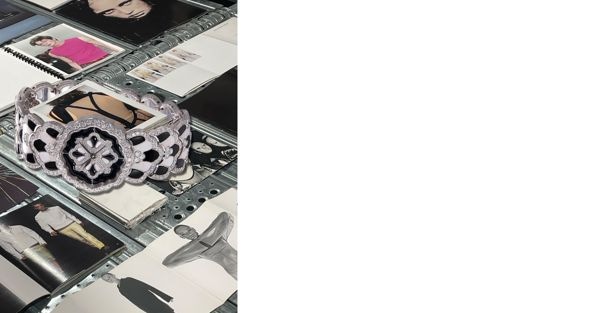
TULLE The Tulle model has a 28 mm diameter case in the shape of a flower in white gold with diamonds. The same motif has been used for the bracelet, also in white gold with diamonds, pink and black enamel, which also appear on the dial. Quartz movement. BUCCELLATI (€115,000).
WRITING & PRINTING PAPER The market for writing and printing paper stands at 77.78 million tonnes in 2025 and is expected to decline to 75.81 million tonnes by 2030. The cause of this slowdown is digitalisation, which is progressively reducing volumes. However, the industry continues to find support in divisions such as examination documents, fintech security modules and premium stationery, where tactile quality is fundamental and central. Specialised niches, particularly those related to presentation and invitation needs, are in fact driving the sector. Last April, Morphine.Online and Galleria 10 Corso Como presented 'Inventory', an installation of more than 500 fragments - lookbooks, catalogues and ephemera - from 1992 to 2002.

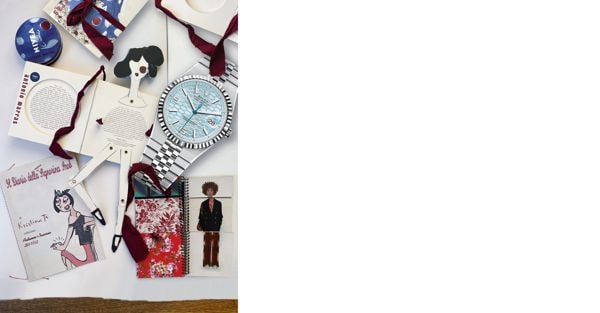
WITH THE WRIST Sporty and elegant, the Land-Dweller has a 40 mm diameter case, bezel and integrated bracelet in platinum. The ice-blue dial has a honeycomb texture, and features a date window at 3 o'clock. The movement is a new automatic calibre. ROLEX (€65,300).

PAPER WEIGHT The paper weight corresponds to the weight in grams of a one square metre sheet. The choice of grammage is central depending on the product to be produced and has various implications in the production process of printing and packaging a printed object. Papers with grammages from 70 to 100 are suitable for printing flyers, flyers and magazines, which are not very thick and have a light consistency. From 115 to 170 grams the thickness is greater: these grammages are used for catalogues, leaflets, brochures and more generally for valuable products. Finally, from 200 to 400 grams are coated boards, used for covers and business cards. Their thickness makes them rigid and firm to the touch, and they are widely used in packaging. From above, in 2009 Antonio Marras signed a collector's pack of Nivea Creme by dressing the classic blue box with a wooden story-book; the invitation to Kristina Ti's F/W 11-12 fashion show starring Franca Valeri's Signorina Snob; the invitation for Gucci by Alessandro Michele's F/W 22-23 fashion show, the first at the Gucci Hub in Via Mecenate in Milan, entitled Exquisite Gucci.

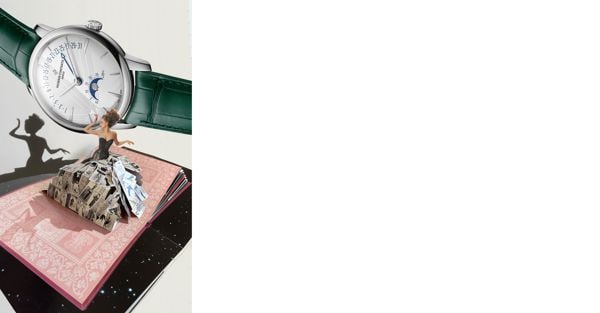
The Patrimony Lunar Phases With Retrograde Date is one of the models created for the brand's 270th anniversary. It has an ultra-thin white gold case (9.7 mm thick and 42.5 mm in diameter) and a dial with a design reminiscent of the Maltese cross, the brand's symbol, with a retrograde date display (at the top) and, at 6 o'clock, the moon phases. Automatic, 270 pieces. VACHERON CONSTANTIN (€58,500).

ON THE BACKGROUND The relationship between fashion and paper as early as the 1950s saw two American companies - Scott Paper and Kimberly-Clark - engaged in the production of cellulose clothes used mostly for promotional purposes. In 1966, however, the first models designed not for advertising purposes came out of the Mars plant in Asheville. One stands out from the others for its versatility: it is white and sold with a set of watercolours with which to personalise it. Two examples touched by Andy Warhol's artistic gesture are now on display at the Brooklyn Museum: on one is the word 'fragile', on the other a drawing of a banana. Among the designers who have experimented with the material and with interesting results is Paco Rabanne, who in 2011 made a paper couture dress for Lady Gaga at the MTV VMAs. The Next 100 Years catalogue celebrates in 2007 the 100th anniversary of the American luxury department store Neiman Marcus, founded in Dallas, where it is still headquartered.

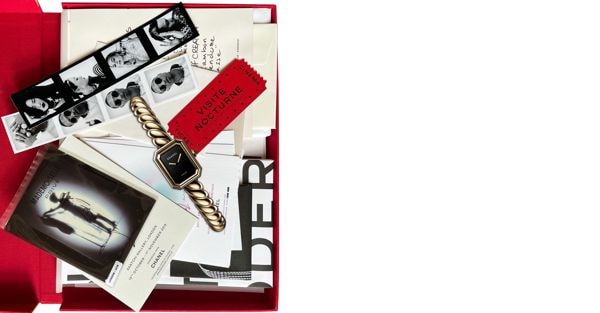
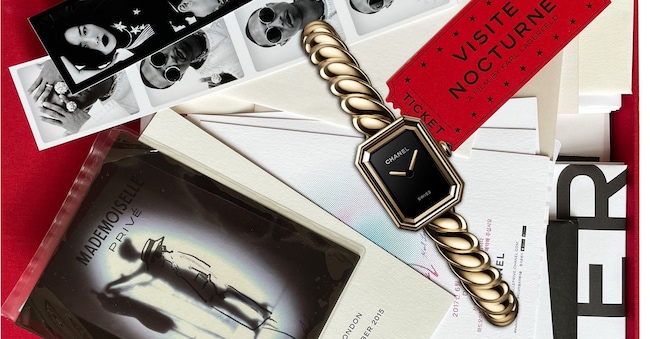
AT THE Wrist In the Première Galon, the distinctive case with its octagonal design reminiscent of the N°5 perfume stopper, itself inspired by the shape of the Place Vendôme in Paris, is made of yellow gold (19.7 x 15.2 x 7.5 mm are its dimensions). The same precious material was also used for the bracelet. The dial is lacquered black. Quartz movement. CHANEL (€15,500).

BIND BINDING With the advent of industrial production, bookbinding has evolved to cope with the technical innovations of the new medium. The main types of binding are currently paperback, wire binding, milling and stapling. Binding is used for printed books over 2 millimetres thick and can be either milled or wire bound. Milled, or glue-bound, is the most common method for making thick books, catalogues and volumes: the pages are joined to the cover by means of a strong elastic glue. In wire binding, the pages are folded and gathered to be bound individually and then to each other with a cotton thread and finally glued. A cloth tape is then inserted, to which a bookmark ribbon is attached. Finally, staple binding is used to make booklets with a few pages. It is done by overlapping several sheets printed front and back, which remain together thanks to the application of two staples in the middle on the spine. Chanel's "Mademoiselle Privé" exhibition, after London, Seoul, Hong Kong and Shanghai, made a stop in Tokyo in 2019: here are the invitations to the event.

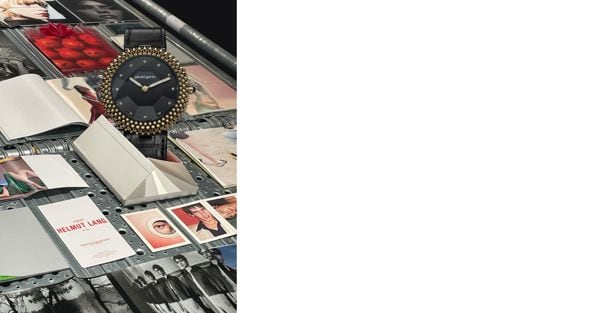
WITH THE WRIST The Gentissima Oursin Black Titanium has a design reminiscent of a sea urchin, 'oursin' in French, evident in the structure of the 36.5 mm diameter case in blackened titanium with yellow gold micro-borings. Automatic movement. Black alligator strap. GÉRALD GENTA (€28,381, exclusive to Italy from Pisa 1940).

BINDING In the world of paper, the ancient techniques of bookbinding have not been lost and survive in a few specialised workshops. Here, even today, skilled craftsmen hand down the professional secrets to produce artefacts of high aesthetic and technical value. The main handmade bindings are tacked stitch, a simple stitch that alternates an external and an internal stitch, especially suitable for booklets that need to open wide; interlaced stitch, a crossing on the spine that allows several signatures to be joined. And the Japanese binding, or watoji, which joins the sheets with a thread running through the entire block, leaving the seam clearly visible on the spine. The 'Inventory' exhibition last April at Galleria 10 Corso Como also celebrated the acquisition and digitisation by Morphine.Online of a thousand documents, ephemera and publishing materials.

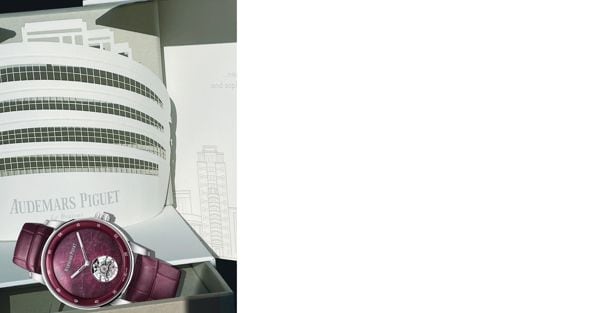
AT THE WHEEL In this version of the Code 11.59 by Audemars Piguet Flying Tourbillon Automatic, the ruby dial at 6 o'clock features an aperture revealing the sophisticated tourbillon of the manufacture movement. Case 38 mm in diameter and white gold hands. Alligator strap. AUDEMARS PIGUET (€150,000 + VAT).

WITHIN THE BACKGROUND Among hand-decorated papers, marbled and woodcut papers are among the most valuable and popular in Italy. Marbled paper is thought to have originated in Persia and has been known in Europe since the 1500s. The steps to make it are many and delicate: a basin is filled with a gelatinous liquid of vegetable origin and the different colours chosen are sprayed on the surface. While these float, the artist, using wooden combs or sticks, proceeds to form the image by moving the colours and creating the chosen shape on the surface. When the design is ready, the sheet of paper is placed in contact with the surface of the liquid. Already after a few seconds, the paper is ready with the decoration. The invitation for the opening of the Audemars Piguet House in Milan in March 2024: the boutique is located in the famous Garage Traversi in Via Bagutta 2.

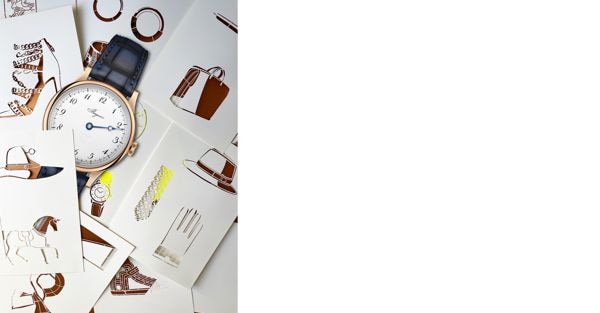
At the wrist Among the company's 250th anniversary models, the Classique Souscription 2025 has a white enamel dial on which a single blued steel hand marks the time. The 40 mm-diameter case is in Breguet gold (75 per cent gold, the rest silver, palladium and copper), and the movement is an IWC-manufactured manual-winding movement. BREGUET (€53,600).

XILOGRAPHED PAPERS Also woodcut papers spread in Europe around the 15th century - the derivation is Chinese -, initially as a popular typeface production that found use to line the furniture of the most modest dwellings or as a cover for cheap editions. The motifs, engraved on a wooden matrix of the same thickness as movable typefaces, were initially impressed by hand, later with the help of the printing press. The press kit 'Quelques idées pour les fêtes' presents the Hermès Christmas proposals, here for the year 2015: a masterpiece of papermaking expertise.

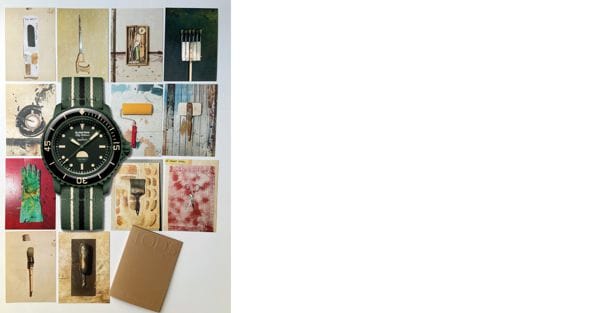
WITH THE WRIST In the Green Abyss, it is the intense green tones with sand and black highlights that make this declination of the Bioceramic Scuba Fifty Fathoms, a collection that reinterprets Blancpain's legendary Fifty Fathoms in Swatch terms. Case in Bioceramic 42.3 mm in diameter, water-resistant to 91 metres, automatic movement made in-house. BLANCPAIN x SWATCH (€400).

On the background With a glance at the oriental world, among the handmade papers considered among the most valuable are the traditional Japanese Washi in the variants Kozo (mulberry), Gampi (thick, with a natural glossy surface, suitable for the pen) and Mitsumata, used for calligraphy and luxury engravings. Khadi paper from India, very thick and made from recycled cotton, is loved by watercolourists for its absorbent qualities. Nepalese Lokta, derived from the bark of the Daphne bholua plant, has historically been used for state documents and sacred texts, while traditional Chinese Xuan imperial paper - produced for over a thousand years - is still used in the restoration of painted scrolls in imperial collections and is among the most suitable in the world for painting and calligraphy. The invitation to Tod's S/S 24 fashion show, held in Milan at the Scala Ansaldo Laboratories, celebrates crafts by recounting the tools used by artisans to create the sets of La Scala Theatre.

At the wrist The 40 mm diameter ceramic case, bezel, titanium back, dial and calfskin strap are black in the Luminor GMT Ceramic PAM01460. This watch allows a second time zone to be read off thanks to an additional arrow-head hand, and the date in the 3 o'clock window on the dial. Automatic movement. PANERAI (€15,300).

Lookbooks, fashion show invitations and some celebratory monographic magazines have become true cult objects in the fashion world over the years. In fact, there is a market of interested parties who seek them out to expand their collection and online there are sites that offer for sale editions of particular value or value, because they are unobtainable, referring to particularly significant collections for a fashion house and a designer. For example, the online bookstore RareBooksParis carries a lookbook of Maison Martin Margiela Womenswear Collection Autumn/Winter 1999-2000 of 19 pages for 950 € or the lookbook of Helmut Lang collection femme/homme été 93 of 6 pages for 195 €, but also the lookbook of Hermès Collection Spring/Summer 1999 of 39 pages for 400 €. The fourth edition of Bottega Veneta's fanzine presents the S/S 24 collection including behind-the-scenes photos, sketches, a carnet de voyage and Alec Soth's campaign shots. Accompanied here by Bottega Veneta's carved leather invitation - which when opened becomes a handbag - for the S/S 26 show, the first by designer Louise Trotter.

AUDEMARS PIGUET, audemarspiguet.com. BREGUET, breguet.com. BUCCELLATI, buccellati.com. CHANEL, chanel.com. GÉRALD GENTA, geraldgenta.com. PANERAI, panerai.com. PATEK PHILIPPE, patek.com. ROLEX, rolex.com. SWATCH, swatch.com. VACHERON CONSTANTIN, vacheron-constantin.com.

Copyright reserved ©
Loading...
Loading...

Newsletter

Notizie e approfondimenti sugli avvenimenti politici, economici e finanziari.

Iscriviti