United States

New York State halts the construction of new AI data centres

The decision allows more time to establish a regulatory framework for the construction of new facilities and to assess their impact on the environment and on costs to users

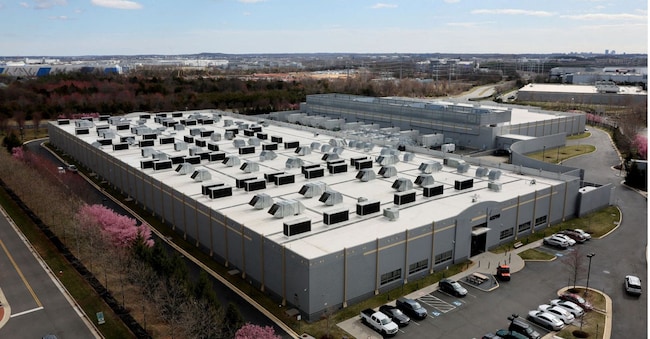
Un data center in Virginia REUTERS/Leah Millis/File Photo REUTERS

4' min read

Translated by AI
Versione italiana

4' min read

Translated by AI
Versione italiana

In the United States, New York is set to become the first state to impose a moratorium on new ‘hyperscale’ data centres – large-scale facilities used by big tech firms and, increasingly, by AI companies – at a time when local authorities across the country are trying to work out how to regulate the proliferation of these energy-intensive facilities.

The Democratic Governor of New York State, Kathy Hochul, signed an executive order on Tuesday banning, for a period of up to one year, the construction of new data centres with an energy requirement of 50 megawatts or more – facilities that consume vast amounts of energy, water and land for their infrastructure. The Empire State thus becomes the first US state to impose such a ban.

Loading...

Hochul’s initiative comes at a time when individual states and the federal government are seeking to remain competitive in the field of artificial intelligence and to create jobs for local communities, whilst ensuring that data centres do not deplete natural resources or strain the electricity grid, nor place an excessive burden on consumers’ pockets.

L'Onu contro il costo ambientale del settore dell'IA

According to statements made by the governor’s aides during a press briefing, the decision is intended to give New York State more time to draw up a regulatory framework governing the construction of data centres and to assess the impact of these large facilities on the environment and on costs to users. The advisers clarified that this suspension is not intended to interfere with the operations of data centres providing essential services, such as those to hospitals, educational institutions or research centres.

In June, the New York State Legislature passed a bill which, amongst other measures, imposes a one-year moratorium on the granting of certain permits for the construction of large data centres. An aide to the governor told journalists that implementing the Responsible Data Centre Development Act would take time and that Hochul felt it was necessary to act urgently to address the concerns of New Yorkers. The moratorium will be lifted once the State has established a comprehensive framework to support local authorities and set out strict building standards.

“We are in the midst of one of the most significant economic upheavals of recent decades… perhaps of all time,” said the governor as she announced the executive order in New York. “This type of artificial intelligence data centre consumes enormous amounts of energy, posing a real risk of overwhelming our electricity grid’s capacity,” she added. “They drive up costs for local users, and I refuse to allow those costs to be passed on to the people of New York.”

Hochul’s stance reflects that of many residents of the state and environmental campaigners, who have scrutinised this type of data centre due to its excessive consumption of energy and natural resources, particularly water. The announcement highlighted the sharp rise in electricity bills for New Yorkers: since 2019, the average price of residential electricity in the state has risen by almost 68 per cent. This situation has clearly turned public opinion against the construction of new data centres, sparking strong protests from the public regarding planned projects in places such as Lansing and East Fishkill.

The decision by the Governor of New York State has delighted environmental organisations, but has also been welcomed by politicians such as Senators Kirsten Gillibrand and Kristen Gonzalez, and is in line with recent opinion polls in New York State

Of course, there were also dissenting voices. “‘China wins,’ commented Pennsylvania Senator John Fetterman in a post on X. Meanwhile, data centre builders have argued that the US’s foreign rivals are backing the anti-AI movement; there is also evidence that anti-AI content created abroad is being published for a US audience.

The decision taken in New York State forms part of a wider battle against the proliferation of data centres in the United States. This battle features some well-known figures. Last March, Vermont’s independent senator Bernie Sanders and New York’s Democratic congresswoman Alexandria Ocasio-Cortez – two leading figures in the American left-wing opposition – introduced, in the US Senate and House of Representatives respectively, the Artificial Intelligence (AI) Data Centre Moratorium Act, a bill aimed at suspending the construction of new data centres nationwide until adequate safety measures are in place. Sanders’ campaign, in particular, goes beyond concerns about the safety standards of these new facilities: ‘Artificial intelligence and robotics are giving rise to the most far-reaching technological revolution in human history,’ he stated in a press release when he introduced the proposal alongside Ocasio-Cortez. ‘The scope, scale and speed of this change are unprecedented.’

If approved, Sanders’ moratorium in the Senate would remain in force until legislation is passed to limit the harmful effects of data centres, namely legislation that mitigates their climate and environmental impact, ensures they do not lead to an increase in utility costs, prevents job losses and guarantees that the wealth generated by AI companies is shared with the people of the United States.

The decision just announced by the Governor of New York and the proposal put forward by Sanders and Ocasio-Cortez in March are not isolated initiatives by savvy politicians, but rather a reflection of a growing collective awareness: over time, what were once niche concerns have become the subject of widespread public debate. Since August 2025, several towns and counties across the country – in Missouri, Indiana, Georgia and North Carolina – have approved temporary bans on the construction of data centres. According to Good Jobs First, a watchdog organisation that monitors economic development, at least 11 states are currently considering similar measures.

Last December, more than 200 pressure groups, led by the national environmental organisation Food and Water Watch, sent a letter to the leaders of the House of Representatives and the Senate calling for a federal moratorium on data centres; the letter expressed concerns about the sector’s impact on electricity bills and the climate crisis. Sanders was the first member of Congress to back this call, which has since gained momentum thanks to the support of progressive figures such as Maxwell Frost, a representative from Florida, and Pramila Jayapal, a representative from Washington State.

Copyright reserved ©
Loading...

Brand connect

Loading...

Newsletter

Notizie e approfondimenti sugli avvenimenti politici, economici e finanziari.

Iscriviti