
Newcleo is pressing ahead with its Wall Street IPO. The paperwork for the merger with the SPAC is ready
The company is set to make its Nasdaq debut by the end of the year, but in the meantime, losses for 2025 stand at 140 million. Three scenarios for the injection of liquidity from the listing

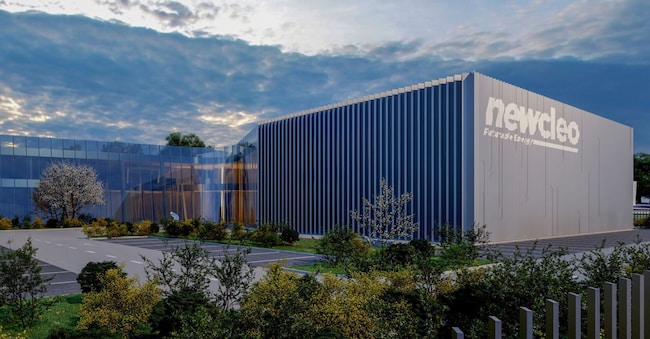
Newcleo is pressing ahead with its listing on the Nasdaq and has filed documents with the SEC for its merger with the SPAC NewHold Investment Corp III, a Cayman Islands-based company already listed on the US stock exchange. This is a necessary step to implement the plan announced a month ago by the fourth-generation nuclear start-up, which aims to list on Wall Street by the end of the year with a valuation of $2.4 billion.
The budget deficit rises to 140 million
The document is extremely comprehensive, comprising hundreds and hundreds of pages that set out the roadmap for the coming months, Newcleo’s business and – as is standard practice for prospectuses – the risk factors, but above all it lifts the veil on the 2025 financial statements. The net loss rises from 110 million in 2024 – a year in which a conservative plan had been adopted – to 140 million. Consequently, the document states, Newcleo’s accumulated losses since the start of its venture now stand at 324 million. In light of these figures and this trend, the auditors – no longer PwC but Grant Thornton – have renewed the going concern warning.
Innovative potential
Of course, as with all highly innovative companies, the early years are the most difficult: they require a great deal of capital – in Newcleo’s case, the estimate is between 3 and 4 billion – before breaking even, and its founder, Stefano Buono, has always been clear on this point. All the more so because his idea is potentially revolutionary in terms of technology and costs: lead-cooled mini-reactors and fuel produced by ‘recycling’ the waste from old plants. Essentially, the perfect solution to the energy trilemma. It is also true that it is not the only fourth-generation nuclear start-up: the field is full of potential competitors; not to mention that advanced third-generation reactors – that is, those using traditional technologies but with the advantages of smaller size and modularity – could well make a big impact, commercially speaking, as early as the end of the decade. And yet Newcleo – according to some experts – has what it takes to succeed, starting with the US, currently the most fertile market for ‘new’ nuclear power: this is demonstrated by its agreements with Oklo and the fact that it has been selected by the US Department to use plutonium for civilian purposes.
The IPO on Wall Street: the figures and three scenarios
The IPO will be a necessary step for the company’s expansion in the US, but also to raise further capital for its development and reach the 1 billion mark. As mentioned, this will take place through a merger with NewHold Investment Corp III, whose shareholders’ meeting (following approval already granted by the board of directors) will need to approve the restructuring. The announced proceeds amount to a maximum of 429 million, of which 220 million comes from PIPE (Private Investment in Public Equity) proceeds, whilst the remaining 209 million is cash held by the SPAC. In reality, the figure will be lower: after deducting fees, it will fall to 374 million. It will then depend on redemptions by the SPAC’s shareholders prior to the merger. In this regard, the prospectus submitted to the SEC sets out three scenarios by ‘pro forma’ adjusting the 2025 financial statements following the merger: if no shareholder redeems their investment, Newcleo would have cash of 469 million; with 50 per cent redemptions, this falls to 385 million; in the worst-case scenario (100 per cent redemptions), 301 million remains.
However, these figures do not take into account changes in the accounts and cash position in 2026. Regardless of the merger, however, the 2025 financial statements showed residual liquidity of 105 million as at 31 December, against cash outflow – during the financial year – of almost 120 million. Between January and April 2026, however, the company states that it raised 45 million from the issue of ordinary shares and through the pre-PIPE financing. 2025 saw revenues fall to 32 million, whilst costs continued to rise (staff costs reached 98 million, up 40 per cent). The auditors at Gran Thornton, whilst approving the financial statements, expressed “substantial doubts about the company’s ability to continue as a going concern” due to “recurring net losses and cash outflows from operating activities”, as PwC had done the previous year. The IPO on the Nasdaq and a potential rally in the share price could mark a turning point.


