Venture Capital

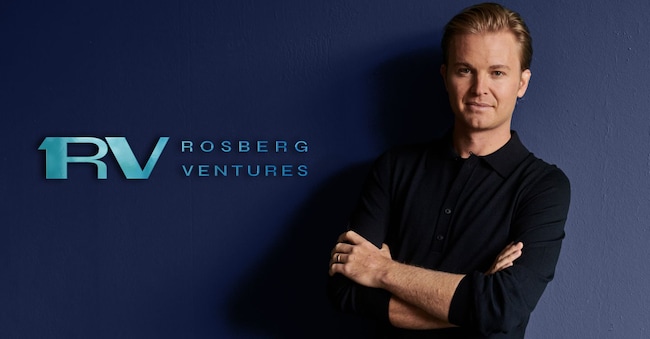
Nico Rosberg, Formula 1 champion raises 78 million with new fund

The former pilot's company has assets under management of 100 million divided into two funds of funds, which invest in US venture capital
by Monica D'Ascenzo

5' min read

5' min read

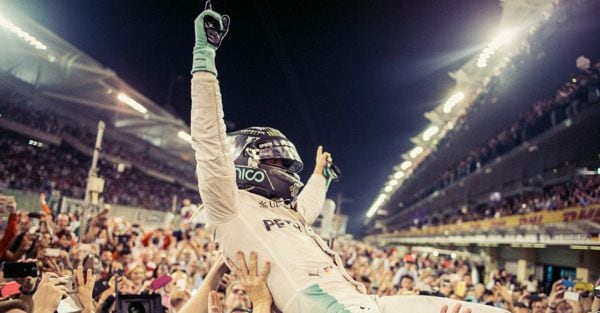
Long-lasting concentration, the ability to make decisions under pressure, analysis of visual, auditory and data stimuli in a matter of moments, very short reaction times and risk calculation. These are the characteristics that led Nico Rosberg to win the Formula 1 drivers' world championship in 2016. That drivers' brains have uncommon characteristics, like those of astronauts, is proven by several scientific studies, and Rosberg, once out of the world of racing, decided to employ them in another fast, risky and adrenalin-pumping context, that of investing in technological innovation.

The first steps as a business angel

.

His interest in investing in start-ups began eight years ago, when the former champion participated in the first transactions as a business angel, and has since amassed a portfolio of more than 35 investments between Europe and the United States. Among other transactions he counts to his credit the participation in rounds of Applied Intuition, a provider of vehicle software for the automotive, trucking, construction, mining, and agricultural sectors, which last March closed a $250 million Series E financing round for a company valuation of $6 billion. Or even Elon Musk's Space X and electric car charging platform ChargePoint, thus joining the ranks of Silicon Valley's leading venture capital firms.

Loading...

The birth of Rosberg Venture

.

A network of relationships that he then put to use in the company he founded with his childhood friend Francesco Sama, with a strong background in private banking. In just two years Rosberg Ventures now reaches the milestone of $100 million in assets under management, thanks to the closing of the second fund of $78 million, raised from Italian and German entrepreneurial families. The second fund comes just a year after the first, which closed in 2023 at $22 million and was fully invested.

"For efficient asset management one should invest a portion of one's capital in the world's best venture on the model of what Yale University has been doing for the last 40 years. I decided to follow that example, but the venture world is very small and the growth is captured by a few players, so you have to go and invest in those funds and you need a critical mass to do that. So we thought of bringing together the wealthiest families in Germany and Italy to raise funds,' says Nico Rosberg, who keeps the book of David Swensen, Yale's chief investment officer from 1985 until his death in 2021, at hand.

Imprenditori-investitori

A closed world, that of American venture capital, to which he has access because of the passion that many share for Formula 1. 'It's very difficult to get access to the best funds, you have to bring an added value. In my case it's Formula 1 because everyone is passionate about the sport, but then you start talking about business and I have to take it a step further. So I bring a particular strategic angle: the major German and Italian entrepreneurial families who can create links and partnerships with the start-ups in which the venture capitalists invest. The families not only have the advantage of return on capital, therefore, but also have added value from an industrial point of view, because we have access to varied and cutting-edge investment portfolios. VC funds, on the other hand, have the opportunity to introduce start-ups to potential major European clients, who by signing contracts can increase the companies' revenues. It is a win-win situation,' explains Rosberg, reached by Il Sole 24 Ore during a trip to Singapore.
Central to Rosberg Ventures' approach is the creation of transformative partnerships between established European industries and technology start-ups with high growth potential. In this way, companies in Europe accelerate their digital and technological transformation and, for their part, the start-ups increase their customer base and consequently their turnover. "I'm very proud because I'm a Formula 1 driver and it wasn't necessarily possible to create something in finance. I have found a new path and we are proceeding according to the business plan,' emphasises Rosberg, who adds: 'We have focused on Germany and Italy because they are the two countries to which I am most attached. Achieving this milestone underlines the demand for a fund that connects long-standing industry leaders with cutting-edge technology.

The AI revolution

.

The sample gives a couple of examples: Codium, a coding platform through AI that helps developers write, test and review code within IDEs and Git, and Watershed, a platform that supports companies in measuring and reporting sustainability data. "These are understandable and useful business models for entrepreneurs. It is immediately obvious what use can be made of them and this facilitates the emergence of partnerships with traditional industrial groups," emphasises Rosberg, who then observes: "The opportunity that AI is creating they say will be bigger than the effect of the internet. The world's total Gdp to date is $100 trillion, of which $55 trillion is produced by working people, while only $15 trillion is produced by technology. Estimates put the contribution of technology growing at 20% of the world's Gdp. This is an incredible growth opportunity'.

These potentials justify, according to Rosberg, the high valuations of AI companies: 'In the best cases it is justified because they have the potential to grow in value, which we have never seen in the history of the world. Of course there will be many start-ups that may not be successful, but those that are successful will create all the returns for venture capital funds,' observes the former pilot, who points out: 'The difference with the tech bubble of 2000 is that in this case there are fundamentals to support the growth in valuations, whereas back then there were none.

Rosberg Venture's target investments are funds globally, but with a predilection for large US venture capitalists. "Our second fund of funds received more interest than we then decided to raise. We will now see how access to other venture capital funds will continue in the coming months with a view to diversifying investments. If we see the possibility of further investment opportunities, we may consider increasing the size of the second fund of funds to $100 million,' Rosberg explains.

Risk Management

.

On the podium 23 times and 30 pole positions for Nico Rosberg in 2016, the year he won the Formula 1 World Drivers' Championship. Born in 1985, German by birth and Finnish by citizenship, Rosberg, who speaks perfect Italian, is a child of art. His father Keke Rosberg became Formula 1 world champion in 1982. 'No matter how good you are as a driver, to be successful you have to have the right car and the right team behind you,' he said, and the same philosophy carries over into finance: the team remains a key element.

Between finance and sport, however, he emphasises a fundamental difference: 'In Formula 1 there is a finish line and when you pass it first you have won. In the world of business it is not the same, because there is no clear end line, there is an evolution that is not always linear. However, there is a common need in both spheres to make decisions quickly, to take a calculated risk. I am used to it, because in sport you fail more than you win and I am not afraid of risk, because I know how to fail well and because I am quick and creative in getting back on track to recover. I always calculate the worst case and am ready to act accordingly'. A skill not to be underestimated when it comes to investing in start-ups.

Copyright reserved ©
Loading...

Brand connect

Loading...

Newsletter

Notizie e approfondimenti sugli avvenimenti politici, economici e finanziari.

Iscriviti