
Nine cities to test the climate contract: net zero target by 2030
The action of urban centres is crucial to reduce emissions. The cases of Milan and Padua, among the Italians selected by the EU Commission to lead the change with concrete actions in synergy with public and private actors on the territory

4' min read
Key points
- Pioneers
- Milan's ambitions
- Padua boosts public transport
4' min read
In the EU, cities are responsible for between 65 and 70 per cent of greenhouse gas emissions. Precisely for this reason, they are considered a key battleground for combating the climate crisis. The latest data on Italy show a chiaroscuro situation. For pollutant emissions (especially the now well-known PM10 and PM2.5), despite the improvements reported by Ispra in 2023, "the state of emergency remains, with some areas on red alert: in particular the Po Valley," emphasises Nicola Armaroli, director at the CNR and editor of the magazine Sapere. Climate-changing emissions, again according to Ispra, in 2022 (latest available data) fell by 21% compared to 1990, but increased by 0.4% compared to 2021. A total of 413 million tonnes of Co2 equivalent emitted into the atmosphere: energy production is responsible for 55 per cent, transport for 27 per cent. 'Pollutant and climate-changing emissions,' explains the scientist, 'are always connected because both result from combustion processes. When we burn a kilo of methane we produce 2.75 kg of CO2, a huge amount. Those of pollutants are much smaller, but enough to cause more than 60 thousand premature deaths per year in Europe'.
The Pioneers
In this scenario, nine Italian cities are aiming to raise the bar to reach net zero greenhouse gas emissions by 2030. They are Bergamo, Bologna, Florence, Milan, Padua, Parma, Prato, Rome, and Turin, selected by the EU Commission from among one hundred European cities in the framework of the 'Smart cities and zero climate impact' mission under the Horizon Europe programme. They have equipped themselves with a Climate city contract in which they have put down on paper the actions to achieve the objective by involving a series of actors on the ground, both public and private.
Milan's ambitions
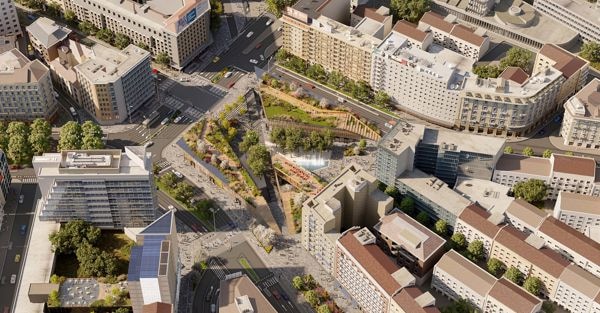
.The Milan 'contract' was signed by the municipality with 25 stakeholders: investee companies, universities, companies and developers, housing cooperatives, civil society organisations, philanthropic foundations and innovation think tanks. It runs along 150 'concrete and measurable' actions. "It will be a choral commitment," says Councillor for the Environment Elena Grandi, "that will allow us to reinvent the city by constructing or reconstructing public and private buildings or entire sustainable neighbourhoods under the banner of energy efficiency. Such as the regeneration projects in Piazzale Loreto, the Scalo di Porta Romana, the new council houses in Lorenteggio-Giambellino. Also on the launching pad are new photovoltaic plants, district heating with renewable sources, forestation and new green areas, depaving, sustainable mobility interventions, infrastructures for bicycle and pedestrian mobility, circular economy initiatives and water resource valorisation. The total value of the interventions is about 6 billion euros, of which 2.6 billion is the responsibility of the municipality and 3.3 billion is to be borne by the signatory stakeholders. "The Po Valley is one of the most polluted areas in Europe and this goal," Grandi acknowledges, "is very ambitious, but it is a necessary path. In the 2022 Climate Air Plan we had set a target to reduce Co2 emissions by 45% by 2030, now we will make a further effort. The meaning of the 'contract' is precisely this: we take up the challenge and commit ourselves to do everything we can. With this mission, we will multiply our efforts and get closer to the target faster. It will be a change of pace that will also affect future actions.
Padova boosts public transport
The Padua climate contract was signed with 36 parties: universities, research and competence centres, multi-utilities and investee companies, through to private companies and start-ups, trade associations, third sector organisations, foundations and banks. It is divided into 14 strategic macro-actions and 146 specific actions, with planned investments of 5.6 billion. "Our city," emphasised Councillor for the Environment Andrea Ragona at the annual meeting of Ance Padua organised by President Monica Grosselle, "has been on the road to reducing emissions for several years now, but further acceleration is needed. The two key pillars are the redevelopment and energy efficiency of industrial and residential buildings, which are responsible for about 73 per cent of city greenhouse gases, and transport, which accounts for 23 per cent. The key measure is the creation of a 'one-stop shop', a technical and economic support point for those who want to carry out energy redevelopment work, facilitating access to financing through the involvement of banks'.
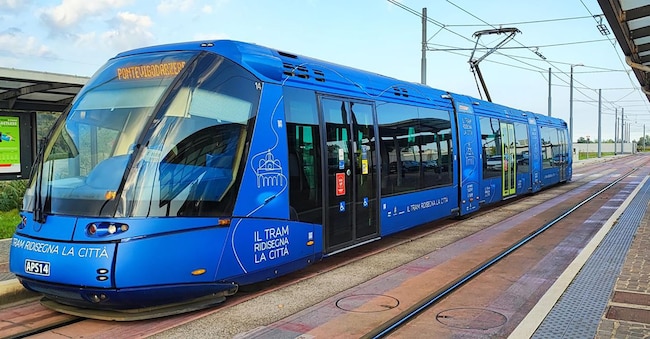
Among the highlights is the Smart project, with the construction of two new tram lines and the integration with modal interchange systems at the edge of the city to help reduce the number of people entering the city. The new lines will add 23 kilometres to the existing route, connecting all the main city arteries and moving up to 12,000 people per hour.


