
Niulinx: with these rules, it’s the end of autonomous driving in Italia
CEO Foresti: ‘The text needs to be amended; as it stands, it will be impossible to provide a service in our country’

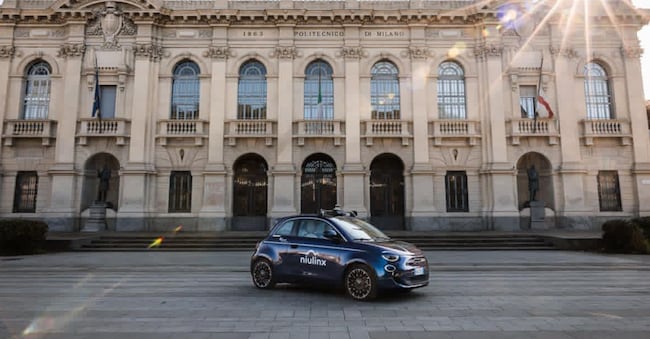
‘The text doesn’t work, and with these rules it will be impossible to offer any service on the market.’ According to Luca Foresti, CEO of Niulinx – a spin-off from the Politecnico di Milano specialising in the development of autonomous vehicles – the new Highway Code, if approved in the form set out in the current draft, will nip the sector’s development in the bud.
Whilst, on the one hand, the draft legislative decree for the new Code recognises automated vehicles for the first time and provides for them to be monitored remotely, a person will always be required to be on board.
“The good news,” explains Foresti, “is that the door is open to the possibility of software dedicated to autonomous driving, but it is the operational model that doesn’t work. Because the requirement to have a person on board prevents the provision of any transport service. Even if the vehicle were to be type-approved, the Highway Code would effectively prevent it from operating in autonomous mode without anyone on board.”
Looking at what is happening elsewhere – for example, in San Francisco with Waymo’s service – it is clear that the prerequisite for operating is precisely that of fully autonomous mobility, a feature that sets ‘smart’ transport services apart from current options such as taxis, Uber or similar services.
“The hope is that the text can be amended during the parliamentary debate,” explains Foresti, “because experience shows that once a code has been enacted, it is extremely difficult to make subsequent amendments. The other obstacle concerns the present – the most advanced trials – which, under the rules currently being approved in Italia, will not be possible to carry out.”


