
No alcohol and low alcohol to conquer the younger market

3' min read
3' min read
The opening is general, even if not all Triveneto producers will be able to take the path of reducing the alcohol content of their wines or total dealcolation, given the widespread production of PDOs in the area. Already in December, upon the publication in the Official Gazette of the dealcolati decree, issued by the Ministry of Agriculture and Food Sovereignty (Masaf), a due and consequential act to the 2021 CAP (the Common Agricultural Policy), the wine world began to evaluate the opportunities that were being created. The change of direction is strong in the world's leading wine-producing country and cradle of the 'Mediterranean diet': until December, in Italy, one could not call a drink with an alcohol content below 8.5 degrees 'wine'. Strict limits remain to be respected: total dealcoholisation is achieved when the alcohol content is brought below half a degree. In this case, the resulting product must be labelled with the minimum shelf life. The treatment must be carried out under the responsibility of an oenologist or specialised technician. The addition of water and flavourings during processing is prohibited. Nothing changes for certified denomination wines: in Italy the total or partial dealcoholisation process cannot be carried out on PDO and PGI wines.
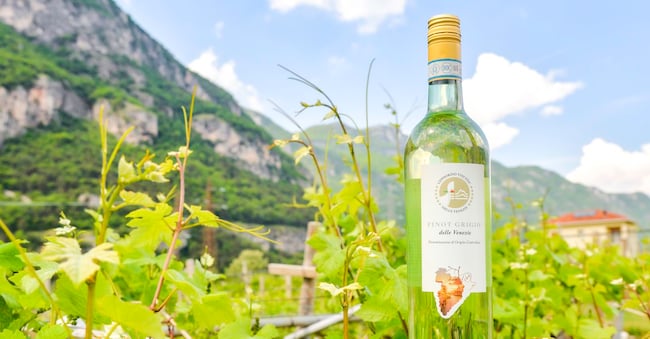
This is why low alcohol is a more viable route for Veneto wineries. Ahead of everyone is the Consorzio Pinot Grigio Delle Venezie, Italy's leading still white wine in terms of production volume, whose production chain comprises 6,141 winegrowers in Veneto, Friuli Venezia Giulia and the Province of Trento, 575 winemaking companies and 371 bottling companies. In December, the members' assembly unanimously approved the proposal to amend the production regulations, which, in line with the orientations of the new consumption models, will include a type of Pinot Grigio Delle Venezie with a low alcohol content (9 to 11 degrees), obtained from an early harvest of the grapes and without any further interventions in the cellar. "It is essential," says President Albino Armani, "to respond to the challenges posed by the market.
The debate also involved the world of Prosecco. "The introduction of dealcoholised or low-alcohol wines will also make it possible to valorise the techniques and plants of distillation companies that are present in the Veneto region with high levels of excellence," notes Stefano Bottega, president of the Wine Group of Confindustria Veneto Est. "Dealcoholisation can become an opportunity, starting from a single raw material, i.e. grapes: with the possibility of allocating a small part of production to a constantly growing niche market. It is necessary to develop plants and experiment with ad hoc distillation techniques,' he adds, emphasising that in the Veneto region a turnover of between 30 and 50 million euro is estimated for this segment, i.e. about 2% or 3% of the current wine turnover. As mentioned, the Veneto wineries are focusing mainly on low alcohol, equipping themselves with more or less large plants, but on average around one million euro, depending on their commercial potential.
Riding the new trend, Vinitaly, which will open its doors at Veronafiere 6-9 April, will also dedicate a space for the first time to Nolo (no or low alcohol) wines, which are set to be one of the main themes of the exhibition. "Wine Paris has dedicated two pavilions to these new products, which will have a corner in the Mixology space set up in Verona, where we will also present focuses on the possibility of tasting them," says the secretary general of the Italian Wine Union, Paolo Castelletti.
In the meantime, the large Italian companies that used to produce dealcoholates abroad, after the publication of the decree, plan to equip themselves to perfect the transition in the Belpaese. Schenk Italia has so far produced between 50 and 80 thousand bottles of dealcolati in Spain, 25% of which were sold in Italy. Now a new era opens up for the South Tyrolean wine producer. 'Some markets, such as Denmark, Belgium, Germany, France and the Netherlands, are showing a growing interest in zero or low-alcohol products, with a strong interest in producing them locally in order to be more competitive,' explains managing director, Daniele Simoni. For Italy, the need to export wine for dealcoholisation and then re-import it entailed costs and complexity. "Being able to produce at home opens up economies of scale, which will allow us to invest more in markets to promote no-low alcohol," he concludes.

