The point

No vote for out-of-towners in the referendum. Why it was rejected and where we are with the law

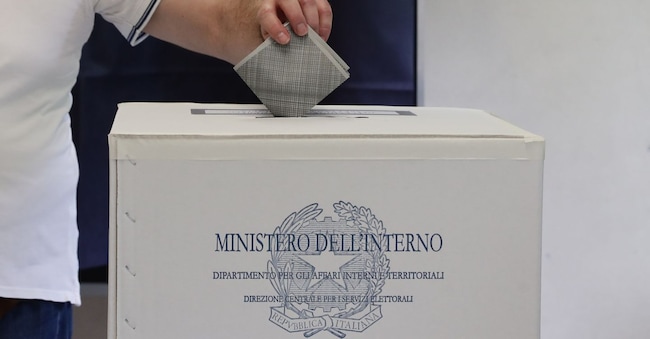
by Lorenzo Pace

ELEZIONI SEGGIO ELETTORALE SCHEDA ELETTORALE SCHEDE ELETTORALI VOTO  VOTAZIONI URNA

3' min read

Translated by AI
Versione italiana

3' min read

Translated by AI
Versione italiana

A double rejection, both in the Senate and in the Chamber, for the 'fuorisede' vote in the referendum on Justice next March. Even in Montecitorio, where the elections decree - in which the double date at the polls is confirmed - was approved on Wednesday, the oppositions' demands were rejected.

In the meantime, however, the processing of the people's initiative bill to make voting for out-of-towners structural, instead of resorting to special measures with decrees for each occasion, continues. Rules that in any case will not arrive in time for the referendum on 22 and 23 March.

Loading...

Opposition amendments (in line with the last two votes)

The very decree on election day for the referendum question on the separation of careers, which came into force on 28 December, did not provide for voting outside one's municipality of residence.

All oppositions tabled different amendments, more or less similar, to guarantee remote voting, some taking over the regulations of previous years. In 2024, for the European elections, the possibility was given to students only: registrations were 23 thousand.

Last year, for the abrogative referendum on labour and citizenship, the audience was expanded to include workers and people in care outside their municipality, and registrations were 67,000, of which 38,000 were from students (making it clear that many learned later about the possibility of voting remotely).

Among the opposition's amendments, the Five Star Movement and +Europa also called forreducing the timeframe to prepare the machine for the vote, since final approval in Parliament will most likely come at the end of February (it must be done within two months of entry into force).

Why off-site voting was rejected

This is the issue. For the government, in addition to a question of cost/benefit, there is an issue concerning technical time, i.e. the time needed to ensure an administrative machine capable of guaranteeing the vote even at a distance.

How voting will be: only those living abroad vote by mail

Thus, it is back to the way it was before. The paradox, in short, is that the situation of those living abroad will be 'easier' than for citizens living in a city other than their own residence. This was recalled by the Ministry of the Interior on 16 January: 'As explained in DAIT Circular No. 1/2026 of the Central Directorate for Electoral Services, for the referendum in question, Italian voters living abroad, pursuant to Law No. 459 of 27 December 2001 and the relative implementing regulation approved by Presidential Decree No. 104 of 2 April 2003, vote by correspondence

Parliamentary procedure

From the government, says Yari Russo, campaigner for The Good Lobby representing the Vote Out Network, the intention would be to put experimentation behind them and move on to an ordinary law. In this regard, the popular initiative proposal has just landed in the Constitutional Affairs Committee in the Senate (on 3 February). The discussion is due to take place within a month, while the text is expected in the House by May.

Danish model to emulate

In addition to hoping that the process will proceed quickly, the rule will have to be 'filled in'. It is, in fact, a proxy law that puts the question (finding ways to vote remotely) to the government. The country to watch out for 'is Denmark' according to Russo. That would be the model that could be emulated. That is, early voting in a special polling station.

It is a special procedure whereby voting takes place before election day: this vote - explains The Good Lobby report - 'is available to every voter at one of the 98 national registration offices and citizens' service centres in any municipality. Early voting can take place up to three weeks before a general election and no later than two days before the election'.

Copyright reserved ©
Loading...

Brand connect

Loading...

Newsletter

Notizie e approfondimenti sugli avvenimenti politici, economici e finanziari.

Iscriviti