Nobel Prize in Physics to Clarke, Devoret and Martinis: their discoveries fundamental to quantum computing
Awarded by the Swedish Academy in Stockholm

Key points
California scooped the 2025 Nobel Prize in Physics, which was awarded this year ex aequo toJohn Clarke, Michel H. Devoret and John M. Martinis, all three from the University of California.
The motivation, for all winners, cites their studies on quantum mechanics, and in particular for the discovery of 'macroscopic quantum tunnelling and the quantisation of energy in an electric circuit'.
Something like this was expected this year, even though the award-winning studies also date back to the 1980s and 1990s when the winners were young, and evidently brilliant, researchers. It was expected because this year marks the first centenary of Werner Heisenberg's work, which laid the foundations for quantum mechanics, which is now talked about daily in the media.
Motivation
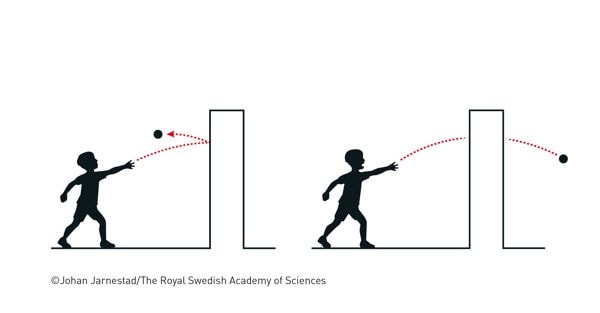
The motivation states that the three professors, one British, one French and the last American, in that order, 'have carried out experiments that have demonstrated how in the quantum world, that of atoms and particles in primis, we find properties that are completely different from those of the macroscopic world, in which we also live, but which can also be transferred to a system large enough to touch and hold in our hands', as was also shown during the proclamation ceremony, with a little coup de theatre. To quote the motivation itself, 'their superconducting electrical system can pass from one state to another with the tunnel effect. They have also demonstrated that the system absorbs and emits energy in doses of specific dimensions, just as predicted by quantum mechanics'.
In practice, without their theoretical studies, we would not have smartphones, solid-state cameras, superconductors and a thousand other pieces of equipment that we use every day, perhaps without even knowing it. And that says a lot about the importance of basic research.