
Deledda: the Nobel Prize-winner enters the classrooms

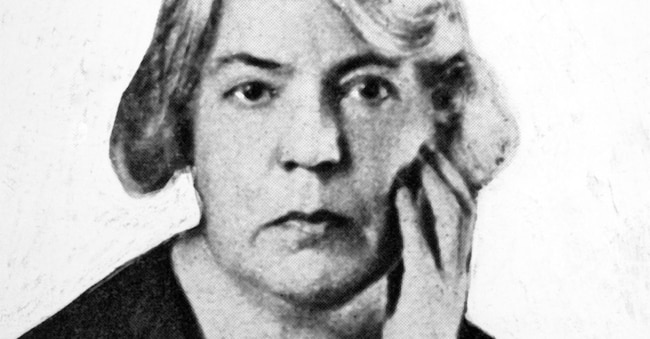
The challenge is entirely cultural: to bring the Nobel Prize into the classroom and introduce it to young students. This endeavour is supported by ‘GRAZIA 100. Reading, living and recounting Deledda’, a project dedicated to the younger generations in the centenary year of Grazia Deledda’s Nobel Prize, promoted by the Region of Sardinia and organised by the non-profit organisation Il Club di Jane Austen Sardegna.
The participants in this initiative will be 700 students spread across 32 classes in 16 secondary schools located in eight regions: Cagliari and its metropolitan area, Sulcis, Campidano, Ogliastra, the Oristano area, the Nuoro area, the Sassari area and Gallura. Through readings, workshops and original creations – ranging from writing to photography, and from podcasts to performances – Deledda’s works will become “living material for discussion and invention”, starting with the lines “We are reeds, and fate is the wind”. Works and writings that remain as relevant as ever, as Claudia Portas, Regional Councillor for Culture, emphasises. ‘As the Region of Sardinia and as the Department of Culture, we wanted to place an integrated and widespread vision of Grazia Deledda at the heart of the Nobel Prize centenary,’ she said, ‘rather than limiting ourselves to abstract ceremonies, but with the concrete aim of leaving a lasting legacy.’ With GRAZIA 100, she added, “we are bringing the Nobel Prize directly into the classrooms and amongst the younger generations, transforming memory into a living, participatory experience”. The cultural journey to explore the writer’s work is structured and unfolds in four phases. The starting point is ‘Discovering Grazia’: local meetings with scholars and experts to introduce the author, the significance of the Nobel Prize and the historical and cultural context of her works. The second stage is called ‘Experiencing Grazia’, featuring educational workshops based on active and experiential methodologies, incorporating writing, images, play and role-play. Then comes the third stage, in which the pupils will take centre stage. In ‘Raccontare Grazia’ (Telling Grazia’s Story), each class will produce a creative piece (a video, podcast, reading, performance, art installation or graphic design project), which will be woven together into a collective narrative. The fourth event is ‘Incontrare Grazia’. Here, a delegation from the schools will be taken to Nuoro, to visit the places symbolic of the writer – from the House Museum to the Church of Solitudine – to present their creations during a day of regional exchange.According to Giuditta Sireus, artistic director of the initiative, ‘a classic only continues to live on if new generations can encounter it, read it and feel free to question it with their own questions’.

