
Nobel Shirin Ebadi to Italy: no more compromises with the Iranian regime
"Stop strengthening it, let us win this battle!" is the heartfelt appeal of the first woman judge in Tehran, at a time when the dictatorship is very fragile

4' min read
4' min read
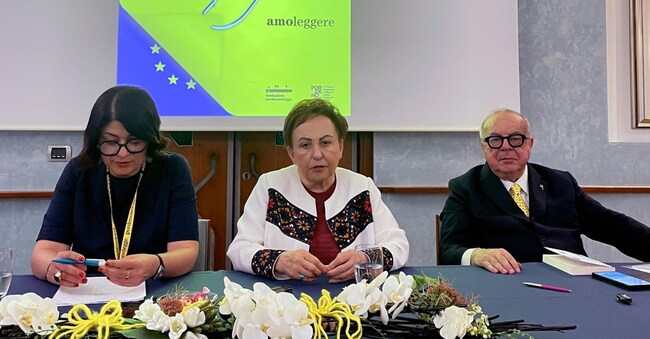
"Stop compromising with the Iranian regime!" said, referring to the Italian government, and Europe in general, Shirin Ebadi, the first woman to become a magistrate in Iran and winner of the Nobel Peace Prize in 2003. During the press conference preceding her opening of the Pordenonelegge literary festival, she described Europe's response to the bloody dictatorship in Tehran as 'very weak: the Europeans have always tried to keep it at bay, to make it happy. All we activists do is ask the Europeans not to strengthen our dictator and allow us to win this battle. Since we are in Italy, I would like to give two examples of these compromises: remember when the former Iranian president Hassan Rohani came to Rome with a delegation and at the Capitoline Museums the statues, masterpieces of Italian art, were covered out of 'respect' for the president, because they were naked. This is a lack of respect for culture, for the art of Italian history, it is unacceptable! And then do you remember when Mohammad Abedini Najafabadi was arrested a few months ago, a person close to the Iranian regime who was supposed to be sent to the United States to stand trial and instead, for an exchange with an Italian person, Cecilia Sala, he returned to Iran?".
Ebadi continues with a third example, which in this case concerns Brussels: "Do you remember when an Iranian diplomat, Assadollah Assadi, was arrested in Belgium with explosives for a terrorist action against a group of Iranian dissidents? He was sentenced to 20 years in prison, but soon after the sentence was made final, the Belgian government signed an agreement for the extradition of the convicted with the Iranian regime. So in a very short time, he was returned to the regime and went back to work. Do you think this is a fair attitude towards a dictatorship like Iran's?" Moreover, observes the activist born in Hamadan in 1947, who recounted her life in Finché non siamo liberi (translated by Alberto Cristofori, Bompiani, pp. 254, euro 14) 'this also makes European citizens travelling to Iran less safe, it is against democratic principles. So I conclude with a message for European governments: do not help the regime, if you do, you do it against your own democracies!"
Three years after the killing of Mahsa Amini, the student murdered just because she did not wear a veil that triggered protests in the streets all over the country. the regime is very weak, Ebadi is full of hope: "until recently if you thought of Iran you thought of a powerful regime with many allies: it financed Lebanese Hizbollah, creating serious problems for the country, in Syria it kept Bachar el-Assad standing, despite the very strong dissent, in Yemen it supported the Houthis who had created a situation of instability. Now we see that the scenario has changed: in Syria, Bachar el-Assad has fallen, in Lebanon, Hezbollah has been greatly weakened, in Yemen, the Houthis are almost gone. The regime very weakened, even their air defence was destroyed in a couple of days by the Israelis. All this has shown that the Iranian regime is not so powerful'.
What about the Life, Woman, Freedom movement, we ask her: 'The movement played a decisive role in changing society, it made the regime back down. For example, a law passed by parliament that was supposed to tighten the punishments against women even more was not enforced because it would have been complicated to apply: you can arrest a hundred women, or a thousand women, but not hundreds or thousands. If we look at the photos we get of people in the streets, we can see that society has completely changed, there are so many women who no longer wear the veil. This is thanks to the movement, which is still alive, it has only changed the method of protesting, but the protests are still going on and the Iranian people and in particular the women continue the struggle'.
"A battle in extraordinary loneliness," observed the president of the Pordenonelegge Foundation, Michelangelo Agrusti, speaking with Ebadi, who also recalled the loneliness of the Syrian rebellion, where in the repression that followed the Arab Spring, Bachar el-Assad killed 500,000 Arabs and Kurds from his country. "I completely agree," the activist remarked, "Syria was a republic, but a republic passed from father to son, and they made massacres of their own people, aided by the Iranian regime both directly and through Hezbollah.

