
Nomad in St. Moritz appeals to global collectors
A must for big spenders at home. Good sales driven by a relaxed and worldly atmosphere. Next stop in the USA in June

Key points
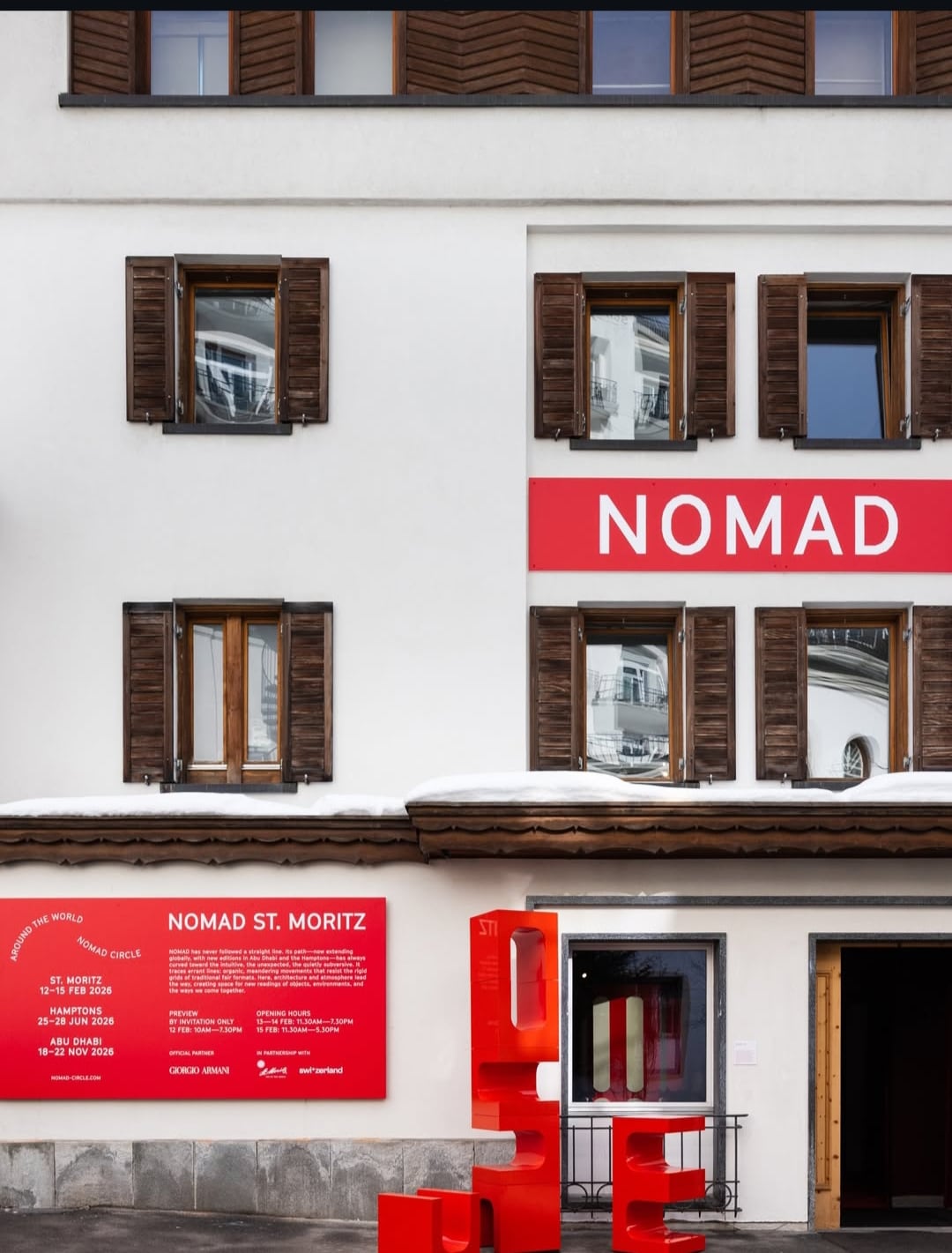
Nomad, the exclusive fair dedicated to collectible art and design led by Nicolas Bellavance-Lecompte, keeps faith with its name and becomes an increasingly global touring event: the traditional Swiss stop in St Moritz has been joined by those in Abu Dhabi, the first edition of which took place last November, and the one in the Hamptons, the favourite seaside of New York's big families, which will make its debut next June (25-28). The locations change and multiply but the target remains the same: people with great assets and cultural curiosity reached and pampered while on holiday, whether in the snow of the Engadine or on the beaches of New England, it makes little difference.
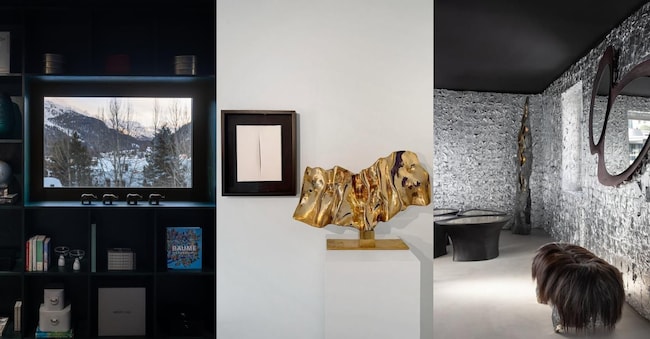
In St. Moritz (12-15 February), the ninth edition has just closed in the setting of Villa Beaulieu, the former site of an orthopaedic clinic. Only 18 galleries were present, but there were many special projects and great support was received from St. Moritz Tourism, the Swiss town's tourist board. How blurred the boundary between art and design is seen in the works of Francesco Zadora, represented at the fair by Margherita Castiglioni. Zadora collects woods on the beach and shapes them into soft, flowing forms, and from those small artefacts sculptures are reproduced, on a larger scale, each in a different material. Prices range from 22,000 to 66,000 euros, prices justifiable by the fact that Zadora, even though she is making her absolute debut as an artist, has a solid design career behind her. Under what name it is not known, but surely this little mystery contributes to the narrative appeal of the works; one of the sculptures sold immediately for 24,000 euros.
Neighbours
There were many Italian exhibitors, taking advantage of the geographical proximity and in some cases second homes in the mountains. A millionaire 'diptych' immediately catches the eye on Secci Gallery's stand A sculpture by Giò Pomodoro ('Piccola Folla', 1964, €65,000) placed in front of a white cut by Fontana ('Concetto Spaziale Attesa', 1966, €950,000), a glance over the million euro mark. The white Fontana, perfectly en pendant with the snowy landscapes is unlikely to return to Milan. Monica de Cardenas, a Milanese gallery but at home in the Engadine with an office in Zuoz, offers a picture gallery made up of fascinating juxtapositions that bring together various artists in the gallery including big names such as Chantal Joffe and Alex Katz, but also much attention for Emilio Gola, already a star at the last Quadriennale in Rome, one of his paintings depicting a box of buttons was on sale for €5,000. Nilufar, a gallery that has always been able to influence tastes and trends in design, proposed a stand where furniture and objects with floral decorations were displayed. Flowers and snakes intertwine in the 'Auratus' wall lamps by Christian Pellizzari, much appreciated at Nomad, €30,000 for his blown Murano glass creations, floral prints also embellished the mirrors by Marc Etienne, less courtly but absolutely ironic the 'artichoke' lamps by Lola Ponse on sale at €8,800.
Collectors
The great protagonist of this edition of Nomad is Polish collector and patron Anna Wozniak-Starak. She was present at the fair with her gallery Craftica, set up to promote Polish designers and, in fact, the space at the fair is entirely dedicated to them. A stand designed by Monica Goszcz-Klos to make a strong impact: covered completely in silver foil, it was the subject of several sales including a work by Formsophy acquired for 12,500 francs. Anna Wozniak-Starak and her husband Jerzi Starak are two central figures in the Polish cultural scene, great collectors, in the next few years their museum in Warsaw designed by Renzo Piano will open. Another patron in the spotlight at Nomad is Petra de Castro, a Swiss collector who has been based in Milan for some years now. De Castro has made her contribution to Nomad with several acquisitions including a historic piece by Giò Ponti and a 1950s bar cabinet by Melchiorre Bega and Pietro Melandri, both acquired from Mondavilli Scagliola, in the Milan gallery several iconic pieces by Ponti stood out such as a glass chandelier offered at €25,000. De Castro also does not only collect but is very active in supporting artists: rendezvous in Venice during the Biennale on the Island of San Clemente where it contributed to an exhibition by Russian artist Vladimir Kartashov in collaboration with the Gowen Contemporary Armani gallery, Nomad's main sponsor globally and in its spaces at the fair, conceived as cosy domestic environments (the furniture obviously designed by Armani Casa) staged a two-person show between Jane Crisp and Yuta Segawa entitled "Through of Looking Glass" curated by Abby Bangser, both designers sold out in a matter of hours, Segawa's highly desirable mini-vases sold in groups of 10 for £270. And Giorgio Armani's former home near St. Moritz was the emotionally impactful setting for several talks and presentations such as the launch of Simon de Pury TL Mag's new art magazine.
Nomadism implies cultural contaminations and exchanges and, therefore, the references to the Abu Dhabi edition are continuous, such as the large orange sculpture by Emirati artist Omar Al Gurg that stands at the entrance to Villa Beaulieu, or the presence at the fair of The House of Artisans, a platform that promotes Abu Dhabi's creative people and that here presents a futuristic seat by studio Samara & The Poet.
In the aisles, the presence of important representatives of the royal families of Saudi Arabia and Dubai was also noticeable, perfectly mingled with other super VIPs of business and collecting such as Maja Hoffman, Norman Foster, Pierre Yovanovitch, all intent on buying a carpet, listening to the story of a Madagascan candelabra with a familiarity and a relaxed attitude unknown in other places and, above all, in other fairs. And this is precisely what Nomad teaches other fairs: what counts is not the number of visitors but the quality of the visitors; you can create a global event even with a few exhibitors, even in the desert, even in the snow.

