
Alcoholic-alcoholic beverages, 'strip drinking' is popular among young people
Zebra striping to lower the alcohol content and get behind the wheel. Dry January is also spreading, after the excesses of the holidays a 'dry' January

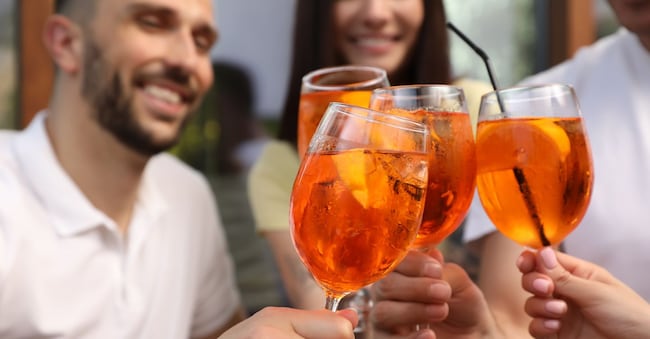
Just as alternating fasting is spreading, there is also 'alternating' drinking: particularly among young people who certainly have a different relationship with alcohol than their parents. It cannot be said that they shy away from a high, but they are certainly also somewhat 'attracted' to moderation. And so a 'striped' or 'zebra striping' way of drinking, in which alcoholic and non-alcoholic drinks are alternated, becomes established. And this is both because they may have to get back behind the wheel (and today there are much stricter traffic regulations than years ago), and also because of a greater focus on well-being and thus on the need to limit calories or at least avoid the harmful effects of significant alcohol intake. This aspect, however, should not be interpreted as an indication of declining consumption, but rather as a clear sign of a change in drinking culture.
This is according to the latest data from Circana, a leading provider of technology, artificial intelligence and FMCG operators who conducted a survey on Mixology in the last two months of 2025, thus close to the end-of-year holidays.
42% of Italians drink on special occasions
"Forty-two per cent of Italians," they write at Circana, "consider themselves drinkers only on special occasions such as Christmas (but also related festivities such as New Year's Eve), which remains one of the main events. But even in what is one of the most important periods for consumption of food and alcohol, there is a growing focus on the quality of drinks and a higher level of conscious consumption. It is not fear but practical awareness: almost 90 per cent of Italians declared that they have responsible consumption behaviour, particularly when driving or performing activities that require alertness.
The fact that the value of the no-low alcohol market in Europe is EUR 1.7 billion and at the end of 2025 a growth of 10% compared to 2024 should be read in this light.
The focus on low alcohol drinks is growing
"The lower alcoholic degree (between 8 and 12°)," they add at Circana, "is preferred, with a 35% growth between 2023 and 2025; not abstinence therefore but conscious dosage. It has to be said that 68% of female consumers are aiming for drinks that combine refined taste and controlled alcohol content, in a context that also sees a focus on quality ingredients. Functional ingredients such as fruit or herbs, even home-made infusions give that touch of originality that is increasingly appreciated by fellow cocktail drinkers'.


