
Non-alcoholic beverages, Assobibe: 'hard to hold on to the market in 2025'
According to manufacturers, -1.5% in volume sales (+1% in value) in large-scale distribution channels, with out-of-home consumption suffering the most after a particularly difficult summer

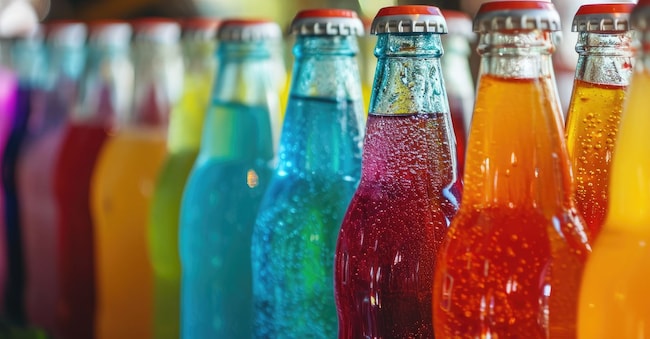
The suffering is above all in consumption in bars and restaurants, partly due to a particularly difficult summer, but more generally following the general trend of families to cut back more on expenditure considered most superfluous and thus also on eating out. Here Cash & Carry lost almost 5% and wholesalers 1.3%. On the other hand, volume sales in the distribution channels for household consumption dropped by 1.5%.
This is the 2025 balance sheet drawn up by Assobibe on the soft drinks sector, which is worth EUR 4.9 billion and employs 83,000 people along the entire value chain. The year, which was "complex and dominated by uncertainties", recorded "a laboured resilience", and closed "with a slight contraction of 1.5% in volume compared to the previous year, after a particularly negative summer, with August dropping by 11.3%".
After a similar trend already recorded in 2024, with a 1.4% decrease in volume, the sector, according to the Confindustria association representing companies producing and selling non-alcoholic beverages in Italia - and relating to the large-scale distribution, Cash & Carry and wholesale channels in the sector -continues to show substantial resilience, albeit in a highly complex situation and in a context of a generalised slowdown in the Italian food & beverage sector".
"In 2025 the sector was able to navigate in a context that was not easy," said Giangiacomo Pierini, president of Assobibe, "This allows us to look at the future with cautious optimism. However, despite a series of interventions by the Government to support the purchasing power of citizens, significant concerns remain on the horizon related to apossible price increase from 2027 onwards, should Sugar tax and Plastic tax not be definitively cancelled. These two levies risk producing a further market contraction, further compromising the stability of the soft drinks supply chain and completely extinguishing any hope of recovery. It is necessary for the government to definitively cancel these tax measures that burden Italian producers, territories, and families, curbing competitiveness without guaranteeing benefits for citizens. Unfortunately, the increase in international conflicts will produce further difficulties'.
Going into more detail on consumption, by volume per category, differentiated dynamics emerged with some positive signs alongside suffering segments. Energy drinks showed an increase of 11.3% in all channels, confirming itself as the most dynamic segment in the segment. Lemonades also showed a positive trend with +1.5%, driven by growth in the large-scale retail and wholesale channels. A substantial stability was recorded for colas (+0.2%), as well as for tonics (+0.9%) and carbonated drinks (the same as in 2024), which grew only in the wholesale channel. On the other hand, non-alcoholic aperitifs and cocktails (-7.4%), isotonic drinks (-7.5%) and chinotto (-7.2%) suffered in all channels. Grapefruit (-5.6%), orangeade (-4.7%), and iced tea (-4.3%) were also negative.


