
Non-PDO hard cheeses gain market share in Italia thanks to lower prices
Convenience also on milk prices for producers has caused generics to grow to over 24% of the total sold (+4 points in the last two years)
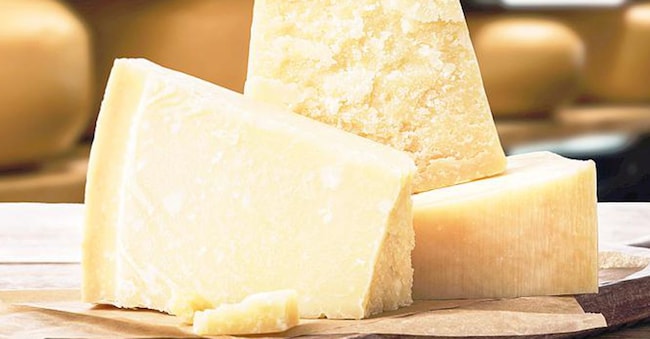
The going gets tough for hard cheeses. In a few years, the two-way game between Grana Padano and Parmigiano Reggiano has become a ménage à trois, due to the attack of non-PDO 'grana-type' products (the name Grana is protected by the geographical indication mark, ed.), which in 27 months have conquered another four points of volume share in the large-scale retail trade, gaining 24.4% of the market.
A little distance from the 27.3% of Parmigiano Reggiano DOP but still far from the 48.3% of Grana Padano DOP. These generic cheeses, without EU geographical indications, are made by Italian companies (often also producers of the PDOs) and offered under fancy or unbranded names. Their market is continuously growing so much that today it is close to EUR 1.9 billion.
Behind the advance of the 'hard generics' there is first of all an issue of convenience both for producers, who can use the cheaper imported milk and curds, and for retailers (who have higher margins, especially in the private label sector), as well as for consumers, who spend less: 14.4 euros per kg against an average of 18 euros. The high price and the 9% increase recorded in 2025 have pushed many Italians to reduce the frequency of purchase and the quantities bought, especially of Parmigiano Reggiano, which in one year in large-scale distribution has lost 11.8% of its volumes.
Considering that for one in three Italians, price is the first criterion for choosing a dairy product, the possibility of saving an average of 25% (and up to 37%) was an important element in pushing towards generic cheeses. A reasoning that is even more valid in the out-of-home world, where one cannot do without this type of cheese, but where the choice of using one type or another affects the food cost. Restaurateurs are, therefore, sensitive to the possibility of saving money, particularly when used as an ingredient. In fact, the two Italian PDOs play a marginal role in the on-trade (6.7% of Parmigiano Reggiano sales), where they have large margins that they have been trying to fill for some time.
As demand grows, so does supply. Many dairy companies have decided to invest in hard cheeses to seize opportunities in domestic and foreign markets. Last year Valcolatte, a specialist in fresh cheeses (Riccotta brand), took over a plant to produce the hard cheeseFlour of Italia destined for the horeca channel and abroad, where it achieves more than 50% of its 320 million euro turnover. The Fiorenzuola cheese factory is located not far from the one where Apl produces Bianco d'Italia, another non-PDO cheese 100% made in Italia.
Other brands have expanded their range (such as Piemontino, Gran Biraghi and Bella Lodi) or invested in portioned products, which are more in demand and profitable. Growing well are grated cheeses, on which Italians spend 895 million euros, where generic cheese mixes are an important presence and where corporate brands, such as Ferrari, Latteria Soresina or Galbani with Grangusto, are the guarantors. It is with a view to completing the portfolio that Granarolo a year ago launched new free-standing formats of its Italian Seasoned Cheese, made with milk from the supply chain and traditionally processed.

