
The loss of agricultural land shows no sign of stopping; a further 20 per cent increase is forecast for 2025
In addition to buildings, ground-mounted solar installations account for over 25 per cent, and the issue of data centres is now also emerging in Italia. Coldiretti: the anti-speculation law must be implemented

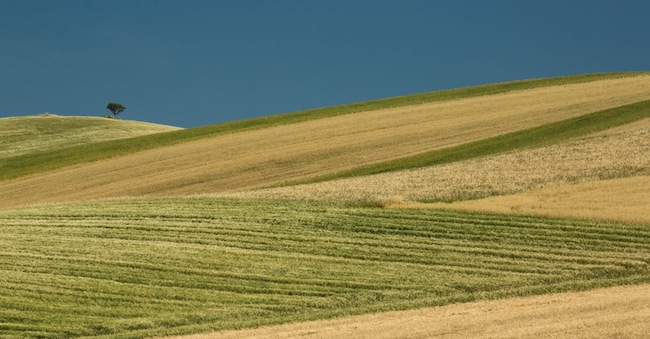
The loss of agricultural land in Italy shows no sign of abating whilst we await the new law against land consumption, which has been under discussion in Parliament for years. According to the latest report from ISPRA, the Higher Institute for Environmental Protection and Research, which is responsible for monitoring the national territory, shows that last year the loss of fertile agricultural land increased by over 21 per cent, reaching 102 square kilometres compared with 84 the previous year. According to an analysis by Coldiretti based on Istat data, between 2000 and 2020 the national agricultural area shrank by 2.7 million hectares, falling from 18.8 to 16.1 million. This loss weakens the protection of the land and increases hydrogeological risk, making the consequences of the climate crisis and the increasingly frequent and intense bouts of extreme weather even more severe.
‘Over-development, unregulated solar panel installations and the influx of new data centres “burn through” food worth 1.3 billion euros every year, jeopardising Italy’s food sovereignty in an already fragile context due to international tensions, whilst rising production costs – from fertilisers to diesel – threaten crops”, the organisation states, commenting on the figures from the new ISPRA report. As regards the consumption of agricultural land, in addition to new buildings, ground-mounted solar installations account for over a quarter of the total land consumed. Coldiretti points out that this situation is expected to improve thanks to the new law currently stalled in Parliament.
Meanwhile, although the figures are still limited, another new development is the emergence in Italia of the issue of data centres, which is likely to have an increasingly significant impact on the phenomenon in the coming years, both in terms of land use and energy consumption. For this reason, Coldiretti emphasises once again, it is essential to safeguard our agricultural heritage and productive land, recognising the social, cultural and economic value of rural businesses in inland areas. The organisation is calling for immediate action to halt the loss of fertile land, starting with the approval of the law on land consumption, ‘which would provide the country with a cutting-edge tool to protect its territory’.

