
Not all hi-tech products have to be smart
Functional limitations and privacy risks, better that these objects remain 'dumb', despite tech innovation
The consumer electronics market is experiencing a growing trend towards the integration of artificial intelligence algorithms in almost every product category. However, the effectiveness of such implementations is often marginal compared to the additional costs and operational complexity imposed on the end user. There are specific sectors where mechanical engineering and functional simplicity guarantee superior performance compared to software automation, while preserving the reliability and immediacy of everyday objects.
The introduction of such technologies entails not only an increase in prices, but also introduces new critical issues related to product longevity, data protection and dependence on software updates that can render perfectly good hardware obsolete. The effectiveness of an everyday object is measured by its immediacy of use and the predictability of the result. In many areas, artificial intelligence acts as an unsolicited mediating layer that complicates the learning curve and reduces the user's direct control over performance.
From producer to consumer
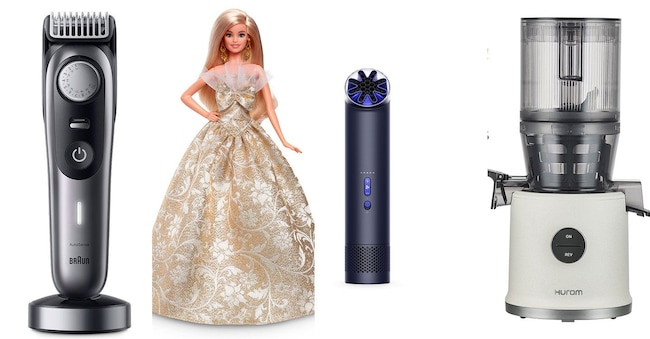
The Hurom H80-ST extractor represents the evolution of cold-pressing technology, where the quality of the end result depends solely on the design of the auger and the low rotational speed. The structural solidity of the device and its mechanical efficiency are the real added value, making any connectivity or complex data processing unnecessary.
The new Hurom H80-ST, part of the Pure Press Line, represents the evolution of domestic slow juicers thanks to the new Spiral Blade technology for smooth and continuous extraction even with more fibrous ingredients. The result is a smooth, homogeneous and nutrient-rich juice, obtained through a gentle process that best preserves the properties of the ingredients. The design incorporates a large-capacity Extra-Large Hopper, designed to simplify everyday preparation: it allows more ingredients to be put in at the same time, reducing processing time and making extraction practical and intuitive, ideal also for family use.
Don't talk to that Barbie
The integration of artificial intelligence into iconic products such as Barbie has highlighted substantial critical issues related to privacy and the very nature of play. Models equipped with Wi-Fi connection and conversational algorithms designed to respond vocally to children have raised alarms about the collection of biometric data and the recording of private domestic conversations. In addition to cybersecurity risks, the automation of dialogue inhibits the pedagogical function of the traditional doll, which historically serves as a 'blank canvas' for the imagination. An AI-free Barbie provides a safe play experience that is totally dependent on the child's creativity, avoiding the transformation of a toy into a disguised surveillance device.

