
'Don't imitate, but create': Meruyert Kaliyeva talks about the new museum in Almaty
The artistic director's goal: to build a long-term sustainable infrastructure to support artists, educate audiences and create new narratives from Central Asia

3' min read
3' min read
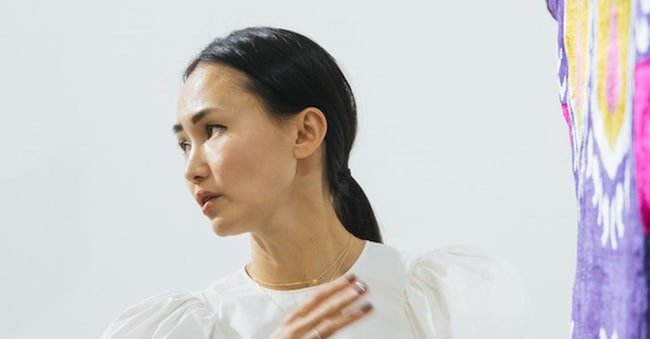
Meruyert Kaliyeva is the artistic director of the Almaty Museum of Arts. Her professional career began at Christie's in London, as an associate specialist in the contemporary art department and in 2016-17 she distinguished herself as Young patrons of the Tate. Returning to Kazakhstan in 2014, she founded Aspan Gallery, specialising in Central Asian contemporary art; in 2022, she curated Kazakhstan's first national pavilion at the Venice Biennale, which received major media recognition, with a project by transdisciplinary collective ORTA based on the ideas of artist, inventor, writer and Sergey Kalmykov. In 2020, she was invited by Nurlan Smagulov to participate in the development of the museum project that gave birth to the Almaty Museum of Arts. We met with Meruyert Kaliyeva to find out what it means to shape a cultural institution in a context as rich as it is changing, a project that promises to redefine the cultural landscape of Central Asia.
What prompted you to accept the artistic direction of this new museum in Almaty?
From a professional point of view, it is an extraordinary challenge and responsibility. This museum is not just about exhibiting great works of art but aims to build a long-term sustainable infrastructure that supports artists, educates the public and creates a space where new narratives from Central Asia can emerge. To be part of this process, right from its foundation, is both challenging and exhilarating.
What is the museum's mission?
To create a dynamic platform for contemporary art, which supports artistic experimentation, promotes critical dialogue and connects local and global perspectives. We aim to make art accessible to a wide audience.
What distinguishes the museum in the cultural landscape of Central Asia?
The museum's size, ambition and international outlook. As the first major private institution of its kind in the region, the museum brings together world-class exhibitions, new commissions, public programmes and educational initiatives. At the same time, it is deeply rooted in place, attentive to the stories, urgencies and creative energy of Central Asia. The museum is not just a space to view art, but a place to think, learn and connect - a site of cultural exchange that reflects Almaty's unique position at the intersection of traditions, geographies and futures.
So why Almaty?
Almaty is the largest city in Kazakhstan and is considered its cultural capital. It is also the hometown of the museum's founder, which gives the project a deeply personal dimension. The museum is his gift to the city where he grew up, studied and built his business, a way of giving back to the community that formed him. Almaty's unique location at the crossroads of cultures, between East and West, tradition and modernity, makes it an ideal place for a contemporary art museum of this size and ambition.

