Around the World

It’s not just New York, Milan and Paris. The new global trends in fashion

The fashion week map stretches from Europe to Asia. A widespread and dynamic constellation: not merely calendars of events, but platforms that reflect a region.

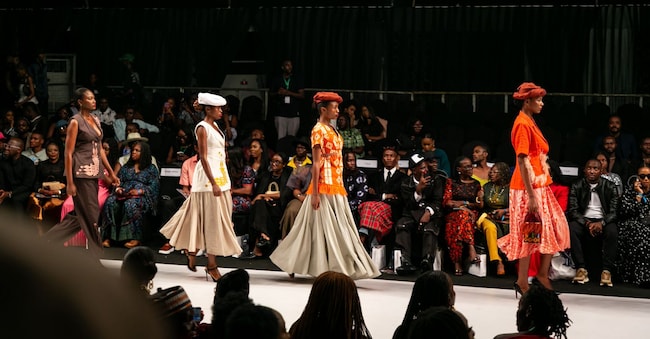
La sfilata di AUDIENCE alla Lagos Fashion Week.

8' min read

Translated by AI
Versione italiana

8' min read

Translated by AI
Versione italiana

For decades, the geography of fashion seemed set in stone, with its rituals centred on the four capitals: New York, London, Milan and Paris. These have always been the events capable of setting trends and shaping visions, the arena where the major fashion houses and independent designers vying for recognition go head to head. But for some time now, the system has been far more complex. Alongside the official calendar, a constellation of cities has emerged that do not necessarily seek to imitate the fashion capitals, but rather to forge their own identity. In Europe alone, Copenhagen has made sustainability an operational requirement, whilst Berlin, after various ups and downs, is working to connect talent and creative languages. Whilst Tbilisi uses its post-Soviet history as a creative lever, Lisbon is building a new international identity centred on manufacturing and the rediscovery of craftsmanship. Beyond Europe’s borders, the landscape is even more complex: Mumbai brings a centuries-old heritage of craftsmanship into the contemporary world; Shanghai is developing an increasingly independent aesthetic; São Paulo links fashion, identity and society; whilst Lagos is creating a pan-African ecosystem; and Seoul, thanks to the global influence of K-culture, has become one of the leading barometers of trends aimed at the younger generations. Each city is forging a different model and, above all, an exportable identity. The real change, therefore, is not merely geographical, but concerns the very way in which we understand the meaning of fashion week: no longer simply days packed with catwalk shows and presentations, but a platform capable of telling a region’s story, supporting an industry, creating communities and producing culture. Today, to understand where fashion is heading, it is worth following this new map.
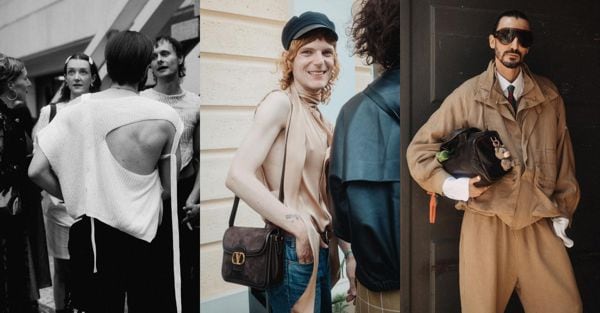
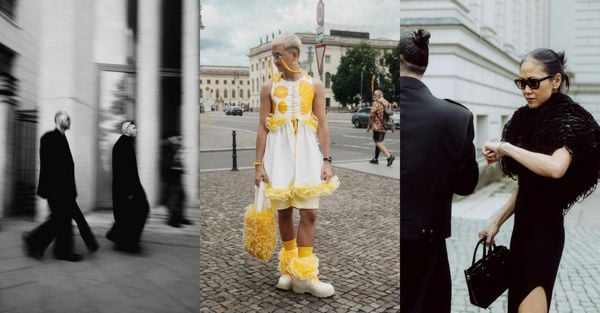
Da sinistra la prima foto, backstage dello show di MARIUSZ PRZYBYLSKI alla Berlin Fashion Week; due immagini di street style a Berlino alla sfilata P/E 27 di GMBH e di BERLINER SALON e al Vogue Café.

EUROPE: EXPERIMENTATION, SUSTAINABILITY AND UNDERGROUND VITALITY

Loading...

If there is one fashion week that has transformed sustainability from a mere statement into a criterion for participation, it is Copenhagen Fashion Week. Since 2020, the event has introduced environmental and social requirements for participating brands, making responsibility a structural element of the system. The result is an international showcase where Nordic aesthetics, innovation, sustainable materials and new production models coexist. Among the new destinations, it is undoubtedly one of the most sought-after by buyers looking for a minimalist yet highly sophisticated style. It is a centralised model: a steering committee, an official calendar featuring around forty or fifty brands, a programme for new talent that selects and supports emerging names, and a recognisable visual identity characterised by minimalism, gender-fluid tailoring, and certified or recycled materials. Among the most interesting names are Stine Goya, who has built her own design language around colour, and Henrik Vibskov, a multidisciplinary designer who has always taken fashion beyond the catwalk, into the realms of installation, set design, costume and performance. Copenhagen thus demonstrates that even a system based on rules and standards can leave room for experimentation.

In Berlin, however, the fashion scene is not confined to a single location. Fashion Week unfolds through a network of shows, presentations, showrooms, exhibitions, talks and parties spread across the city, with the Fashion Council Germany and the Berlin Senate committed to supporting emerging talent and new formats. It is a more curatorial model, where fashion engages with culture, architecture, cinema, music and nightlife. “Fashion Week has gained enormous visibility and significance in recent years, and it is fascinating to see how many creative talents are making their mark here, returning season after season,” explains Michael Biel, State Secretary for Economic Affairs. “Berlin is attracting more and more new brands and designers. The convergence of established voices, fresh perspectives and a growing international presence demonstrates its potential as a fashion capital: this is the direction in which we want to continue investing.”
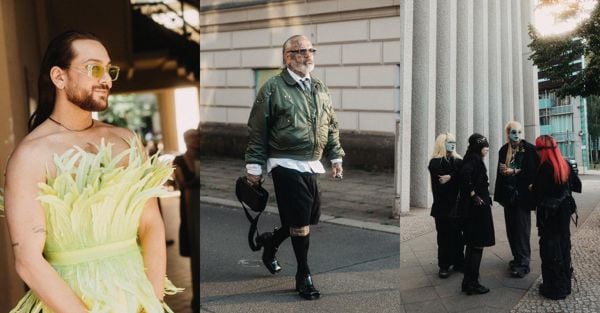
Street style al Vogue Café e alle sfilate di GMBH, MARIUSZ PRZYBYLSKI, DAGGER e BARRAGÁN.

Christiane Arp of the Fashion Council Germany adds: “Our formats – fashion shows, presentations and talks – are interwoven, enabling us to support German talent and those working in Germany through direct dialogue with the public. And I am particularly pleased that, once again this year, many brands led by women are taking part: what is still merely an aspiration elsewhere is already a reality at Berlin Fashion Week.”
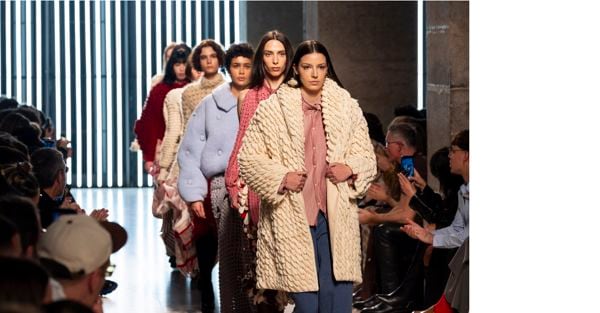
Tbilisi is yet another case in point. The Georgian capital has developed one of Europe’s most interesting underground creative scenes, where fashion, music and contemporary culture coexist. Over the last twenty years, the country has produced talents such as Demna Gvasalia, who grew up in Tbilisi and then trained in Antwerp, and David Koma, who was born in Georgia and graduated from Central Saint Martins in London. Mercedes-Benz Fashion Week Tbilisi, founded and led by Sofia Tchkonia in 2014, has helped to transform this creative energy into an international platform. The new headquarters, Factory Tbilisi, is a former industrial complex covering 27,800 square metres, once a Coca-Cola factory, now a centre for creative culture featuring studios, exhibition spaces, an auditorium and a theatre. It is a place that encapsulates the city’s identity: industrial heritage, an underground atmosphere and experimentation. Exhibitions, installations, craft workshops and talks coexist alongside fashion shows, whilst designers such as George Keburia, Lado Bokuchava and Galib Gassanoff demonstrate how a geographical periphery can be transformed into a centre for aesthetic exploration. The event’s core mission is to offer Georgian designers the opportunity to ‘present work rooted in their own cultural context and showcase it to a global audience’, as Tchkonia herself explained.

Un’immagine di street style alla sfilata di VOGUE Café e due a quella di DAGGER.

The European tour concludes in Lisbon, which continues to champion ‘Made in Portugal’, underpinned by high-quality textile manufacturing. ModaLisboa, founded in 1991, is one of the longest-running fashion weeks and, in 2026, reached its 66th edition, with events spread across Pátio da Galé, Mude and the Gulbenkian Centre for Modern Art. Here too, the event spreads across the city, fostering a dialogue between fashion and culture. Carlos Gil, Dino Alves and Luís Onofre represent the strength of the Portuguese fashion scene, whilst the new generation is focusing on sustainability, upcycling and experimentation. In this context, Sangue Novo plays a vital role: a platform dedicated to emerging talent that bridges the gap between education and industry through mentoring, materials research and collaborations with textile partners. ModaLisboa thus becomes a model capable of bringing together tradition, craftsmanship and contemporary creativity.

La sfilata di MAFALDA SIMÕES a Moda Lisboa.

FROM THE EAST TO THE SOUTH OF THE WORLD: THE NEW FRONTIERS BETWEEN HAUTE COUTURE AND K-POP

Lakmé Fashion Week and Global India Couture Week, organised in collaboration with the Fashion Design Council of India, are among the main driving forces behind Indian fashion, with Mumbai and New Delhi serving as key hubs. More than just commercial events, they are a ritual that showcases the relationship between couture, the market, celebrity and traditional craftsmanship. Here, embroidery – understood as a language rather than mere decoration – takes centre stage once again. The 2026 edition broke with tradition right from the outset, with the opening moved outside Delhi for the first time: Anamika Khanna kicked off the week in Hyderabad, against the backdrop of Falaknuma Palace. A choice that signals a desire to broaden the perspective beyond the capital’s historical centre and to highlight the textile traditions of the south of the country. Khanna’s Moonlit Palace collection was particularly significant because it rejected the more conventional imagery of Indian couture. Self-taught, with a background as a dancer and painter, the designer has reinvented the sari, kurta and dhoti through a dialogue between local craftsmanship and contemporary cuts. As the first Indian designer to present her collections at Paris Fashion Week and to distribute her brand globally, Khanna has demonstrated how India’s heritage can be transformed into a contemporary and global language.

From India to China, Shanghai Fashion Week is cementing its international standing. Maison Margiela’s presence with its first fashion show, alongside side events by Tom Ford and Prada, reflects the growing interest of major fashion houses in the city. For the local fashion scene, the symbolic hub remains Labelhood, a platform for avant-garde design that has helped launch designers such as Oude Waag, Shushu/Tong and Mark Gong. Among the best-known names is Feng Chen Wang, who celebrated a decade in the business with a show at which she debuted her womenswear line. There are now numerous Chinese designers who no longer chase Western trends, but instead export their own aesthetic, capable of weaving together cultural heritage, technology and new forms of communication. Shanghai is therefore not merely a market to be secured: it is increasingly a place where new codes of Asian fashion are being defined.

Loading...

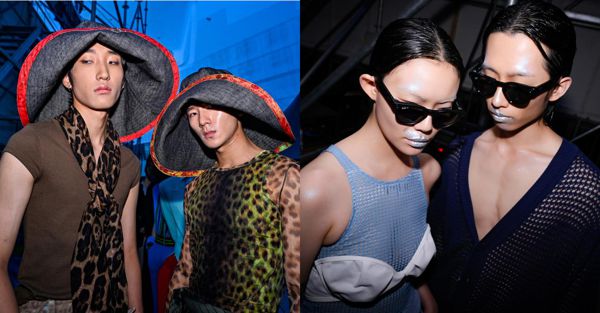
Due immagini di backstage dalla Seoul Fashion Week con i brand CARUSO e KIMOUI.

Another of the most interesting developments in recent years has been the rise of African fashion. Lagos Fashion Week, in Nigeria, is now one of the continent’s most influential platforms: founded in 2011 by Omoyemi Akerele, it celebrated its fifteenth anniversary in 2025, bringing together over sixty designers and around fifteen thousand guests. The aim is not merely to give designers visibility, but to build a system: sustainability, local production chains, market access, funding, manufacturing and training are an integral part of the project. Among the names that have helped shape the contemporary African fashion scene are Iamisigo by Bubu Ogisi, Hertunba by Florentina Agu, Kílńtàr by Michelle Adepoju, Onalaja, Orange Culture and Emmy Kasbit, all committed to reinterpreting traditional fabrics and techniques such as Aso-Oke, Adire and Ankara.

“What defines Lagos Fashion Week is the work that goes beyond the catwalk,” explains Omoyemi Akerele. “It’s about nurturing designers, and as African fashion gains greater global visibility, we must ensure that this visibility translates into real economic value on the continent. This is the central focus of *The Blueprint for a Regenerative Fashion Future*, the pan-African fashion manifesto we launched in June during London Climate Action Week. A strong and regenerative fashion system must invest in local infrastructure, protect intellectual and cultural property, tackle waste management, strengthen access to finance and markets, and recognise the value of craftsmanship and our knowledge systems. If this commitment translates into collective action, creativity can generate lasting value for African economies.”

Alongside Lagos, South African Fashion Week in Johannesburg, Dakar Fashion Week in Senegal and Accra Fashion Week in Ghana are all gaining momentum. What they have in common is the creation of their own market: an ecosystem in which sustainability, textile craftsmanship and pan-African ambition can flourish without necessarily relying on European validation.

Another long-running fashion week is that of São Paulo, which in 2025 celebrated its 30th anniversary and its 60th edition, featuring 38 brands. It is a commercial and cultural platform that showcases a diverse Brazil, characterised by biodiversity, craftsmanship and sustainability. The Brazilian fashion scene has also developed a direct engagement with social issues, ranging from the representation of Afro-Brazilian communities to the inclusion of Black, Indigenous and transgender models.

The fashion tour concludes in Korea, where the international success of pop culture has transformed Seoul into one of the most influential cities on the fashion scene. Music, TV series and social media fuel a creative ecosystem in which street style is often just as important as the catwalks. Seoul Fashion Week is now one of the key barometers of trends set to captivate the younger generations. In its Spring/Summer 26 edition, the event celebrated its 25th anniversary by transforming the entire city into a stage, set against a backdrop of historic monuments and contemporary landmarks. Cultural fusion is the common thread: established names coexist with a new generation of labels working across tailoring, streetwear and traditional Korean craftsmanship. In this context, K-pop and K-dramas act as global amplifiers just as much as the catwalk.

The new geography of fashion does not replace the four major fashion capitals, but complements them, multiplying the places where ideas, culture and desires are now generated. Creativity does not have a single centre of gravity, but rather a constellation of centres, each with its own identity that brings local roots and global ambition into dialogue. And the journey continues.

UPCOMING DATES Accra Fashion Week, 15–20 December, accrafashionweek.org. Berlin Fashion Week, 29 January–1 February, fashionweek.berlin. Copenhagen Fashion Week, 1–5 February, copenhagenfashionweek.com. Dakar Fashion Week, 1–6 December, dakarfashionweek.com. Global India Couture Week, July 2027, gicw.in. Lagos Fashion Week, 28 October–1 November, lagosfashionweek.ng. Lakmé Fashion Week, 15–18 October, lakmefashionweek.co.in. Mercedes-Benz Fashion Week Tbilisi, May 2027, mbfashionweektbilisi.com. ModaLisboa, October 2027, modalisboa.pt. São Paulo Fashion Week, 13–18 October, spfw.com.br. Seoul Fashion Week, September 2028, seoulfashionweek.org. Shanghai Fashion Week, 9–16 October, shanghaifashionweek.com. South African Fashion Week, 20–24 October, safashionweek.co.za.


Copyright reserved ©
Loading...
Loading...

Newsletter

Notizie e approfondimenti sugli avvenimenti politici, economici e finanziari.

Iscriviti