Social security and pensions

Not only university degree, the other options for redemptions with contribution peace

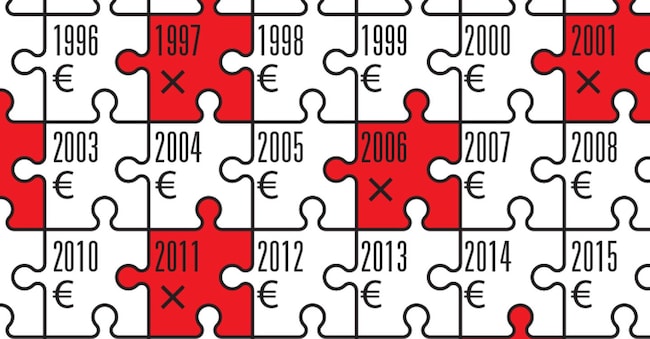
Recovering 'gap' periods is possible for all workers who have no contributions before 1996. Up to five annuities can be recovered

6' min read

6' min read

I started working in 1998 and I have gaps in my contribution statement and I am not a graduate. Are there other types of buy-back to anticipate my pension?

In addition to degree redemption, there are other forms of redemption that allow one to increase one's contribution years. One of the most innovative is that of contribution peace. The Budget Law of 2024 has in fact reintroduced, on an experimental basis for the two-year period 2024-2025, the possibility of redeeming periods uncovered by contributions.

Loading...

The question

The application for contribution peace can be submitted by those insured with the Inps, the Employees' Fund and other management schemes, including the Separate Management. Workers must not have any contributions prior to 1996 nor must they hold direct pension benefits in any pension management. Those who meet these requirements may buy back periods not covered by contributions between the first and the last credited contribution (by 2023). A person who has accrued contributions in various social security managements may choose the management in which to exercise the redemption with a maximum redeemable period of 5 years, even if not consecutive. Contribution peace may also be requested by survivors, relatives and relatives-in-law within the 2nd degree. An insured person opting for this measure must never have accrued contributions before 1996, as the acquisition of insurance seniority before that year will result in the cancellation of the redemption requested and the return of the contributions paid. Contribution peace is allowed for periods not covered by contributions in all forms of compulsory social security, including foreign ones. It is not possible to redeem periods in which work was carried out with an obligation to make contributions, even if they are not covered by contributions.

The burden of the contribution peace is calculated using the so-called 'percentage' method, applying the IVS rate in force in the insurance management where the application is made (33% for employees), on the social security taxable amount of the last 12 months preceding the date of the application.

Amount and payment

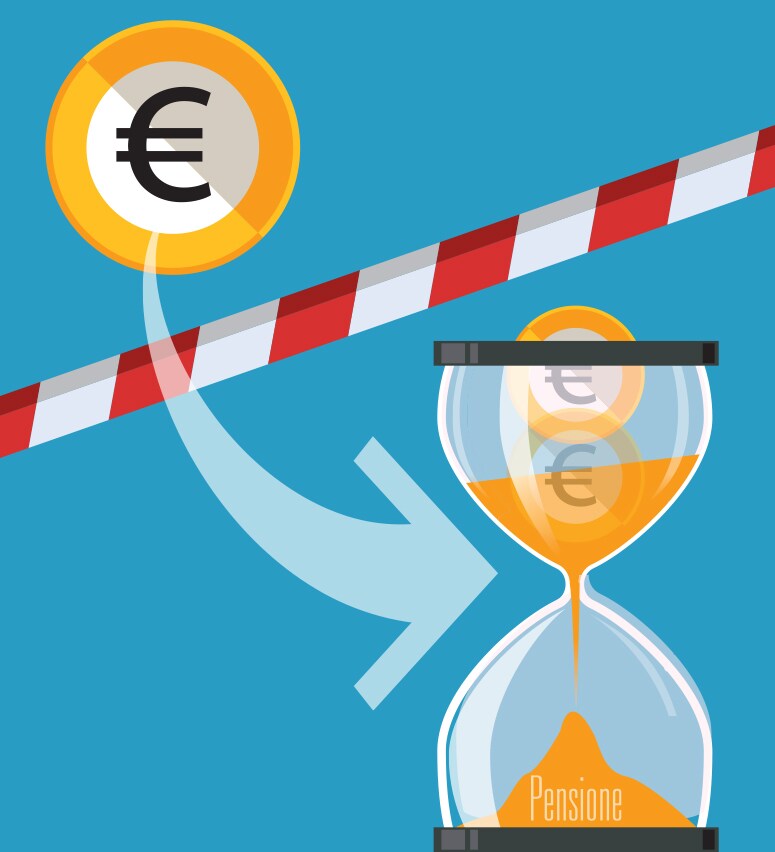
The amount must be related to the period subject to redemption and multiplied by the number of years applied for. The payment may be made in a lump sum or in instalments, without interest, in a maximum of 120 instalments of at least EUR 30 each. The instalment payment cannot be accepted if the contributions are necessary for the immediate accrual of the pension eligibility requirements and, in any case, all instalments must be paid before the retirement date. The Inps will credit the contribution statement when the balance is paid. In the event of an interruption of payments, within the deadline, a period corresponding to the amount paid will still be credited in the contribution statement. The Inps recently recalled that those who had already activated the previous edition of the contributory peace, which can be requested in the three-year period 2019-2021 pursuant to Decree-Law 4/2019, will be able to make use of it again for a maximum of a further 5 years, bringing the total number of years recovered to 10.

Fiscus

The Budget Law 2024 provides for the tax deductibility of the burden incurred for contribution peace, as is the case for degree redemption or voluntary payments; this tax benefit increases with the employee's income, often making accrual more advantageous for recipients of salary increases. The Budget Law of 2024 provided for the possibility for employers to directly bear the burden through tax-free production bonuses, subject to their conversion by the employee with full deductibility by the employer from business income. The amount payable directly by the employer will be a maximum of EUR 3,000.

The charge for work in non-contracting states is paid

.

I have worked abroad in China and the United States, is it possible to have the relevant contributions recognised for pension entitlement purposes?

The period of employment with contributions paid in the United States, a country with which Italy has a bilateral convention on social insurance, can be aggregated free of charge for the purposes of reaching a contribution requirement under Italian law. In the event a person has worked in a non-EU country that does not have a bilateral convention with Italy, such as China, it is possible to have this period recognised, for pension entitlement purposes, only after redeeming it for consideration as defined in Article 51 of Law 153/1969 and the more recent Article 3 of Legislative Decree 184/1997. The most recent regulation has extended this possibility to all employees regardless of the social security management in which they have accrued contributions. All periods of work performed abroad (excluding those related to self-employment) can be subject to redemption. In order to have the foreign contribution recognised, a telematic application for redemption must be submitted to Inps, which must be accompanied by documentation relating to the employment relationship, such as pay slips, employment contract, letters of promotion or statements from the employer. All documents must be translated and validated by the diplomatic authority of the country of origin. The charge to be paid is calculated in the same way as for a redemption of a degree: with the mathematical reserve if the requested period falls under the salary calculation system and with the percentage method if the period is generally after 1995.

Expectation, OK for recovery at worker's expense

Because of some family problems I had to request a period of unpaid leave of absence. How can I make up for this period from a pension point of view?

Law 53/2000 allows the person concerned to request a single or fractioned period of leave not exceeding two years. The leave is granted upon presentation of appropriate documentation proving the actual reason for the request. Such leave may be requested for serious reasons relating to family members up to the 2nd degree of kinship, even if not cohabiting, and to relatives or relatives-in-law up to the 3rd degree of kinship with disabilities. During this period of absence, the employee does not receive pay and does not accrue contributions. The rule allows this contribution gap to be made up with a special application for redemption, against payment, which must be submitted to Inps by filling in form AP35 and attaching dated documentation proving the serious family reasons, the period of the leave and its acceptance by the employer. This form of charge is also tax deductible.

Prescribed payment: annuity can be activated

I realised that during a period of employment between 2008 and 2010 I did not receive any contribution payments. Can I recover the relevant contributions?

In order to be able to recover the contribution omitted by the employer and as of today prescribed (placed in periods prior to the last 5 years and 10 months from the time of the application), the institution of the constitution of a life annuity is active, pursuant to Article 13 of Law 1338/62. With this form of redemption, the worker or the employer request to reconstruct the unpaid contribution by paying a charge corresponding to the pension loss caused, subject to delivery of the original dated documentation to the territorially competent Inps office. The cost will be calculated using the mathematical reserve method for periods prior to 1996 and the percentage method for contribution periods after 1995; in the latter case, the cost will be proportional to the last annual salary accrued at the time of the request. Life annuities are also available to coordinated and continuous collaborators, members of the board of directors and all insured INPS members who are not directly responsible for their contribution payments.

Sabbatical year, more options to close contribution gaps

I had a sabbatical year from work for personal reasons. Can I make up for this lost period from a contributory point of view?

In order to understand whether or not it is possible to make up for this contribution gap, it is first necessary to verify the presence or absence of contributions credited before 1 January 1996. If there is even a single contribution credit before that date, it is not possible to cover this contribution gap. If there is no contribution credit before 1.1.1996, it is possible to resort to contribution peace, bearing in mind, however, that it is an experimental measure, introduced by Law 213/2023 for the two-year period 2024-2025. If the insured person meets the requirements, he/she may redeem the sabbatical year, for a maximum of 5 years, even if not continuous, subject to payment of a charge calculated using the 'percentage' contribution method linked to the last annual salary, as a lump sum or in instalments up to a maximum of 120 instalments, without interest. The charge is tax deductible. If, on the other hand, professional training, study or research courses were attended during the sabbatical year, aimed at acquiring professional qualifications or skills for employment or career progression, it is possible to apply for redemption if the qualification or certificate has been obtained, even for those with contributions prior to '96; Article 6 of Legislative Decree 564/1996 provided for this form of redemption only for training periods after 31.12.1996.

Copyright reserved ©
Loading...

Brand connect

Loading...

Newsletter

Notizie e approfondimenti sugli avvenimenti politici, economici e finanziari.

Iscriviti