
Not only Kiev: all obstacles on the road to EU enlargement
Hungary continues to prevent the opening of the first negotiation chapter with Ukraine, and the knot is also slowing Moldova's path. More generally, however, several member states are cautious about further enlargement of the European Union to countries that are seriously lagging behind and lacking reforms to EU governance
from our correspondent Beda Romano
 Aggiungi Il Sole 24 Ore
ai preferiti su Google
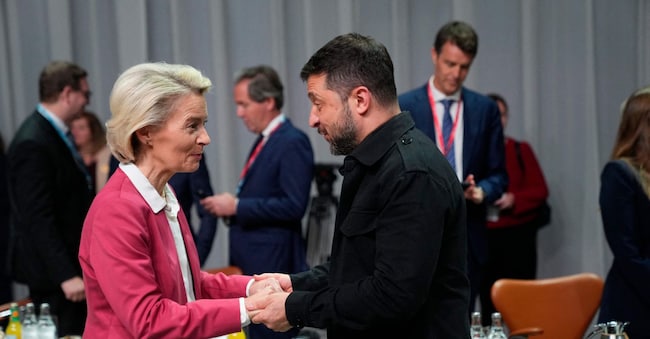
BRUSSELS - Once again, European leaders a few days ago greeted Ukrainian President Volodymyr Zelensky with kisses, hugs, and tributes of trust and solidarity. Three and a half years after the outbreak of war with Russia, European support for Kiev, albeit between highs and lows, has never been lacking. At the same time, the promise of rapid EU membership has been lacking. The obstacles posed by Hungary are only the most obvious.
At the meeting of the European Political Community in Copenhagen last Thursday, Prime Minister Viktor Orbán confirmed that for the time being he does not intend to give his approval to the opening of the first negotiation chapter (dedicated to the rule of law). EU rules provide for unanimous agreement. In fact, Budapest is vetoing it: "Accession is too much," said the prime minister in Denmark, "We just need a strategic agreement.
Formally, Hungary blames Kiev for not fulfilling its commitments to protect the rights of the Hungarian minority in Ukraine, a total of 100-150 thousand people. In domestic politics, Prime Minister Orbán counts on the support of the many Hungarians abroad, a legacy of the country's division after the Great War. Many observers attribute Hungary's rigid stance to the campaign in the run-up to the April 2026 elections and the attempt to wrest away currently frozen European funds.
In June, the government organised a non-binding consultation. According to the prime minister himself, 95 per cent of the voters were against Kiev's accession (2.27 million people took part in the vote, one third of the electorate). The results are difficult to assess as the government did not allow the consultation to be monitored. In the past, the Friedrich Naumann Stiftung, a liberal German foundation, had called these consultations 'marketing campaigns'.
The Hungarian veto against Kiev's enlargement is also penalising Moldova. The two countries go hand in hand, due to the political will of the Twenty-Seven who, for the time being, do not want to separate the paths of Kiev and Chișinău. The two are former Soviet republics, and it is feared that a so-called decoupling would weaken Ukraine politically on the international stage. Theoretically, the first negotiation chapter concerning Moldova could be opened as Budapest is not vetoing it.


