
Not just big companies: the Mattei Plan finally opens up to the third sector
Aics 2023 tender money ready: Fairtrade Italy will use it to develop sugarcane production in Malawi

3' min read
3' min read
There are the construction of water networks for sugar cane producers in Malawi and the training of livestock workers in Tunisia. The revival of agricultural supply chains destroyed by the civil war in Ethiopia and the development of agroforestry supply chains in Colombia. A year and a half after its launch, the Mattei Plan launched by the Italian government to support development in Africa is finally getting down to the business of financing third sector projects as well. The Italian Agency for Development Cooperation has recently published the ranking list of the AICS 2023 call for proposals, with which over 118 million euros have been allocated to sixty development projects, submitted partly by local authorities - municipalities and regions - and partly by civil society organisations. The deadline for submitting proposals was 10 June 2024, and now that the ranking list has been published, three-year funding, averaging two million euros per project, can start.
Until now, the Mattei Plan, whose endowment is 5.5 billion for four years, had mainly served as a cap for public-private partnership agreements signed by large Italian companies: Eni, Terna, Bonifiche Ferraresi. According to the Cpi Observatory of the Catholic University of Milan, which monitors public accounts, as of 30 April 2025 only 600 million of the ceiling established for the Mattei Plan had been allocated. Projects concerning agriculture constitute the second most financed chapter through the plafond, right behind training.
Now, thanks to the AICS call for proposals, the Italian government's support for the African continent is finally expanding beyond the perimeter of companies. Among the projects that have received funding, for example, is the plan for the development of farmers' markets in Albania devised by the metropolitan city of Bari. The municipality of Cremona, on the other hand, with its strong vocation for livestock farming in its countryside, has presented a programme for the training of livestock farmers in Tunisia. The Friuli Venezia Giulia Region is focusing on supporting coffee producers in southern Tanzania. Among the NGOs that focus on the agricultural development of African communities, Action Aid will deal with female entrepreneurship in the shea sector in Mali, while Icei has a plan for the development of the agro-forestry sector in Colombia.
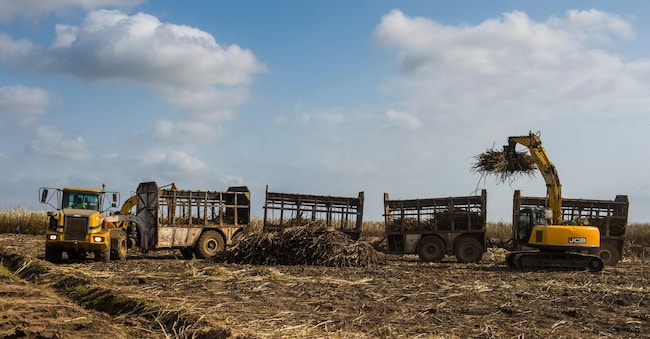
Last year Fairtrade Italia also took part in the AICS call for proposals: 'We are the leader of a project to help producers of sustainable sugar cane in the countryside of Malawi,' says the organisation's managing director, Paolo Pastore. We are already working with some cooperatives in the area, three to be exact, which bring together some 3,500 small farmers, each with a maximum of 3 hectares of land available to cultivate'. Thanks to funding from the AICS call for tenders, two million euro over three years, Fairtrade Italia will build a plant to manage the local water network. 'The goal,' explains Pastore, 'is both to make water drinkable for the population and to create an efficient distribution network of water resources in the fields, thus increasing sugarcane productivity. Malawi, in fact, has not only drought problems, but also inefficient management of resources when they are available: there are periods of the year when there is significant rainfall, but there is no system for collecting this water. Fairtrade Italia will therefore build both the settling tanks and the filtration systems.
The project in Malawi will start by the end of the summer: 'The activities on site will be managed by Fairtrade Africa,' explains Pastore, 'while Fairtarde Italia will supervise the project. The sugar produced by the three cooperatives will instead be put on the market through our Fairtrade circuit. The work on the water system will allow the farmers to produce all year round, instead of only in certain seasons, and this will significantly raise their productivity and income'. A local company is also part of the project: "It is an agricultural partner of the local cooperatives," explains Managing Director Pastore. "In fact, we have to be sure that the new drinking water facilities are suitable for the climate in Malawi, and above all that the local population is then able to manage them themselves all year round.


