Holland

Dutch Design Week 25, a quarter-century-long laboratory of forms and materials

On its 25th anniversary, the Eindhoven exhibition brought together 2500 designers and 300,000 visitors under the theme 'Past. Present. Possible'

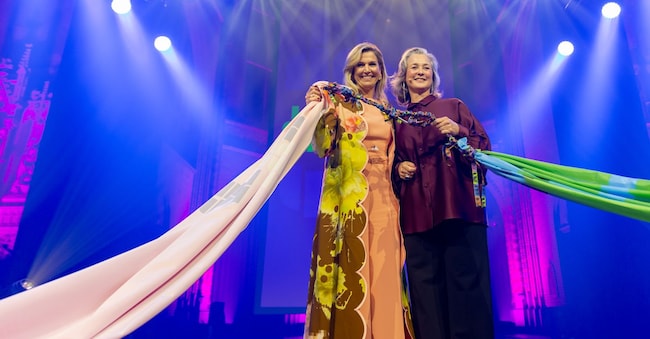
by Enrico Marro

La regina d’Olanda Máxima e la direttrice creativa Miriam van der Lubbe inaugurano la 25° edizione della Dutch Design Week.

4' min read

Translated by AI
Versione italiana

4' min read

Translated by AI
Versione italiana

"Past. Present. Possible". Past, present and possible: ever more proudly experimental from the title, in its 25th edition the Dutch Design Week in Eindhoven brought together more than 2500 designers scattered across 120 locations in the city (from former factories to streets and squares) and hosted some 300,000 visitors over nine days of exhibition.
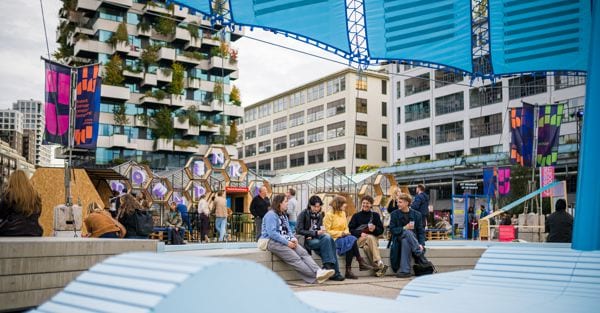
Nella sua 25° edizione, la Dutch Design Week di Eindhoven ha riunito oltre 2500 designer sparsi in 120 luoghi della città (da ex fabbriche a strade e piazze) ospitando circa 300mila visitatori in nove giorni di esposizione.

At the dawn of its first quarter century, one of Northern Europe's most important exhibitions has now become more than ever a huge open-air laboratory on forms, materials and technologies.

Loading...

A unique ecosystem in Europe

"We started in 2001 with what was then called the Design Event: thirty designers and maybe a thousand visitors," explains Miriam van der Lubbe, one of the founders of Design Week and creative director of the event, to Il Sole 24 Ore.
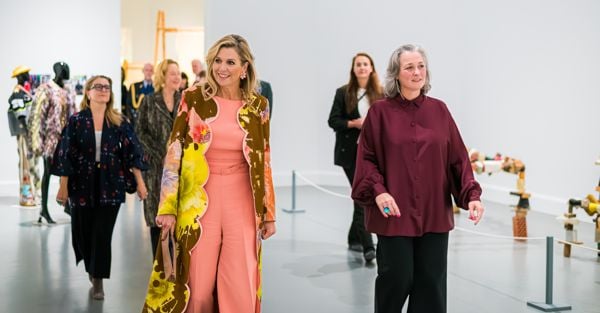
Miriam van der Lubbe (a destra), tra le fondatrici della Design Week nonché direttrice creativa della rassegna, accompagna la regina d’Olanda Máxima tra i padiglioni della rassegna.

"Those were the years when Eindhoven was reborn after the economic crisis of the early 1990s. There was a lot of desire to do and a lot of space in the former factories available. We wanted to create a different exhibition than in Milan, less product-centred.
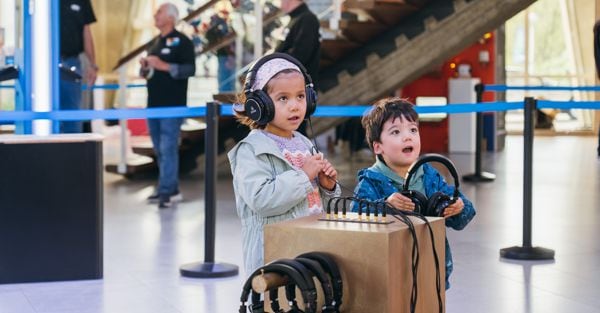
«Con la Dutch Design Week resteremo concentrati su Eindhoven - chiarisce van der Lubbe - sempre aperti alla sperimentazione: punteremo sulla qualità anziché sulla quantità, continuando a fare crescere questo ecosistema unico in Europa».

"The future? We will remain focused on Eindhoven," van der Lubbe clarifies, "without dispersion to other locations, and always open to experimentation: we will focus on 'density' and quality rather than quantity, continuing to grow this unique ecosystem in Europe.
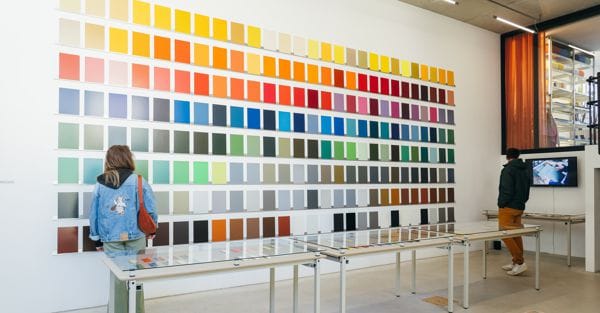
La rassegna olandese ha debuttato a Eindhoven nel 2001 con il nome di Design Event, puntando su un approccio sperimentale e sul social design senza dimenticare comunque il prodotto.

Hollis+Morris, Canadian light and Dutch fabrics

The Dutch exhibition is truly huge.

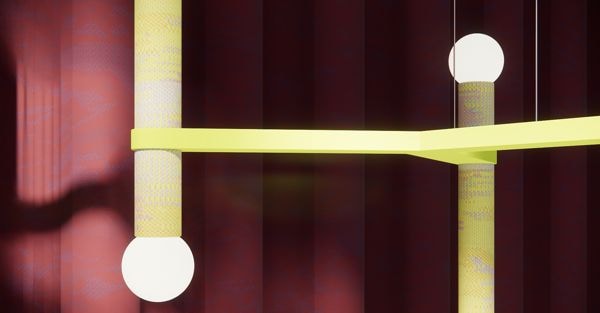
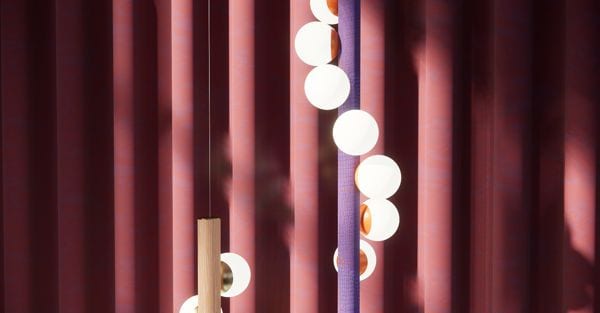
On the product side, the most interesting exhibits include Fabric Light: A Tactile Dialogue Between Material and Atmosphere, a collection resulting from the partnership between the Canadian design studio Hollis+Morris (making its debut in Eindhoven) and the Dutch textile innovation company Byborre.

Uno dei pezzi di Fabric Light, collezione frutto della partnership tra lo studio canadese di design Hollis+Morris (al debutto a Eindhoven) e la textile innovation company olandese Byborre.

The result, exhibited in the interior of The Social Hub hotel, arelighting systems with clean and essential shapes, rooted in the tradition of both craftsmanship and new technologies of sustainability.

The result of interdisciplinary design that has fun experimenting by embracing lighting, architecture and fashion.

La collaborazione tra Hollis+Morris e Byborre ha dato vita a sistemi di illuminazione dalle forme pulite ed essenziali, frutto di una progettazione interdisciplinare tra luce, architettura e fashion.

R100: five designers and lots of aluminium

Intriguing then are the shapes forged by R100, a project created by Norwegian aluminium giant Hydro.

The idea was to unite five designers from different backgrounds (Sabine Marcelis, Keiji Takeuchi, Cecilie Manz, Daniel Rybakken and Stefan Diez) and put them to work on recycled aluminium made from the demolition of greenhouses, the casting of old light poles and more generally from scrap.

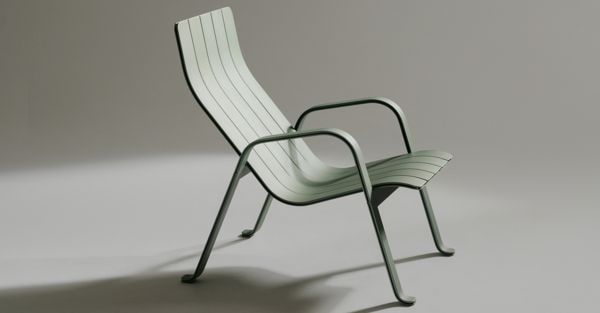
Dalla collezione R100, le sedute modulari per esterni Profil disegnate dal giapponese Keiji Takeuchi (foto di Einar Aslaksen).

Hydro did not set any limits in terms of extrusion press size or type of product: the only self-imposed condition was that the entire process (from the collection of aluminium scrap to smelting and production) took place within a 100 km radius.

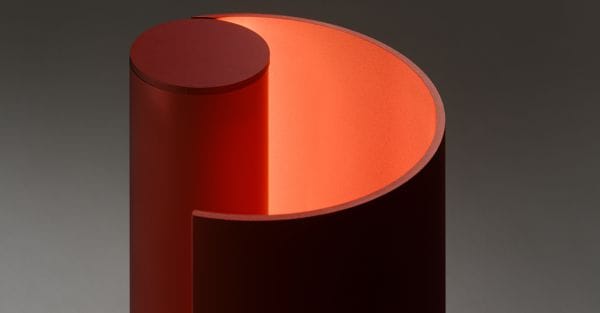
Sempre da R100, un dettaglio delle lampade Orbit Light firmate dall’olandese Sabine Marcelis: eleganti contenitori di luce dalle forme fluide e profonde (foto di Einar Aslaksen).

The result is a collection that transforms the industrial processing of aluminium into flair and creativity, starting with the splendid Orbit Light lamps by Dutch designer Sabine Marcelis: light containers with deep, fluid shapes that transform simplicity into elegance.

Not forgetting Profil, the refined modular outdoor seating by Japanese Keiji Takeuchi.

A Conversation Chair

Interesting interior furnishings were displayed in the Forward Furniture exhibition, housed in two thousand square metres of a former dairy factory.

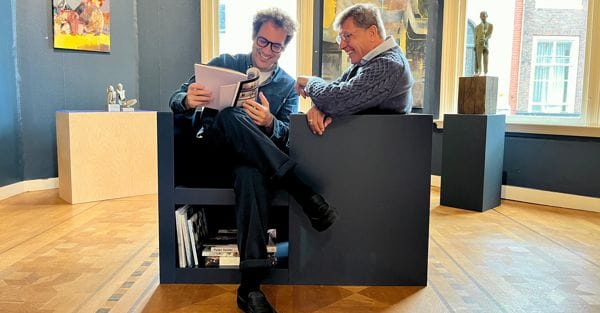
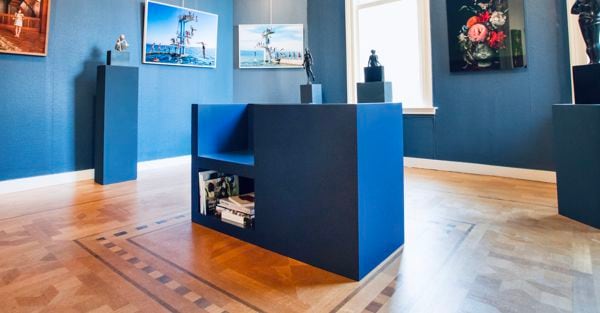
La Sedia da Conversazione scomponibile e trasportabile disegnata da Carmine Papa (a sinistra nella foto) su commissione della galleria d’arte privata De Twee Pauwen, una delle maggiori d’Olanda (a destra il gallerista Lucas van Hasselt).

Prominent among these is the Decomposable and Transportable Conversation Chair designed by Carmine Papa on commission from the De Twee Pauwen private art gallery, one of the largest in the Netherlands.

La creazione di Carmine Papa permette a due persone di accomodarsi fianco a fianco - pur guardando in direzioni diverse - in un dialogo silenzioso, approfondito dalla libreria integrata sotto la seduta.

More than a bench, it is a "sculptural exploration of shared experience", as the designer explains, allowing two people to sit side by side while looking in different directions in a silent dialogue, deepened by the integrated bookcase beneath the seat.

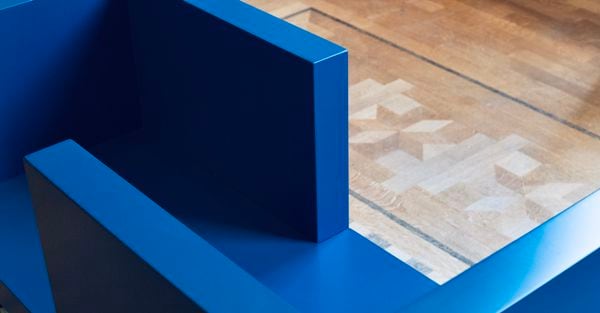
Dall’alto la forma a zig zag della Sedia da Conversazione richiama quella dei tradizionali ponticelli giapponesi ad angolo, creati per bloccare i demoni.

The shape from above recalls that of the traditional Japanese angled bridges, created to block demons.

An invitation to sit, observe and connect that can be declined in a thousand environments and materials, from street furniture to interior design, from wood to marble.

Fighting attention deficit

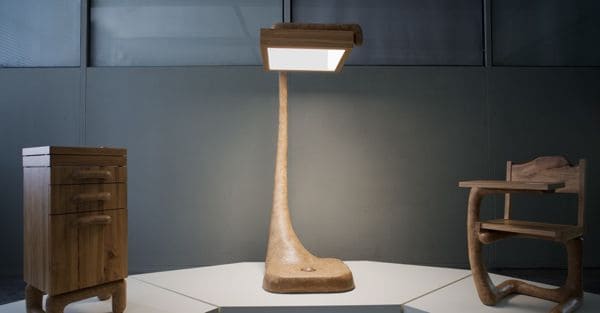
The young Stijn Weski, on the other hand, offers a collection in cherry wood dedicated to people with Attention Deficit Disorder (Adhd): the floor lamp has illuminations in different colours, as do the sideboard drawers.

Le creazioni in legno di ciliegio di Stijn Weski, progettate per persone con Disturbo da Deficit di Attenzione (Adhd): la lampada da terra ha luci con colori differenti, così come i cassetti della credenza.

Ancient Rome without marble

The work ofJordan Artisan, a former carpenter and expert in materials research, harks back to ancient Rome: in his creationsmarble is replaced by construction waste.

Jordan Artisan con uno dei suoi pezzi ispirati all’Antica Roma: il marmo viene però sostituito dagli scarti di lavorazione dei cantieri, conferendo ai materiali una leggerezza e consistenza inedite.

The result is pieces with unprecedented shapes and materials, even made-to-measure, that appear to be marble-like but are in reality very light even if very robust.

Noa Haim, between design and play

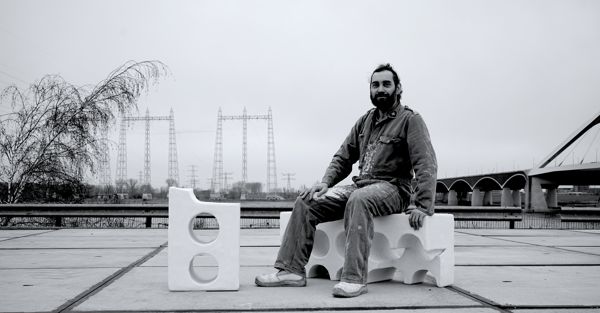
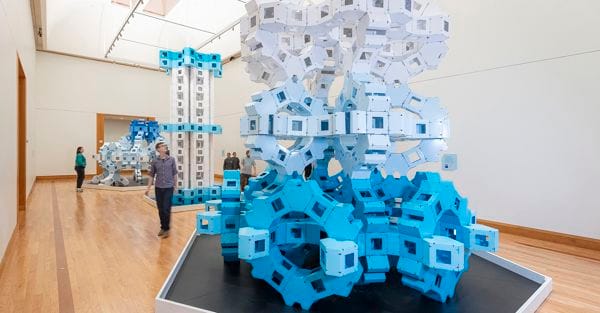
The Collective Paper Aesthetics collection by Noa Haim is playful: a fun and colossal family "lego" in which tetrahedral or octahedral honeycomb-shaped cardboard "bricks" can be combined freely, creating interior furnishings, including chairs and lamps.

I Collective Paper Aesthetics firmati da Noa Haim, qui nella versione esposta a Eindhoven nello spazio Kazerne dopo aver debuttato in Alaska all’Anchorage Museum.

Infinity, when the chair becomes circular

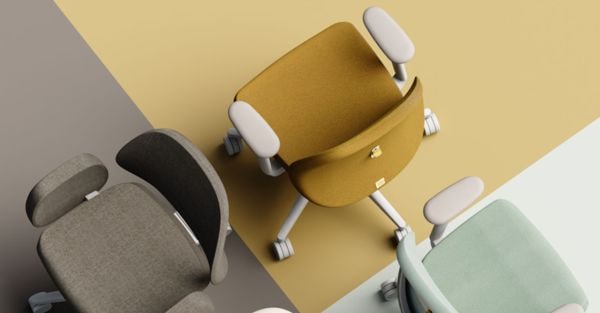
Inside the Klokgebouw, a former Philips factory converted into an exhibition space, the Infinity collection by No-em stands out: office chairs with minimalist and sustainable lines that make circularity their banner.

La collezione Infinity di No-em: sedute da ufficio dalle linee minimaliste e sostenibili che fanno della circolarità la loro bandiera.

So much so that it is possible not only to buy them, but also to rent them and then return them to the manufacturer for a second life.

The biogeometry of Gløe lights

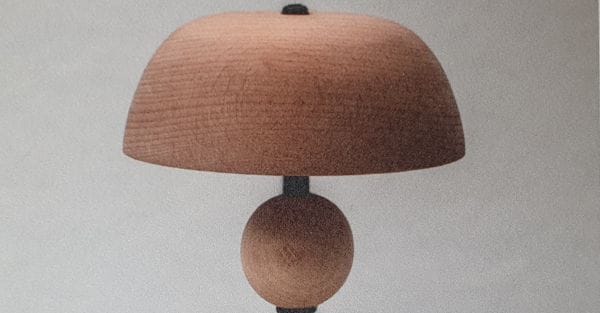
Then the Gløe collection by the young Floor Anne Schram stands out for its elegance: a series of modular lamps - table, floor and pendant - inspired by biogeometry, an emerging discipline that combines modern science and technology with sacred geometries (circle, square and triangle) to create spaces of well-being and positive energy.

Un dettaglio di una lampada della collezione Gløe, firmata della giovane Floor Anne Schram: si ispira alla biogeometria, disciplina emergente che unisce scienza e tecnologia moderne con geometrie sacre per creare spazi di benessere ed energia positiva.

Sill Bench, return to the Belgian stone

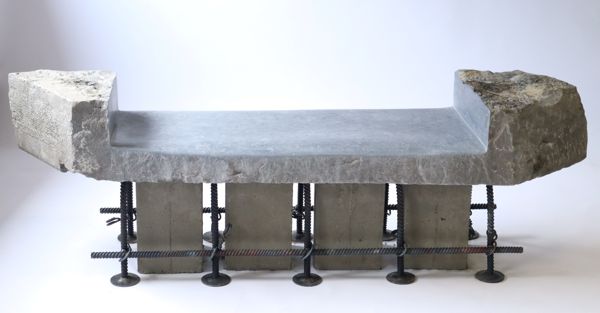
Decidedly more massive is the Sill Bench by Stijn Jean Vos: it represents an explicit homage to the Petit Granit, the traditionalBelgian limestone once present in every home (on windowsills, stairs, worktops) and nowadays unjustly forgotten in favour of cheaper and less sustainable materials such as concrete.

La Sill Bench di Stijn Jean Vos: rappresenta un omaggio esplicito al “Petit Granit”, la tradizionale pietra calcarea belga un tempo presente in ogni casa.

Copyright reserved ©
Loading...

Brand connect

Loading...

Newsletter RealEstate+

La newsletter premium dedicata al mondo del mercato immobiliare con inchieste esclusive, notizie, analisi ed approfondimenti

Abbonati