
Leuven 'the learned' celebrates six hundred years of university among art, science and beer
The city in Flanders celebrates one of the oldest universities in Europe: a journey through history among libraries, colleges, churches, gardens and castles

Key points
In six hundred years, it has enjoyed founding the modern scientific anatomy with Andrea Vesalio (in 1543), drawing one of the most famous maps of our planet with Gerardo Mercatore (in 1569), and discovering the theory of the Big Bang with the cosmologist-priest Georges Lemaître (in 1931), a fascinating figure poised between science and faith and great friend of Albert Einstein.
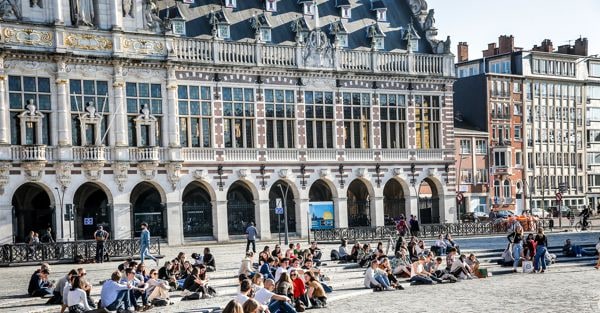
Studenti davanti alla nuova Biblioteca Universitaria di Lovanio, inaugurata nel 1928 (foto di Rob Stevens).
The University of Louvain, one of the most anthropic universities in Europe and the first in the Benelux, which will be blowing out sixty-six hundred interminable candles in a little over a month's time, has not missed a beat: the bull with which Pope Martin V established the Studium generale Lovaniense at the request of the Duke of Brabant dates back to 9 December 1425.
A six-hundred-year history
A university that has grown hand in hand with its host city: cultured, refined, curious, projected into the future.
Eternallyyoung by choice and vocation, but also a brain magnet since time immemorial: let us mention, among others, Erasmus of Rotterdam, the humanist Tommaso Moro, the philosopherJustus Lipsio (but the list would be eternal).
Eternamente giovane per scelta e per vocazione, Lovanio è una città universitaria colta, raffinata, curiosa, proiettata nel futuro (foto di Joel Hoylaerts).
In other words, Leuven, a quarter of an hour's train ride from Brussels, is a must-see pearl in the Flemish jewellery box of the tourist with a fine palate. Impregnated with history to the core in every corner, starting of course with the university buildings.
The ancient University Hall
The oldest university building is the Gothic University Hall in Naamsestraat, built in 1317 as a covered cloth market and also used from 1425 by the newly founded university, in a unique two-century-long cohabitation between students and merchants.
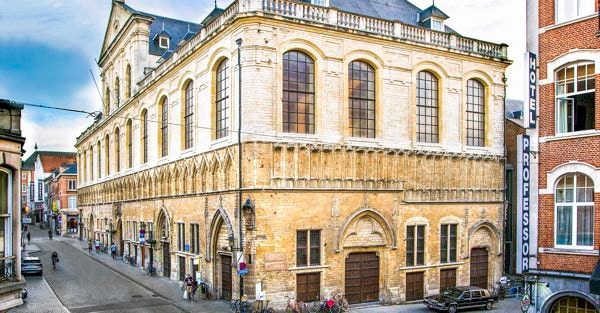
La University Hall di Naamsestraat, costruita nel 1317 come mercato coperto di tessuti e utilizzata dal 1425 anche dal neonato ateneo: fino al 1914 ha ospitato l’enorme biblioteca universitaria (foto di Rob Stevens).
Since 1630, the Rega wing of the palace has housed the monumental library, later extended over two floors, built with donations from monasteries and private individuals.
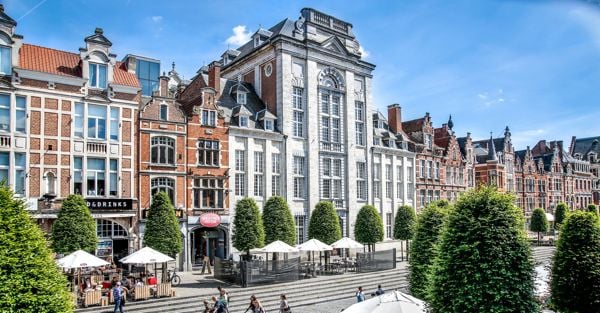
La facciata posteriore della University Hall, affacciata sull’Oude Markt, la lunga piazza del Mercato di Lovanio con decine di caffè e boutique (foto di Rob Stevens).
It was spectacular: inlaid oak bookcases, polished parquet floors, sumptuous stucco ceilings and life-size reproductions of the most famous Greek sculptures, starting with Nike. But it all went up in smoke in 1914.
The Martyrdom of Louvain
It was midsummer, on 25 August 1914, but from the sky a black, gloomy snow began to fall on the city: it was the ashes of the more than 300,000 books (including 250 medieval manuscripts) of the Library of the University of Leuven in the Naamsestraat, burned by the German imperial troops.
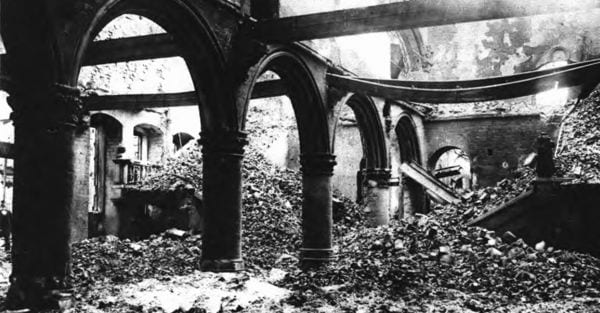
I resti dell’antica Biblioteca Universitaria dopo essere stata bruciata dalle truppe tedesche nell’agosto del 1914: vennero distrutti oltre 300mila volumi, compresi 250 manoscritti medievali.
In two days of violence the Kaiser's soldiers killed 248 civilians, destroyed over 1100 houses and expelled or deported the majority of the population (42,000 inhabitants) to Germany in one of the most effective war crimes of the First World War.
Leuven became a symbol with his martyrdom. And from the ashes of that tragedy one of the new symbols of the city was born: the new Library.
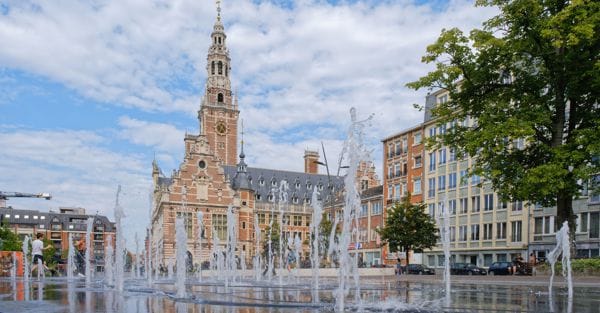
La nuova Biblioteca di Lovanio: costruita in sette anni in uno stile oscillante tra il Rinascimentale e il Barocco su progetto dell’americano Whitney Warren, è dominata da una torre di oltre 80 metri (foto di Filip Van Loock).
The New Library "made in the USA"
It seems ancient, but it wasinaugurated on 4 July 1928: a date not coincidental, given that it was theUnited States (starting with the future president Hoover) that was personally involved in financing a new library, with a colossal worldwide crowdfunding operation ante litteram that also involved Japan.
Built in seven years in a style oscillating between Renaissance and Baroque to a design by the American Whitney Warren, it is dominated by an 80-metre-plus tower with a 63-bell mega-carillon to be reached after 289 steps to enjoy the panorama of the medieval city.
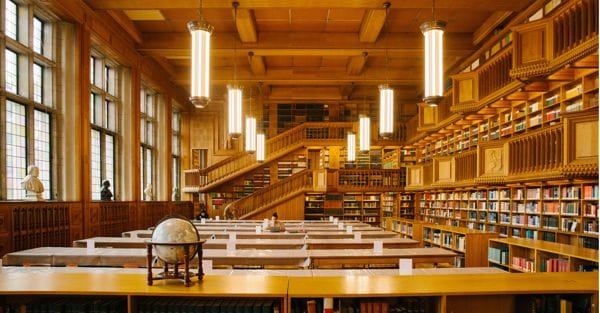
L’enorme sala di lettura: lunga 44 metri, tutta in rovere, ospita su due piani buona parte del patrimonio librario della biblioteca (foto di Kevin Faingnaert).
The 44-metre-long reading room, all oak, on two floors, which houses a large part of the library holdings, is splendid.
In turn destroyed by the Nazis in 1940, who burned over 900,000 volumes, the new library was rebuilt and reopened in 1951.
On the square, a statue of a warrior Madonna, whose sword pierces an eagle, the symbol of Germany. Lest we forget.
The Hidden Pearls: The Ancient Colleges
But the real surprise of university Leuven are the colleges, the backbone of knowledge in the city.
They began popping up as early as the 15th century, soon after the foundation of the university: before the French Revolution there were already 45.
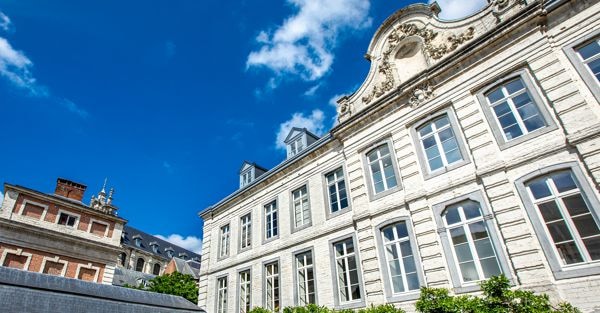
Il Premonstratensian College, ricostruito in stile rococò a metà Settecento: qui visse da studente e insegnò da docente Georges Lemaître, padre della teoria del Big Bang (foto di Rob Stevens).
Splendid palaces, founded by religious orders, by professors, by wealthy families: they did not serve as lecture halls but as lodgings and dormitories for thousands of students, sometimes even for some professors.
In all of them we find chapels, cellars, sometimes small (so to speak) libraries
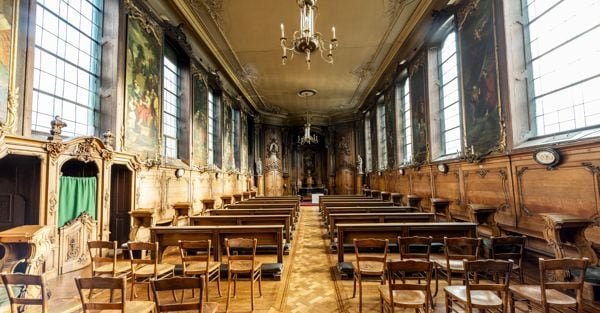
La cappella dell’Hollands College: risale alla seconda metà del Settecento e ospita un’Adorazione dei Magi della scuola di Rubens (foto di Rob Stevens).
Hollands College, survivor of Napoleon and Hitler
The most interesting?
There is the Hollands College with its neoclassical flavour, founded in 1616 for Dutch students from Haarlem, withthe city's only Library that survived Napoleon, the Kaiser and Hitler, and with a delightful chapel from the second half of the 18th century in which an Adoration of the Magi by the school of Rubens stands out.
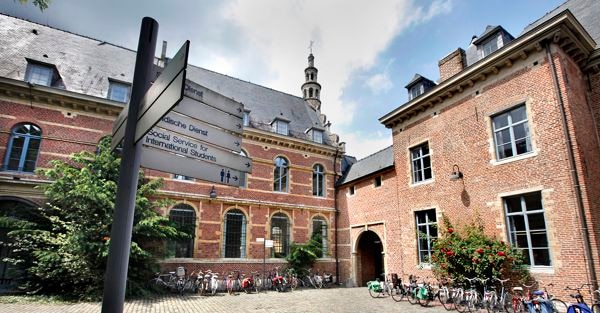
Uno dei cortili interni del Van Dalecollege, fondato nel 1569 per gli studenti poveri di Anversa (foto di Rob Stevens).
The Van Dalecollege, a piece of Italy
Or the Van Dalecollege, founded in 1569 for poor Antwerp students engaged in the fields of theology, philosophy or canon law: it has an exquisitely Renaissance style, similar to the Hospital of the Innocents in Florence and with a dome reminiscent of the Bramante in the temple of San Pietro in Montorio.
The Big Bang at Premonstratensian College
Or the Premonstratensian College, rebuilt in the Rococo style in the mid 18th century, where Georges Lemaître, the father of the Big Bang theory, lived as a student and taught as a lecturer. Today it is home to the Faculty of Economics and Business.
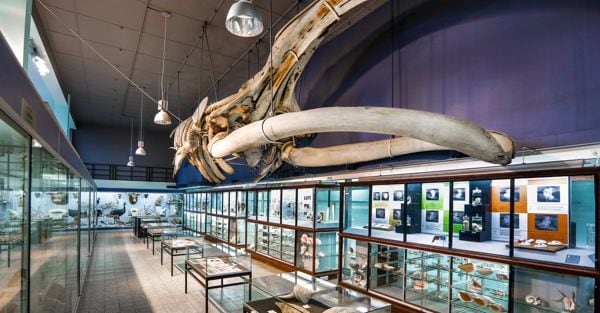
Il Museo universitario di Zoologia, ospitato all’interno del neoclassico King’s College (foto di Rob Stevens).
Not to be forgotten is the King's College, founded in 1579 at the behest of Philip II, rebuilt in 1770 in the neoclassical style: today it houses the faculty of zoology with its small museum.
Sleeping in the Pope's College
And there is also the U-shaped Pope's College, built in 1523 for theology students by Adrian VI, the only Dutch pope in history and the last foreigner before Wojtyla, pope for only twenty months.
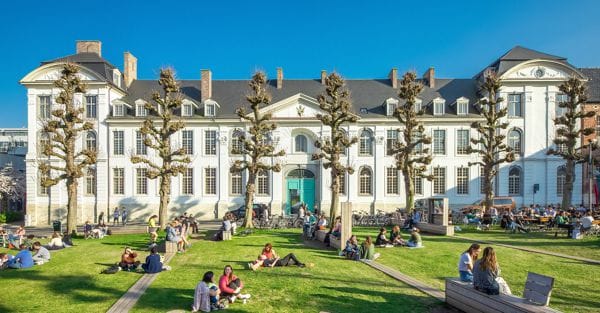
Il Collegio del Papa, voluto nel 1523 per gli studenti di teologia da Adriano VI, unico pontefice olandese della storia: ancor oggi ospita duecento studenti (foto di Rob Stevens).
We can admire the palace in its late 18th-century version with an Austrian flavour, with two hundred students still having the lucky to sleep within those walls.
Sixteen works of art en plein air
Six hundred years and counting. To celebrate them, since May, Leuven has created a permanent en plein air, "And So, Change Comes in Waves", with sixteen works (eight installations and eight poems) resulting from the dialogue between over seventy scientists and a group of artists.
"The creators in their works focused on a scientific element," explains curator Heidi Ballet, "on the questions the university is trying to answer: for example, how can education be more inclusive? Or: what is the power of not knowing?"
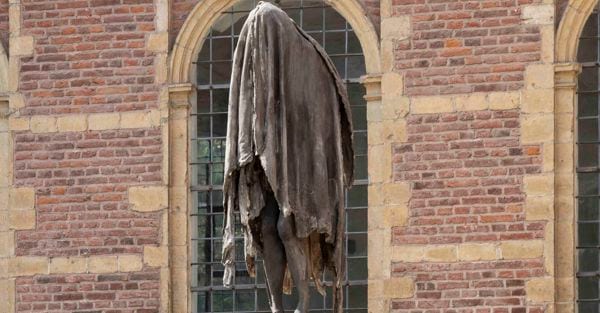
L’“Arcangelo” scolpito da Berlinde De Bruyckere nel cortile del Van Dalecollege per riflettere sul tema della resilienza (foto di Marijke Kindt).
The Archangel of Berlinde
Among the most intriguing works is the imposing 'Arcangel' sculpted by Berlinde De Bruyckere in the courtyard of the Van Dalecollege to reflect on resilience: a figure poised between suffering and consolation, without a halo or a face, covered as it is by a fleece, with a hump between the shoulders that reveals hidden wings.
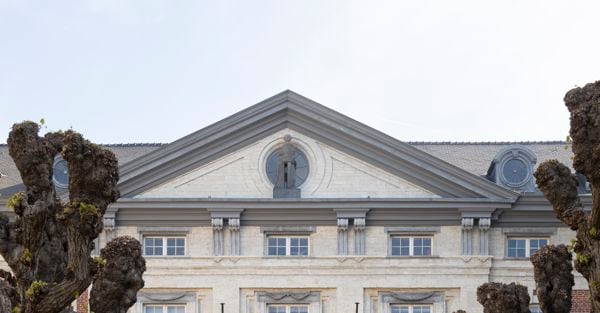
“The Majestic”, l’opera con la quale Ugo Rondinone indaga il rapporto tra natura e vulnerabilità umana: si erge in alto sulla facciata del College De Valk (foto di Marijke Kindt).
Nature according to Rondinone
Or 'The Majestic', the work with which Ugo Rondinone investigates the relationship between nature and human vulnerability: he is inspired by hoodoos, or earth pyramids, a geological phenomenon in which erosion creates subtle spires in the landscape.
The sculpture stands high on the façade of the De Valk College, from where it observes the daily hustle and bustle of the courtyard. An elevated position transforms it into a mythical, timeless presence.
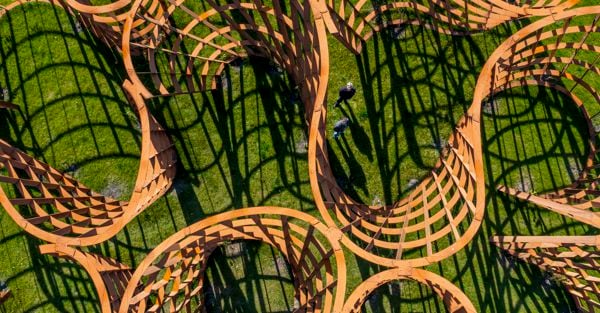
Un dettaglio dall’alto di “Wandering Garden”, creata dal duo Gijs Van Vaerenbergh all’interno del Castello di Arenberg: un’installazione vorticosa e piena di energia che rappresenta un omaggio al concetto settecentesco di labirinto (foto di Jan Crab).
The forest maze in the castle
Or the imposing Wandering Garden, created by the duo Gijs Van Vaerenbergh inside the splendid Arenberg Castle, now the KU Leuven science campus: hundreds of metres of curved steel grids forming a labyrinth that - thanks to climbing plants - will turn into a forest, allowing the work to evolve with the rhythm of the seasons.
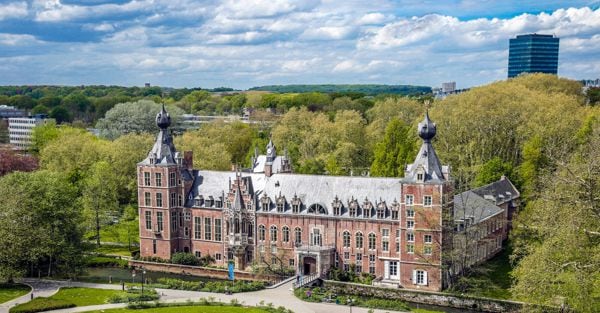
Il Castello di Arenberg, che ospita l’installazione “Wandering Garden”: oggi è il campus scientifico dell’Università di Lovanio (foto di Rob Stevens).
A swirling, energy-filled installation that is a homage to the 18th-century concept of the labyrinth, synonymous with personal quest, mythology, love or intrigue.
The structure is covered with more than hundred different species of climbing plants, from the most common (edera and wisteria) to rarities (the 'Dutch pipe' or the chocolate vine).
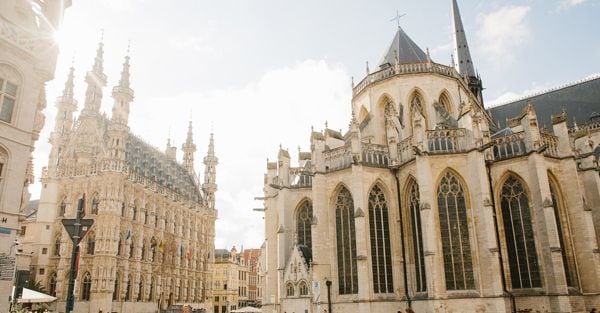
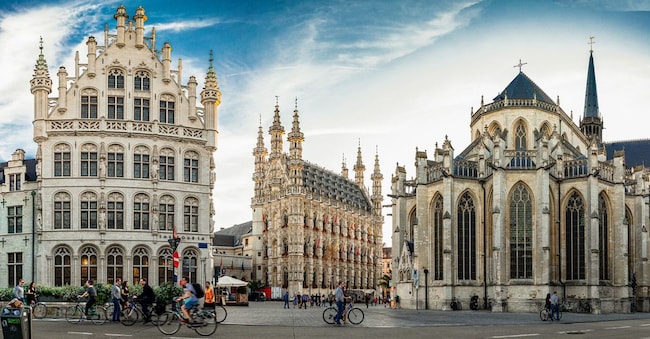
A destra la Chiesa di San Pietro, patrimonio Unesco dal 1999, a fianco del Municipio (foto di Kevin Faingnaert).
San Pietro, Unesco masterpiece
So far the university. But Leuven is much more. All to be discovered, for example, the churches.
Starting with the splendid St. Peter's, Unesco World Heritage Site since 1999, built in 986 and turned Gothic in the 15th century: it houses the Ultima Cena (1468) and the Trittico del Martirio di San Erasmo (1460), both from the brush of Dieric Bouts, and an ancient Romanesque crypt.
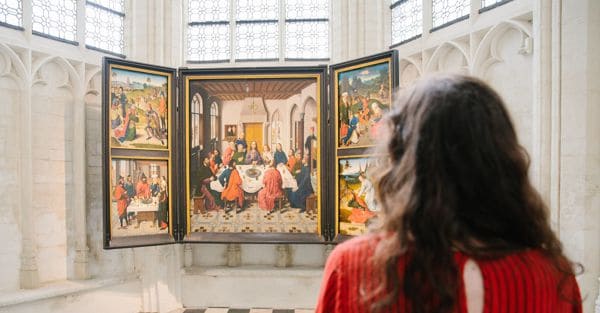
L’Ultima Cena (1468), celebre opera di Dieric Bouts conservata nella Chiesa di San Pietro (foto di Kevin Faingnaert).
Or the nearby baroque Church of San Michele, built in 1650: it is inspired by the Chiesa del Gesù in Rome.
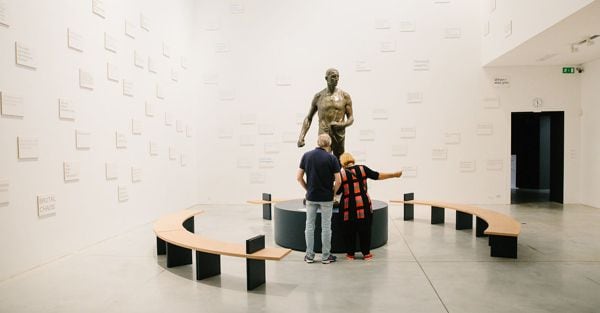
L’interno dell’avveniristico museo M, disegnato dal belga Stéphane Beel e inaugurato nel 2009: ospita 46mila opere di ogni epoca (foto di Kevin Faingnaert).
The futuristic M Museum
Lovers of contemporary art will find what they are looking for in the adventurous M museum, designed by Belgian Stéphane Beel and inaugurated in 2009: it houses 46,000 works from all eras, with masterpieces by Dieric Bouts or Rogier van der Weyden but also intriguing acoustic installations such as Brahim Tall's.
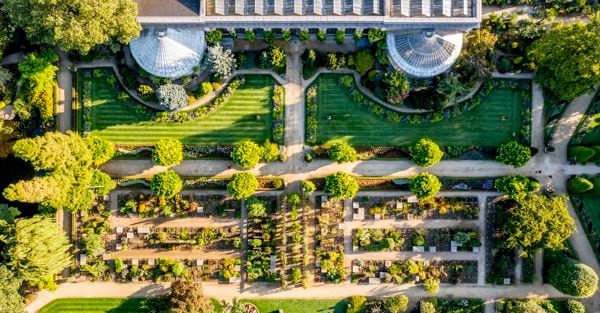
Un’immagine dall’alto del Giardino Botanico, il più antico del Belgio: due ettari di storia, di architettura e di botanica (foto di Jan Crab).
Between Botanical Garden and Beghinaggio
Finally, don't forget the Botanic Garden, the oldest in Belgium, established in 1738. Two hectares of history, architecture, botany, science, colour and above all peace in the centre of Leuven.
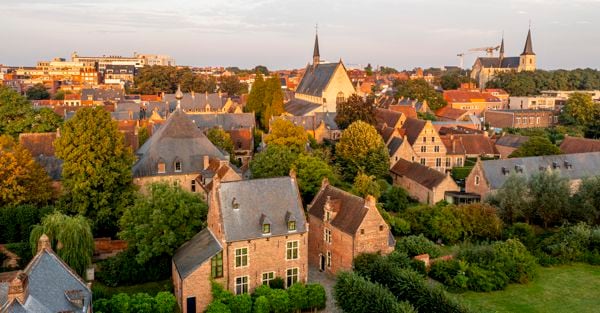
Il Grande Beghinaggio, patrimonio Unesco dal 1998: una città nella città destinata alle donne sole, la cui storia è iniziata nel 1360 (foto di Jan Crab).
And the Grande Beghinaggio, a Unesco World Heritage Site since 1998: a walled city within a city for single women. It has a very long history, beginning in 1360 and ending with the disappearance in 1988 of the last 'beghina', Julia.
Today it is a residential area of the university for students and visiting professors.
Travel through history at Martin's Klooster
Those who love historical hotels should not miss the Martin's Klooster, a complex built in the 500s for the Secretary of the Emperor Charles V: over the centuries it became aknight's hospital, a convent and since 2003 - after extensive restoration - a four-star hotel.
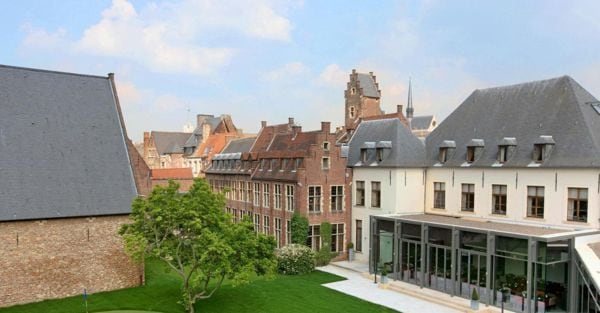
Uno scorcio dei palazzi che compongono il complesso dell’hotel Martin’s Klooster: costruito nel Cinquecento per il segretario dell’imperatore Carlo V, diventò ospedale per cavalieri e convento.
To the 135 huge rooms of the original complex, 35 rooms were added this year in the new wing created from the former Hospital of St. Elisabeth, dating back as far as the 11th century.
A true journey through history with oak beams, medieval windows and small towers, awarded the Green Key certification for its focus on sustainability.
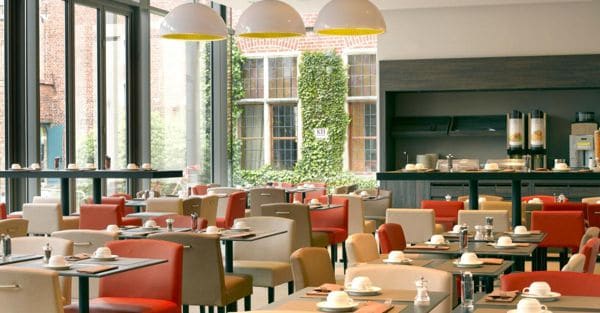
Alle 135 enormi camere del complesso originale da quest’anno se ne sono aggiunte 35 nella nuova ala ricavata dall’ex Ospedale di Santa Elisabetta, risalente addirittura all’XI secolo.
Hail to the Artois Star
Last but not least, Leuven is also the city of beer.
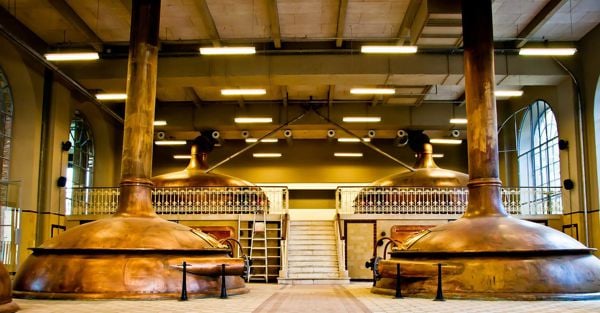
Gli enormi bollitori originali in rame dove un secolo fa sgorgò la prima Stella Artois: potete ammirarli nel complesso che ospita il ristorante De Hoorn (foto De Hoorn).
Or rather, of a beer: the Stella Artois, created in the university city in 1926 to celebrate Christmas but actually born in 1366 in the Den Horen (the Horn) brewery, appreciated over the centuries by thousands of students from all over Europe and which became 'Artois' after the brewmaster Sebastian Artois took over the brewery in 1717.
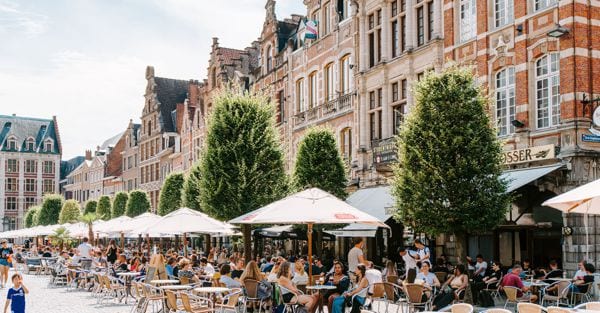
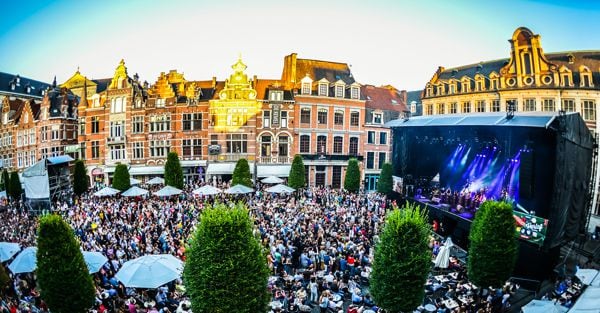
I tanti locali all’aperto nell’Oude Markt, cuore godereccio della città: non a caso lo chiamano “il bar più lungo del mondo” per l’incredibile densità di pub in un unico luogo (foto Liefst Leuven).
You can admire the original copper kettles where the first Star gushed out a century ago in the complex where the Restaurant De Hoorn is located.
And of course you can enjoy it anywhere: in particular in one of the many open-air venues in the Oude Markt, the city's enjoyable heart just a stone's throw from St. Peter's, not by chance dubbed 'the world's longest bar' for the incredible density of pubs in one place.
Here's to the health of Leuven and the six hundredth anniversary of its university: so ancient and so modern.

La Stella Artois, brand creato nel 1926 per celebrare il Natale, in realtà è nata nel lontanissimo 1366 nella birreria Den Horen: secolo dopo secolo è stata apprezzata da migliaia di studenti arrivati a Lovanio da tutta Europa (foto di Jan Op DeKamp).

Brand connect

