Cannes Film Festival

'Nouvelle Vague', a profound love letter to the history of cinema

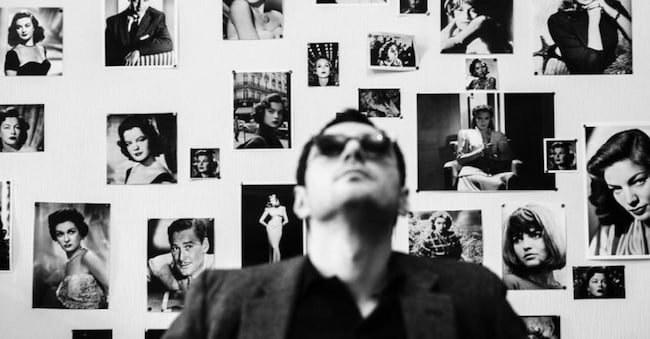
Richard Linklater's film about the making of 'Breathless' in competition at the Cannes Film Festival
by Andrea Chimento

Nouvelle Vague

3' min read

3' min read

A glittering homage to the genesis of one of the great masterpieces of film history: Richard Linklater is in competition at the Cannes Film Festival with 'Nouvelle Vague', a film that recounts the production of Jean-Luc Godard's 'Breathless', one of the manifestos of the advent of modernity on the big screen.

The film opens in Paris in 1959, at a time when Godard realises that all his companions and fellow Cahiers du Cinéma members have moved on from criticism to directing a feature film. After Claude Chabrol, François Truffaut, Eric Rohmer and Jacques Rivette, the time had also come for him to take the plunge.

Loading...

After presenting at this year's Berlin Film Festival the beautiful 'Blue Moon', focusing on the lyricist Lorenz Hart, Richard Linklater confirms his impressive moment of form with another feature film dedicated to the creative act.

Whereas the previous film focused on a few hours in the artist's life, in this case the American director describes the months that passed from the green light to make the project to the moment when Godard was able to show his friends the finished film.

Undoubtedly, this is first and foremost a tribute to a filmmaker who changed the history of cinema, but what is even more important is how lightly Linklater has managed to narrate such a profound period in the evolution of the Seventh Art.
As engagingly as perhaps with a hint of envy, Linklater recounts the years of the Nouvelle Vague as a veritable factory of creative inspiration, ready to revolutionise the language of filmmaking regardless of the rules that had dominated it until then.


A clockwork script

.

Capable of intriguing the uninitiated and of being a real treat for any self-respecting cinephile, 'Nouvelle Vague' may appear at first glance as a toy designed for aficionados, but as the minutes pass one perceives a dramaturgical strength of writing that removes any doubts about the value of the operation.

Linklater takes the viewer into that miraculous process, in which everything revolves - for better or worse - around Jean-Luc Godard, an author who is celebrated in an intelligent and unconventional manner.

There is also room for several funny moments in this film, which flows by quickly and smoothly, making even those who were not there nostalgic for a time they never lived through.

The final captions, where the subsequent fortunes of 'Until the Last Breath' are explained, could have been avoided, but they are small details within an incisive and brilliant operation.

Renoir


Renoir

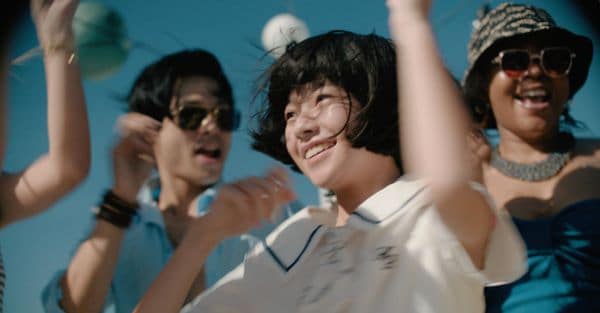
Chie Hayakawa's 'Renoir' also stands out positively in the competition,

Set in Tokyo at the end of the 1980s, the film stars Fuki, an eleven-year-old girl, who is going through a difficult family situation: her father is battling a very serious illness, which has him in and out of hospital, while her mother suffers from ever-worsening bouts of stress.

Mixing reality with Fuki's imagination, the film has an almost impressionistic slant, which at times risks making the vision too cumbersome and confusing, but at the same time offers an original look within a film that thrives on precisely these stylistic impulses. After making her debut with the successful 'Plan 75' (2022), Japanese director Chie Hayakawa directs another film focusing on decidedly delicate themes, confirming her elegant and refined stylistic touch. Not everything is perfect, but the charm is not lacking.

La trama Fenicia


The Phoenician Plot

.

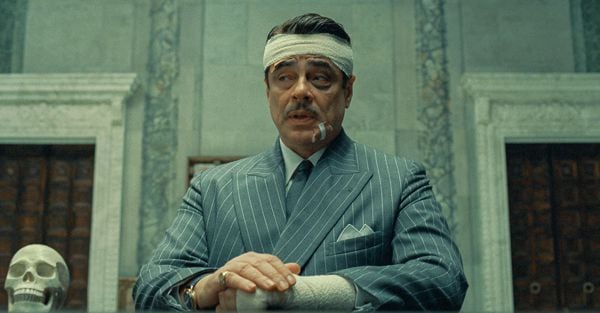
Finally, 'The Phoenician Plot', a new film by Wes Anderson, was also in competition.

The screenplay revolves around the story of a family business that finds itself at the centre of an intricate and tension-filled plot. The film opens with Zsa-Zsa Korda, one of the richest and most powerful men in Europe, miraculously saving himself from a serious plane crash. From that moment on, he begins a journey with his daughter to resolve a delicate administrative situation concerning his estate.

As in his previous two films 'The French Dispatch' and 'Asteroid City', Wes Anderson's cinema is now increasingly theoretical, less exciting and engaging than it used to be, but more inclined to think in terms of extremely layered storytelling.

There is no shortage of clumsy and unsuccessful moments, alternating with funny and inventive passages. The result is a film that half works and that we will soon be talking about again: it will be released in our cinemas in the last days of May.

Copyright reserved ©
Loading...

Brand connect

Loading...

Newsletter

Notizie e approfondimenti sugli avvenimenti politici, economici e finanziari.

Iscriviti