Pharmaceuticals

Novartis acquires MorphoSys for EUR 2.7 billion

The Swiss group will offer shareholders EUR 68 per share in cash and delist the Swiss biotech company, specialising in anti-cancer drugs

by Mo.D.

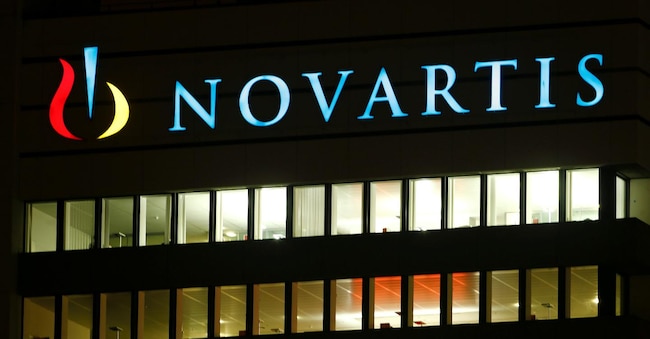
The logo of Swiss drugmaker Novartis AG is seen at its headquarters in Basel, Switzerland January 25, 2017. REUTERS/Arnd Wiegmann/File Photo

3' min read

3' min read

Novartis acquires MorphoSys for EUR 2.7 billion. The Swiss pharmaceutical company announced that it will acquire the German biotechnology company, a developer of cancer treatments, for EUR 2.7 billion (USD 2.9 billion), adding a promising candidate for the treatment of bone marrow cancer to its portfolio.

Rumours already circulated yesterday led MorphoSys' shares to gain 38.6% on the Frankfurt stock exchange. At the opening today, Morphsys shares jumped 15% to EUR 66.10, while Novartis shares were trading around parity.

Loading...

Transaction details

.

The Swiss group will offer shareholders €68 per share in cash and will delist MorphoSys after the deal, which is subject to certain conditions, including a minimum acceptance threshold of 65 per cent of MorphoSys' share capital and regulatory approvals.

Novartis' external line strategy

.

To offset declining sales of pandemic-related drugs, pharmaceutical companies are turning to the cancer drugs sector, which has significant growth estimates for the near future. Novartis, for its part, has cut jobs and costs and last year spun off its generic drug business Sandoz, as part of a focus on fewer therapeutic areas and geographic markets. It also told the market that it would focus on an overall M&A strategy with deals worth less than USD 5 billion.

The MorphoSys target

.

MorphoSys, based in Planegg, Germany, will continue to operate as a separate, independent company until the completion of the deal, which is expected in the first half of 2024. Novartis with the deal adds pelabresib, one of MorphoSys' most promising drugs, used to fight deadly forms of cancer such as myelofibrosis, a rare type of bone marrow cancer, and certain types of nodular lymphomas, to its portfolio. In turn, the German biotech had secured pelabresib in a $1.7 billion acquisition from US cancer specialist Constellation Pharma in the hope of setting a new standard of treatment.

In December, pelabresib met the late-stage primary study objective and all four disease markers in myelofibrosis when used in combination with ruxolitinib, a class of drugs called JAK inhibitors. The company now intends to submit application for approval in the US for the combination treatment in the second half of 2024. For years, Novartis' Jakavi was the only drug approved for this indication, but about half of the myelofibrosis patients who benefit from the drug lose their response to treatment after two to five years.

The two companies have a history: they had signed an agreement in 2018, when Novartis agreed to buy the rights to a drug for skin diseases from MorphoSys and co-developer Galapagos NV. However, the trials on the experimental medicine ended about a year later. In a separate agreement announced yesterday, MorphoSys agreed to sell the global rights to Monjuvi to partner Incyte Corp. for $25 million.

The market reaction

.

The board of directors and the supervisory board of the German company, according to market disclosures, intend to recommend their shareholders to accept Novartis' offer. Some analysts, however, pointed out that 'Novartis is paying more than it should in this transaction', writes for example Suzanne van Voorthuizen, analyst at Van Lanschot Kempen.

The shares of MorphoSys had already been moving for a while and have been rallying in recent weeks because rumours of three large pharmaceutical companies interested in taking over the German company were circulating in the market.

According to Bloomberg Intelligence, the German biotech is under increasing pressure to raise funds. Should it obtain regulatory approval for pelabresib, it could launch that drug as early as mid-2025. However, according to Bloomberg Intelligence, the company still has to repay some €260 million in debt by the end of 2025 and sales of its only currently approved drug, Monjuvi, have been 'disappointing' recently, with more competition coming for that therapy.


Copyright reserved ©
Loading...

Brand connect

Loading...

Newsletter

Notizie e approfondimenti sugli avvenimenti politici, economici e finanziari.

Iscriviti