
Novartis invests in Ivrea. A new plant for radiopharmaceuticals
Sites. The production plant will be built in the Silvano Fumero Bioindustry Park. The funds amount to 100 million: an investment in nuclear medicine

3' min read
3' min read
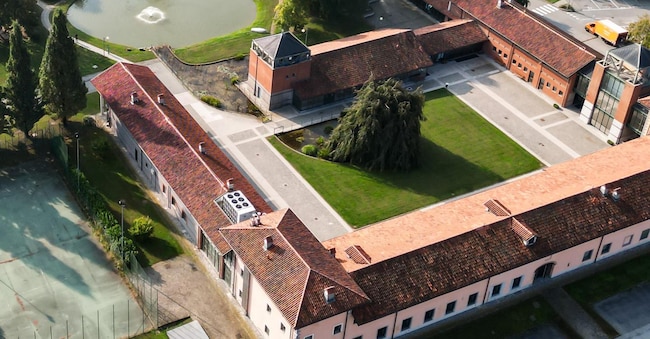
Precision medicine, innovative drugs and prevention are the latest formula for attacking cancer. In particular, pharmaceutical research is increasingly turning towards radiopharmaceuticals for the treatment and diagnosis of tumours. This is also demonstrated by the very recent investment by Novartis in Colleretto Giacosa near Ivrea, where Adriano Olivetti's factory once stood, and whose legacy is kept alive by the Bioindustry Park Silvano Fumero, the science and technology park specialising in the biomedical sector, in operation since 1998 under public-private management. Here, at the end of May, the start-up of the construction site for the new production plant of Advanced Accelerator Applications Molecular Imaging was announced, a Novartis group company dedicated to the research and production of diagnostic radiopharmaceuticals since 2022, established in 2002 under the name Advanced Accelerator Applications with a specific focus on oncology. The new plant will focus on the production of radioisotopes for diagnostics.
A new investment by a leading multinational drug company, 13 million euros, which is part of an investment strategy of about 100 million dedicated to the latest frontier of precision nuclear medicine in oncology, based on radioligands, i.e. radiopharmaceuticals capable of selectively recognising cancer cells and eliminating them through the use of radioactive particles, without damaging healthy cells. A research, development and production activity aimed in particular at the treatment of prostate cancer.
Radiopharmaceuticals were first defined as 'medicinal products' in 1989 by a European directive, which was implemented in Italy in 1991. They are composed of a carrier, a molecule with transport functions, plus a radioactive atom which the carrier, using the metabolism of the person, leads to the organ to be studied and treated. Diagnostic radiopharmaceuticals pinpoint the exact location of the tumour and its biological behaviour, information needed to define a personalised, precision therapeutic strategy. They are mainly used in oncology, but also have cardiological and neurological uses, in particular for studying Parkinson's and Alzhiemer's disease. In therapeutic radiopharmaceuticals, on the other hand, the carrier carries a radio nuclide that is lethal to the tumour. One of the most innovative fronts in nuclear medicine is the possibility of using the same radiopharmaceutical for both the diagnostic and therapeutic phases: the 'diagnostic' aspect of the drug makes it possible to verify almost in real time the effectiveness of the therapy on the person and, if necessary, to intervene to improve the therapeutic action.
The production of these technologically innovative drugs is particularly sophisticated also because they are products that do not tolerate long lead times. This is why procurement by the hospitals that use them is a logistically delicate issue and they are generally purchased on demand. The Bioindustry Park plant is the only one in Piedmont and one of three in Italy.
This is a growing market, just think that therapeutic radiopharmaceuticals are frequently used in the treatment of prostate cancer, a disease for which, according to the American Society of Clinical Oncology (ASCO), in addition to conventional therapies, they are able to reduce the risk of death at four months by 38% and the risk of progression by 60% compared to standard therapy.

