Pharmaceuticals

Novo Nordisk's problems prompt Denmark to cut 2025 estimates

The country has revised its economic growth forecast for 2025 downwards to 1.4% from the previous 3%.

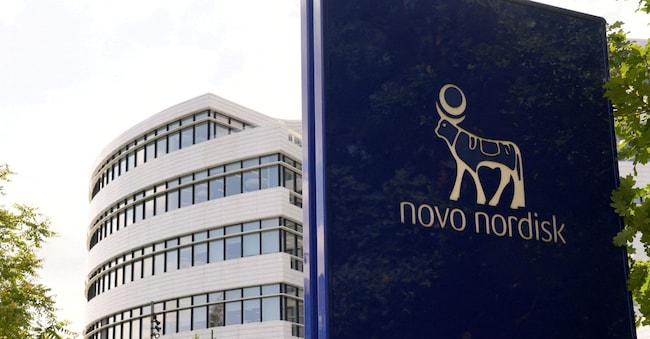
FILE PHOTO: A view shows a Novo Nordisk sign outside their office in Bagsvaerd, on the outskirts of Copenhagen, Denmark, July 14, 2025. REUTERS/Tom Little/File Photo

3' min read

3' min read

Denmark has revised its economic growth forecast for 2025 downwards to 1.4% from the previous 3%, due to a less favourable outlook for pharmaceutical giant Novo Nordisk and tariffs imposed by the US on Danish exports. The Ministry of Economic Affairs announced this in a statement today: 'The pharmaceutical industry is under increasing pressure due to growing competition in the market for weight loss drugs, which has reduced the industry's growth expectations.

The Northern European country, with a population of around six million, has benefited from the rapid expansion of the pharmaceutical group producing the slimming drug Wegovy and the diabetes treatment Ozempic. Last year, Denmark's economic growth even ranked among the highest in Europe, driven in part by Novo Nordisk, which contributed one-fifth of the overall increase in national employment.

Loading...

Denmark, whose economy is strongly export-oriented, certainly has other large industrial groups such as the ship owner Maersk, the brewery Carlsberg, the toy manufacturer Lego and the wind turbine leader Vestas. But the weight achieved by Novo Nordisk in recent years greatly shifts the balance of the country's economic growth.

The weight of US tariffs

The Danish Ministry of Economic Affairs, in its GDP announcement, added that tariffs on goods exported to the United States, the first destination market for Danish products, will further weigh on growth. Exports to the United States fell sharply in the first half of the year, after surging in the last six months of 2024, the ministry pointed out. Exports are now expected to increase by just 0.9 per cent in 2025, compared to a forecast of 4.3 per cent in May.

The ministry did, however, revise its 2026 GDP growth estimate upwards to 2.1 % from the 1.4 % reported in May, supported in part by a forecast of higher expenditure, both private and public.

Novo Nordisk's estimate cut

.

At the end of July, Novo Nordisk cut its revenue and operating profit forecasts for the second time in 2025, in an attempt to reassure investors about its ability to remain competitive in the anti-obesity drug boom, facing US rival Eli Lilly. The company, which employs around 34,000 people in Denmark, now faces possible layoffs after nearly doubling its overall workforce over the past five years.

The company said it now expects full-year sales growth from 8% to 14% at constant exchange rates, down from the previous target of 13% to 21%. The estimates also point to annual operating profit growthof between 10% and 16% compared to the previously estimated target of 16% to 24%, also at constant exchange rates.

On that occasion, the stock lost up to 26% during trading. Since the beginning of the year, the balance has been negative by 44%, despite an attempt to recover in the last month (with +3%).

The partnership with Replicate Bioscience

.

Novo Nordisk seeks to react to market complexities and competition with new growth strategies. The Danish group announced yesterday that it will collaborate with Replicate Bioscience to develop innovative treatments against obesity, type 2 diabetes and other cardiometabolic diseases using self-replicating RNA technology.

As part of the agreement, the Danish pharmaceutical giant will have access to an exclusive global licence to use Replicate's proprietary srRNA platform for the development of new therapies. Replicate Bioscience, for its part, will receive research funding and up to USD 550 million from Novo Nordisk, including potential milestone payments. The agreement also includes tiered royalties on future sales of developed products.

The partnership comes at a time when fears are growing that Novo Nordisk may lose its first-mover advantage in the anti-obesity drug market to US rival Eli Lilly. The company itself recently warned to expect increased competition this year from 'copycat' versions of its blockbuster obesity treatment Wegovy.

According to Rachael Lester, Chief Business Officer of Replicate, the srRNA technology developed by the Californian biotech 'allows patients' cells to naturally generate their own therapeutic proteins'. The company points out that this platform can stimulate stronger immune responses and provide a better safety profile than currently available srRNA drugs.

Replicate is also conducting studies on a rabies vaccine and experimental therapies for lung and breast cancer, as well as other treatments in development.

Eli Lilly had already moved in the same direction in 2023, when it partnered with Swiss biotech Haya Therapeutics to develop RNA-based drugs against obesity, marking the start of increasingly fierce competition in the sector.

Copyright reserved ©
Loading...

Brand connect

Loading...

Newsletter

Notizie e approfondimenti sugli avvenimenti politici, economici e finanziari.

Iscriviti