
Now let's really take them seriously
Venice 81. For the first time, TV series have the dignity of being grouped in a section of the Festival, in the famous Fuori concorso. Sure, they are signed by directors like Cuarón and Vinterberg, but they confirm that time has changed in cinema
by Cristina Batocletti
4' min read
4' min read
With such a demanding name, the Venice Film Festival and not simply a festival, like its eternal rival Cannes, the Lido festival takes on the responsibility every year of translating the urgency and grasping the demands of society, promoting its forward thrust to honour the name of the 'Art Biennale' under which it has been held for 81 years. Venice cannot only propose more or less arthouse films, glamour or a launching pad for the Oscars, as has happened several times, from Gravity to Poor Creatures!. It has the task of making 'art', just like its sister events of theatre, music, dance, architecture, art.
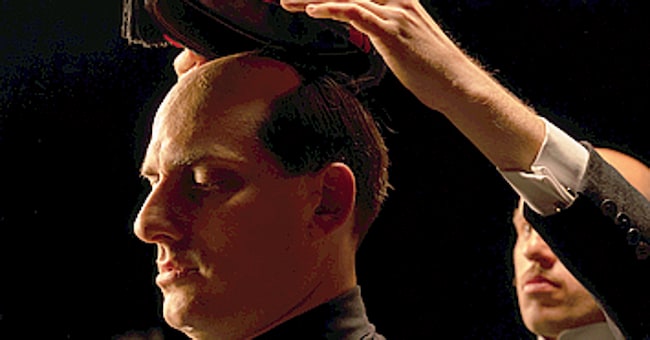
Above all, it must pick up on new trends. This year it has done so by giving television series the dignity of being under the prestigious Fuori Concorso section, which hosts the great masters who are not in the competition (this year from Avati to Bellocchio, from Burton to Francesca Comencini, Costner, Diaz, Kitano, Rohrwacher) and, sometimes, box-office films that drag a few extra celebrities onto the red carpet or brighten up the billboard. These are four television series that have not been slipped into the schedule as extraordinary events and are actually crowned. Alfonso Cuarón's Disclaimer, an adaptation of the novel The Perfect Life by Renée Knight, starring Cate Blanchett, tells the story of a journalist who investigates the transgressions of institutions, but finds herself the occult protagonist of a book that lays bare her dark secrets. What they are, we can guess from the battage publicity that wants it to be a work of extreme eroticism. Rodrigo Sorogoyen, author of the disturbing As Bestas, together with Sandra Romero and David Martín De Los Santos in Los años nuevos revolves ten episodes around the same time of year: New Year's Eve. Thomas Vinterberg in Families Like Ours imagines an exceptional flood that forces Denmark to evacuate the country, placing its citizens in forced exile. The wealthy get to choose their destination, the less fortunate must rely on government allocations. And finally, Joe Wright narrates Scurati's Mussolini saga in images in M. The Son of the Century. A director of interiors and spectacular dramatisations, who knows whether he will adopt the twists and turns of Anna Karenina or the tone of The Darkest Hour. For now we know that he has chosen to express himself in Italian for a story, ahinoi, all Italian with excellent actors, such as Luca Marinelli in the role of the Duce, unrecognisable in the pictures above all for his cunning and dark gaze, far from the usual Mussolinian macchiettism. It is already off to a good start.
Easy, you might say, to ennoble TV series in an ad hoc section with directors and actors of this calibre. But no, there is an idea behind it. It is now accepted that TV series are not a second-rate product, quick and easy. Directors, scripts, actors can now be worth a ticket to the theatre. Over the years, scene by scene, they have conquered the beauty of the big screen and today they demand communicating vessels in the universe of the visual field. They demand a condition of reciprocity: that it is not only films that move from the big to the small screen. Series must also be granted the reverse privilege.
Venice was the first to perceive and 'ratify' a change in the enjoyment of cinema. If television series have lengthened the duration of individual episodes, approaching that of films, the most popular films today, warns the director of the Venice Film Festival Alberto Barbera, are those that last little more than a minute, enjoyed on TikTok or YouTube, especially in China while travelling for work or study. These tiny films are still films. This is also suggested to us by Nicolas Winding Refn who brings, also out of competition, an eight-minute commercial and challenges the audience to think that this is not art.
All these mutations tell us that there are no rules, especially of time in the enjoyment of the image, and that perhaps we need to rethink the chrisms we were used to in going to the cinema. We should no longer expect 90 or 120 minute durations per film, but indulge in an event to be enjoyed like a concert or a theatre performance, last what it lasts. In Venice Disclaimer will entertain us for almost 6 hours, Los años nuevos 7 and a half hours, Families like ours 5 and a half hours, M almost 7 hours. It is time, then, to change the concept of our being in the hall, the head and the usages. We have done it many times and we must expect it again, ever since the seventh art was born 130 years ago. Since then, the mode and perception of film enjoyment have changed: from circus phenomenon to handmaiden of live shows, to absolute protagonist with various evolutions. The only hope for the writer is that the length at will of a film, which revolutionises cinema programming, is not at the expense of its balance and grace with unnecessary and excessive narrative deviations, as when one regrets that in a book, which could have been a masterpiece, there are a hundred pages too many.

