
Nuclear, the Chamber accelerates. Nuclitalia's Smr white paper in November
The white paper will draw conclusions from a study phase on which technology to adopt for third-generation reactors. But now geopolitical risks make it more difficult to focus on non-EU solutions

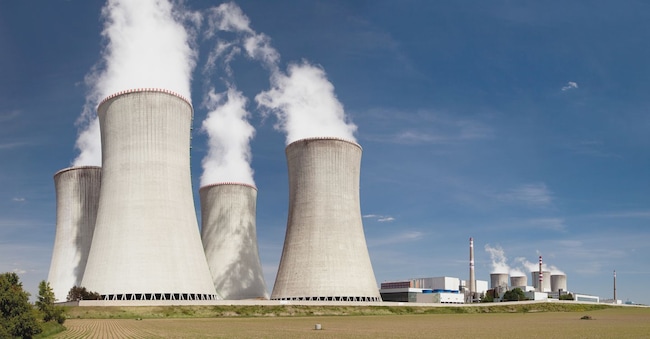
Nuclitalia, the company set up a year ago by Enel, Ansaldo and Leonardo, will publish thewhite paper on nuclear power in November. It will contain the conclusions of a study phase on which technology to adopt for the development of the Smr, the third-generation reactors designed to produce electricity with better safety conditions than second-generation nuclear power.
Italian textile industry
And again: it will have to define how an Italian supply chain for the production of these plants can be developed. There is already a nuclear energy supply chain operating in Italia, the second largest in Europe, (including the Ansaldo group, the Malacalza family's Asg Superconductors, which produces superconducting magnets for the reactor of the Iter project on nuclear fusion, Fincantieri) but the products are mainly for projects developed abroad. Smr reactors are smaller in size than second-generation mega plants (although they take up as much space as large industrial sheds) and have the advantage of being able to mass-produce the parts in the factory, implying lower manufacturing costs. Hence the possibility of a national production chain developing. The modalities, indeed, are all to be defined. And, probably, the White Paper will have open conclusions with more options, especially when it comes to the choice of technology. Worldwide, various countries have developed technologies for Smr, there are at least 80 projects under study, the most interesting in France, England, the United States (here there are three different technologies), and China.
U.S. Westinghouse Technology
In 2024, the option of adopting US Westinghouse technology was being considered, because it was at an advanced stage and because it was considered cheaper to implement. The reality is that the world has changed in the meantime: the need for autonomy in energy supply is now a matter of national security, and so becoming dependent on US technology may be more complicated. Hence the case for evaluating more options: such as European or European-led technologies or solutions developed in Italia, which would take longer and cost more but would be safer in the long term.
To the House ahead
Meanwhile, after Prime Minister Meloni announced the go-ahead for the Nuclear Bill before the summer, the measure is being accelerated in Parliament. In the House, in the combined Environment and Productive Activities committees, while the fourth meeting on the dossier of amendments - about 500 - is underway, the votes are proceeding swiftly and a tightening of the speaking time has been imposed: the time has been further limited, already reduced from five minutes to three minutes for each group, plus one minute for each person. A kind of kangaroo also entered the scene: 100 M5s amendments on the national radioactive waste repository were rejected en bloc. Only the 'common principle', identified in the regulation on the construction of the repository, was put to the vote, and with the 'no' vote, the individual votes on some 100 amendments were not taken.
Ddl in 4 articles
The four-article bill (presented on 17 October 2025) gives the government the authority, to be exercised within one year, to regulate 'the production of energy from sustainable nuclear sources'. The delegation is to provide for a 'national programme', the regulation of the 'decommissioning and dismantling' of existing nuclear installations on national territory, the regulation of research, development and utilisation of fusion energy, and ways to promote research and development in the fission sector. The bill provides for 20 million euros for each of the years 2027, 2028 and 2029 for the implementation of the investments envisaged by the proxy, from the resources of the Fund for the financing of investments and infrastructure development of the country allocated to the MASE.

