
Nuclear: from the Divertor Tokamak Test to small modular reactors, here are the projects the Italian industry is working on
By the end of this legislature, the government wants to have a legal framework ready for the return of nuclear power in Italy: here are all the pieces that research institutions and companies in the peninsula are working on

6' min read
Key points
- Nuclear fusion
- The Dtt programme in Frascati
- Eni's commitment to magnetic confinement fusion
- In France, largest international fusion project
- The contribution of Italian companies
- Fission
- Aeneas' role on this front
- Classification of installations
- The fourth generation
- Small Modular Reactor and Advanced Modular Reactor
6' min read
Within this legislature, the government wants to have the legal framework for a return to nuclear power ready. The announcement came in recent days from the Minister for the Environment and Energy Security, Gilberto Pichetto Fratin, at the microphones of Radio 24. 'I am working with a working group that must deal with the legal framework,' the minister explained. 'If you want to buy a small modular reactor, there must be a compatible legal framework. In short, the government wants to speed up on this front and is aiming at new-generation nuclear power, on which the Italian industry is at the forefront with ENEA (the national agency for new technologies, energy, and sustainable economic development) leading the way. But what is it all about? And what is meant by Small Modular Reactor (Smr), i.e., small modular nuclear reactors?
Nuclear Fusion
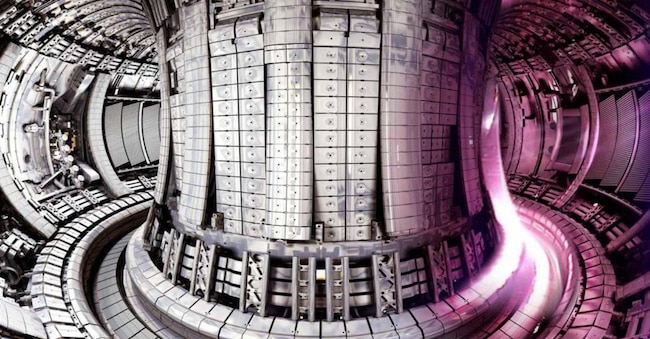
.Let us begin by clarifying the difference between fusion and nuclear fission. The aim of fusion is to reproduce on earth the same mechanism that 'lights up' the stars to obtain renewable and inexhaustible energy. In fusion, energy arises from the union of two nuclei of very light elements such as, for example, hydrogen. The reaction gives rise to a neutron and helium, a noble gas widely used in everyday life. In the case of fusion, no greenhouse gases or radioactive waste are produced. Today, to reproduce this mechanism, scientific research uses a machine called a Tokamak, which is toroidal in shape, characterised by a hollow casing, with a 'reaction chamber' inside, lined with a shell made of lithium, a metal found in abundance on earth. The fusion reaction is reproduced inside the Tokamak using the lithium present in the casing, deuterium, a form of hydrogen in which seawater is rich, and tritium, generated directly inside the Tokamak, in a closed cycle.
The Dtt programme in Frascati
On this front, Enea is working in tandem with Eni on the DTT (Divertor Tokamak Test facility) project conducted at the Enea Research Centre in Frascati, on the outskirts of Rome, for the engineering and construction of a tokamak machine dedicated to the experimentation of components that will have to handle the large quantities of heat that develop inside the fusion chamber. Enea participates in the Dtt, one of the largest scientific experiments ever carried out in Italy, with 70%, Eni has 25% of the project while the remainder is divided between universities and centres of excellence, including the Create consortium (Research for Energy, Automation and Electromagnetic Technologies), the National Institute of Nuclear Physics (Infn), the RFX Consortium, the Polytechnic University of Turin, the University of Tuscia, the University of Milan-Bicocca, the University of Rome Tor Vergata, the National Research Council (CNR) and the European Research Centre for Design Technologies and Materials (Cetma).
Eni's commitment to magnetic confinement fusion
Eni then, it is worth remembering, is actively engaged in magnetic confinement fusion, i.e. the technology that resorts to the use of very powerful magnetic fields to confine the plasma in which fusion takes place, as mentioned, within the Tokamaks. The group was among the first energy companies to invest in this field as well as being a strategic shareholder in Commonwealth Fusion Systems (CFS), a spin-out start-up from the Massachusetts Institute of Technology in Boston, whose roadmap includes the construction of the first fusion plant capable of feeding electricity into the grid by the early 1930s.
In France, the largest international fusion project
.The largest international fusion project to date is Iter, the International Thermonuclear Experimental Reactor, a collaboration between the seven major economic powers (the European Union, China, India, Japan, Korea, Russia, and the United States). It is an extremely complex project, carried out by scientists and engineers of many nationalities, under construction in Cadarache, France, with an investment of 20 billion euros, of which the European Union will provide about 50%. The aim is to demonstrate the feasibility of fusion energy production and to have the maximum scientific return in order to make progress as quickly as possible towards a demonstration Demo reactor.


