
Nuclear power, why Italia and Germany are having second thoughts after the goodbye
They are the two big EU countries without an atom. Chicco Testa: 'confident in case of a new referendum

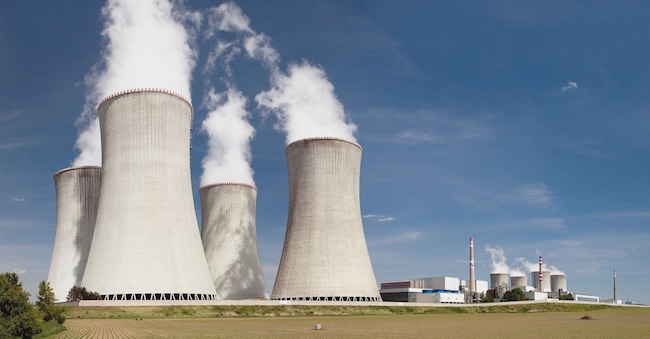
Key points
- Chernobyl
- The two referendums
- The German Turning Point
- The new debate
- In Germany challenge on the atom
- France and nuclear power
- Second thoughts
The first to realise this was a Swedish engineer at the Forsmark plant: the radiation values were too high on that 26 April 1986. After two long days, the then Soviet Union admitted it: 'an accident occurred at the Chernobyl nuclear power plant'.
Chernobyl
Forty years later, it remains the worst disaster ever. And in the current international crisis, Chernobyl is also the memory of lost energy independence. Especially for Italia and Germany, the two major European countries without the atom. Sweden continues to have it. Like Ukraine, whose power stations have ended up in the crosshairs of the Russians. Or like Japan, despite the Fukushima accident.
The two referendums
'If it comes back to a referendum, I am relatively confident'. Chicco Testa, from being a convinced opponent of nuclear power as president of Legambiente in 1986, became a fervent supporter after the turning point recounted in the book 'Tornare al nucleare?' (Einaudi 2008). Now that the debate is alive again, he speaks of 'favourable polls due to the combination of the energy crisis, a calmer attitude of public opinion and the position of young people. Back then, they perceived nuclear power as a capitalist technology as opposed to renewables'. Then it was 1987 when, after the toxic clouds and the ban on eating leafy greens, 85 per cent of the participants in the referendum voted to repeal the laws facilitating the construction and operation of power stations. The voice of the Italians was also clear in the second consultation: in an Italia that was more passionate about the question on legitimate impediment, which referred to the premier's trials, 94% of voters spoke out against the Berlusconi government's plans to return to nuclear power. It was June 13, 2011. Three months earlier, on 11 March in Japan an earthquake followed by a tidal wave led to Fukushima the other accident classified, like Chernobyl, with the highest severity on the Ines (International Nuclear and Radiological Event Scale).
The German Turning Point
At that time, a Energiewende, energy turnaround, also accelerated in Germany, with the decision to shut down nuclear power plants and decommission them: in 2023, the last reactors were shut down; in 2025, the cooling towers of the Gundremmingen plant in Bavaria were torn down. The impact triggered by the 'Japan's Chernobyl', as defined by the weekly Der Spiegel, was combined with political and economic contingencies: Chancellor Angela Merkel 'needed the support of the Greens and then', Testa recalls, 'there was a huge amount of cheap Russian gas. We thought it could last forever. Before the aggression against Ukraine, Germany was going to open the second North Stream pipeline. Then the game changed'.
The New Debate
So today in both Italia and Germany the debate has resumed. Our Minister of the Environment, Gilberto Pichetto Fratin, at the IlSole24ore conference on 'Energy transition and the nuclear industry' (see IlSole24ore of 15 April) outlined the possible stages of the proxy bill on nuclear power: 'I hope to close the legislative process by the summer in order to arrive at the end of the year with the implementing decrees'. And the director of the International Energy Agency, Faith Birol, renewed his suggestion to 'reconsider the choice made on nuclear power. For economic prosperity, energy security, national sovereignty'.


