
Nuclear at sea: the new frontier of naval decarbonisation

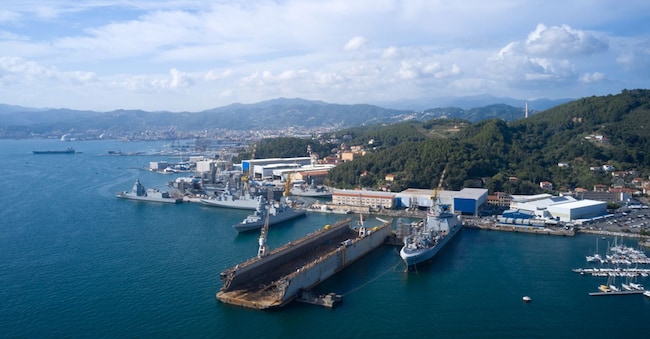
The energy transition at sea does not only pass through liquefied natural gas, methanol (also bio) or hydrogen. Among the technologies appearing on the horizon of sustainable shipping, nuclear power at sea - long the exclusive territory of Russian navies and icebreakers: today there are more than 160 nuclear-powered vessels, according to the WNA (World Nuclear Association) - is making a comeback in the international industrial and regulatory debate. Not as an imminent solution, but as a concrete prospect for the decarbonisation of deep-sea routes in the medium to long term.
The starting point is a structural fact: maritime transport consumes around 350 million tonnes of fossil fuel each year and produces around 3% of global CO₂ emissions. The IMO (International Maritime Organisation) has set a target of net zero emissions by around 2050. Alternative fuels available today - liquefied natural gas (LNG), methanol and biomethanol, ammonia - reduce emissions but do not zero them, and present problems of energy density, port availability and cost. Hydrogen, while promising, requires up to five times more space on board on average than marine diesel to store the same energy. Nuclear power, in this context, offers a radically different profile: several years' autonomy without refuelling, almost zero emissions, high energy density.
Fincantieri and the Path to Net Zero
In this framework, Fincantieri, a global leader in high-complexity shipbuilding, has declared its goal of designing the first zero-emission ship by 2035, in a path that has already produced concrete results: princess Cruises' Sphere class vessels, delivered in 2024 and 2025, achieve an emissions reduction of around 55% when operating on LNG; the Mein Schiff Relax, delivered to TUI Cruises in February 2025, reaches 58%. By 2030, Fincantieri is aiming for ships capable of zero emissions in port thanks to dual fuel systems combined with fuel cells and batteries.
In parallel, the Italia group is working on hydrogen - both the methane reforming version and the liquid hydrogen and PEM cell solution developed for Viking - on biofuels, silicone paints, and friction reduction systems through a layer of microbubbles under the hull. Applications that, put together, provide the picture of a group committed to the entire transition chain, because decarbonisation is not just a manufacturer's problem but requires the commitment of the entire ecosystem: shipowners, fuel suppliers, port infrastructures.
A nuclear battery for ships
Nuclear power for ships belongs to the category that Fincantieri itself defines as 'futuristic but promising for large ships'. It is on this front that the group has partnered with Newcleo, a start-up founded in 2021 by Stefano Buono, and RINA, an Italian multinational certification, ship classification and engineering consultancy firm, to carry out a feasibility study on the application of nuclear power in the naval field. At the heart of the project is the fourth-generation liquid-lead cooled fast reactor (LFR) developed by Newcleo, in the 30 MW electric version designed for ship propulsion.
The concept is that of a small enclosed nuclear battery, to be installed on board: refuelling required only once every 10-15 years, minimal maintenance, replacement of the entire unit at the end of its life with removal for decommissioning and reprocessing of the fuel. The choice of liquid lead as coolant offers a further advantage in terms of marine safety: in the event of an accident, the lead would solidify in contact with cold water, enclosing the reactor core in a solid envelope and containing radiation thanks to its shielding properties.
Parallel to this, Fincantieri is involved in the MINERVA project - Marinisation of nuclear power plant on board armed vessels - funded by the National Military Research Plan and developed together with the Italian Navy, Ansaldo Nucleare, RINA Services and the University of Genoa. The aim is to assess the feasibility of integrating fourth-generation reactors on military surface ships - not only submarines and aircraft carriers, but also frigates and cruisers - responding not only to the need for decarbonisation but also to the growing demand for on-board energy linked to new direct energy weapon systems and latest-generation sensors.
The strategic rationale is to use Defence as a pathfinder to develop technologies, skills and supply chains to power civil applications. Fincantieri is therefore aiming to be the player of reference for fourth-generation nuclear navy, in a segment - that of high-tech cargo ships - where the group also sees a concrete possibility of bringing back to Europe constructions currently dominated by Asian shipyards.
The world is on the move
The Norwegian NuProShip project - conducted by VARD, Fincantieri's Norwegian subsidiary, together with the Norwegian University of Science and Technology and industrial partners such as DNV - is one of the most advanced examples of applied research into nuclear power at sea. The first phase, completed at the end of 2024, evaluated 99 companies developing SMR technologies suitable for naval applications, selecting some promising designs. The results of the second phase, published in January 2026, confirmed the technical feasibility of nuclear-powered ships, with VARD developing a concept design of an offshore ship powered by a fourth-generation reactor.
In July 2025, the Maritime Nuclear Energy Organisation (NEMO) was meanwhile granted consultative status at the IMO, whose Maritime Safety Committee initiated the revision of the Safety Code for Nuclear Merchant Ships, which dates back to the 1980s and does not cover either SMRs or the all-electric ship concept.
The International Atomic Energy Agency (IAEA) has meanwhile launched ATLAS (an acronym for Authorised Atomic Technologies for Applications at Sea), an initiative to develop regulatory structures for nuclear propulsion at sea. However, the timeframe is still long: the first commercial applications of fourth-generation SMRs on ships are expected no earlier than the mid-2030s, initially for domestic coastal operations, with wider deployment expected around 2045.

