The initiative

Numa, ‘stones’ against violence against women: awards for Roia, Melandri, Fiscale, Lugli and Casa delle donne

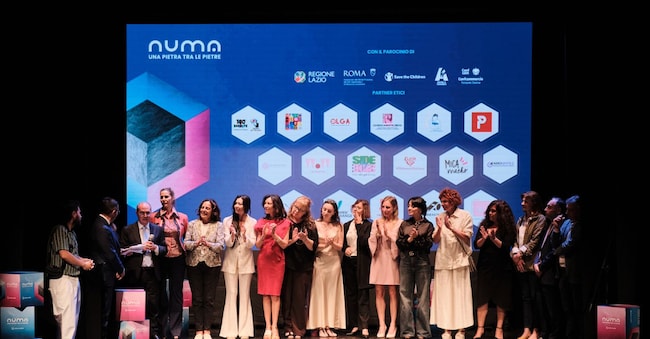
At the Teatro de’ Servi, Lefebvre Giuffrè presents awards to those who make a difference in the fight against abuse, discrimination and prejudice
by Rome Editorial Staff

I partner etici della prima edizione di “Numa - Una pietra tra le pietre”

6' min read

Translated by AI
Versione italiana

Key points

6' min read

Translated by AI
Versione italiana

A multitude of sectors coming together to shout “enough” to violence against women: from the right to freedom of association, through sport and journalism, to the business world. The first stage of the ongoing initiative “Numa – A Stone Among Stones” promoted on 10 June by Lefebvre Giuffrè in a packed Teatro de’ Servi in Rome, with the aim of creating a permanent space for reflection, in-depth analysis and discussion on the major issues affecting contemporary civil society.
Antonio Delfino

Recognise to combat

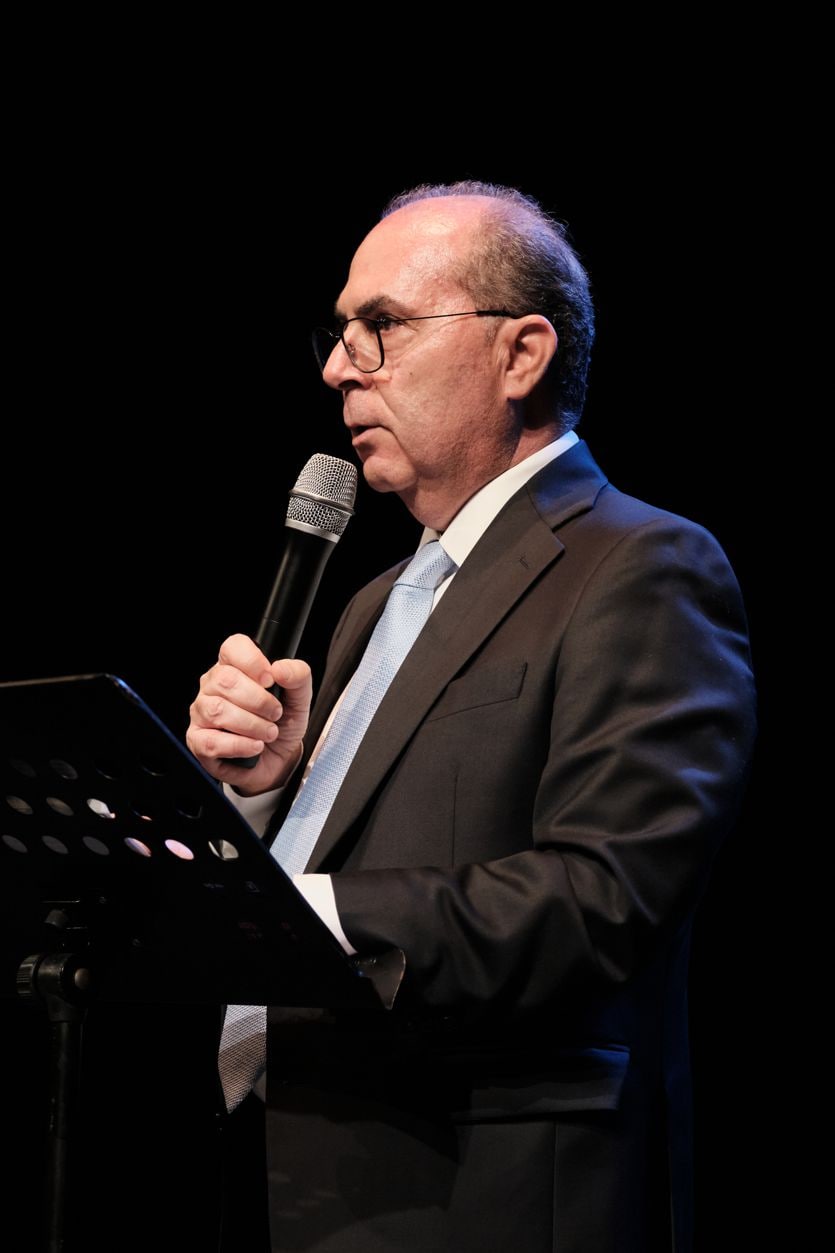
It is no coincidence that the decision was made to begin with violence against women, one of the most insidious and pervasive scourges of our time—affecting people across all social classes, levels of education and income—despite the undeniable progress made in terms of legislation and rights. For this reason, as explained on stage by Antonio Delfino, head of external and institutional relations at the publishing house, the idea behind Lefebvre Giuffrè – with CEO Stefano Garisto — was to ‘recognise’, which is also the key verb for defeating abuse and discrimination: to see them, without downplaying them, without dismissing them as a ‘conflict’ between equals, without concealing them. To recognise those who have made and continue to make a difference.
Loading...

Fabio Roia

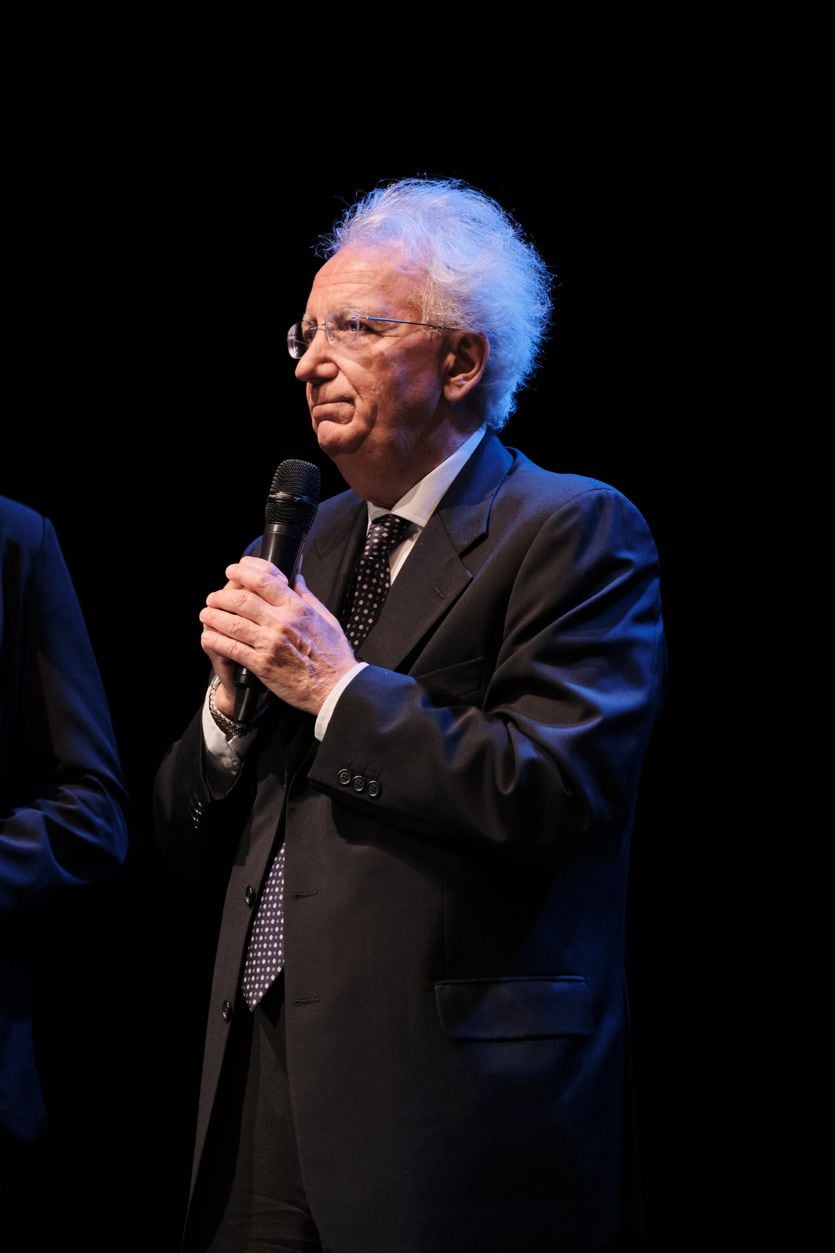
Judge Fabio Roia: ‘We must do even more; we must be wary of taking steps backwards’

Five names have been selected by the Organising Committee, coordinated by Marco Ruotolo, Professor of Constitutional Law at Roma Tre University, from a shortlist of proposals put forward by the Thematic Committee led by Manuela Perrone, a journalist at *Il Sole 24 Ore*. In the Law category, the award – a work created using a cobblestone by the artist Enrico Marcato – was presented to Fabio Roia, President of the Court of Milan, a magistrate and scholar who has been committed for years to issues concerning the protection of women and the fight against gender-based violence. Roia wished to highlight the progress made, but also to warn of the delays. ‘The problem of violence is not solved by trials, obviously, but by doing enough, even more than we are doing: in everyday life, with the involvement of men, with men having to act as social watchdogs. Because I believe we are taking steps forward, but also backward.’ The magistrate cites two examples: the advice shared on social media by the President of the Piedmont Regional Council, Davide Nicco (“When you receive a woman you don’t know in your office, if you are alone, always leave the door open. You never know”), and the collapse of the political agreement on the bill that introduced the factor of the absence of free and current consent to define the offence of rape.

Barbare Leda Kenny (Casa internazionale delle donne)

Kenny (International Women’s House): ‘A unique space built from the ground up’

In the Social Commitment category, the award was presented to the International Women’s House in Rome, a historic institution within the Italian women’s movement and a leading voice in the promotion of women’s rights, culture and policies. The award was collected by the Casa’s new president Barbara Leda Kenny. “I am taking on an important legacy,” she said, “and I am delighted to represent the Casa di tutte here today. On 2 October, it will be fifty years since the feminist occupation of Palazzo Nardini in Via del Governo Vecchio: the Casa was born out of a movement and an act of rebellion. Over the years, women have had the collective strength to reclaim that space time and again. I thank all the women who believed in that space and defended it: a common good of the city, a political infrastructure self-managed by 28 feminist associations. An institution built from the ground up, and in this sense a unique place.”
Lara Lugli

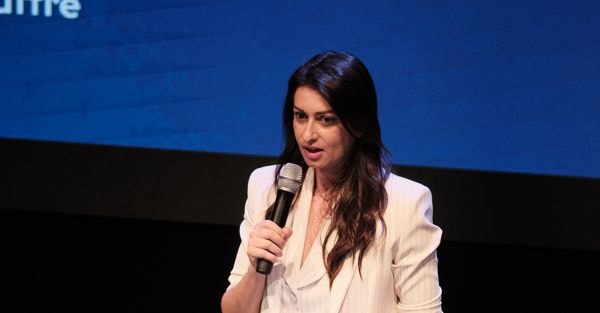
Former volleyball player Lara Lugli: ‘Every stone is crucial to building a road’

In the Arts, Sport and Entertainment category, the award was presented to Lara Lugli, a former volleyball player, member of the Assist association – the National Association of Female Athletes – and the central figure in a story that helped spark public debate on the rights of female athletes and maternity protection in sport. When she decided to go public with the injustice she faced as a pregnant athlete, ‘I felt like a stumbling block’, she said on stage. “Because when a system operates unchallenged, and certain unjust practices are accepted as normal, standing out becomes necessary. And sometimes it is also necessary to jolt people’s consciences, to make them pause, to force them to look at what they would prefer to ignore.”
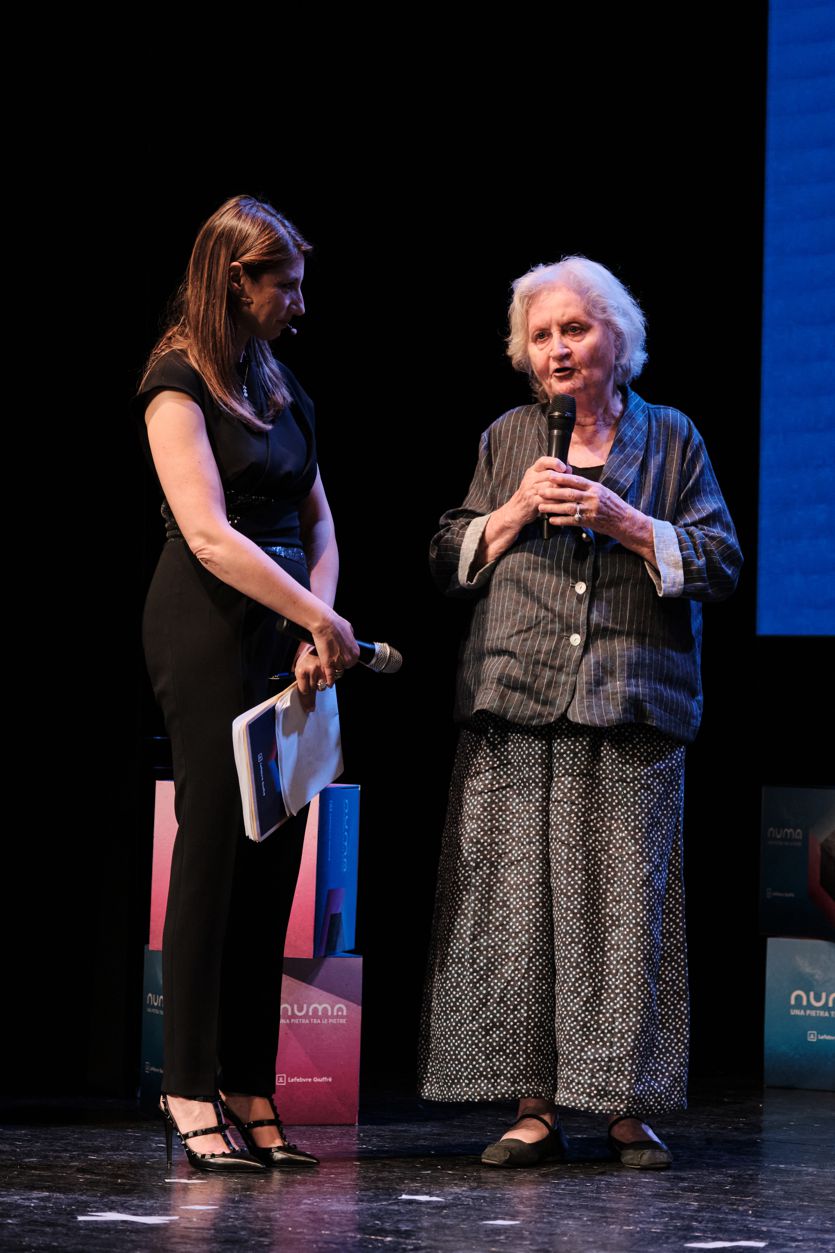
Lea Melandri

Lea Melandri and her tribute to 1970s feminism

In the Journalism, Web and Communication category, the award was presented to Lea Melandri, writer, essayist, feminist and president of the Libera Università delle Donne di Milano, one of the most influential figures in Italian feminist thought. Melandri, who wished to pay tribute to her colleague Angela Azzaro, who passed away prematurely, emphasised the importance of ‘having brought to the fore a phenomenon that still struggles to enter public and political debate, given its gravity. This is an award for the great revolution that was the feminism of the 1970s: if we are talking about violence against women today, it is because there has been half a century of a culture and a practice that has raised awareness of the issue. Until then, women were not subjects, but functions: ‘mothers of’, ‘sons of’.” Melandri also wished to highlight how the burden of “male dominance” weighs heavily on men too, who are forced to don armour and follow the “script of masculinity”: ‘Yes, they have been on the side of privilege and power, but they too, by identifying women with sexuality, the body, feelings and care, have deprived themselves of an essential part of what it means to be human.’

Anna Fiscale (QUID Project): ‘The workplace must be a safe place’

In the Economy and Business category the award went to Progetto QUID, a social enterprise founded by Anna Fiscale which promotes workplace inclusion and sustainability through the recovery of textiles and the professional integration of women from vulnerable backgrounds. Founded in 2013 in Verona, Progetto QUID now has 180 employees, mostly women, many of whom have escaped situations of violence. “This is one of the vulnerabilities we have focused on from the very beginning,” said Fiscale. “For those who are victims, the workplace must also be a safe place.”

Spotlight on the orphans of femicide

The evening, hosted by Rai journalist Maria Soave, featured a moving account from Giuseppe Delmonte, an orphan of femicide and founder of the Olga Foundation, which supports the children of mothers killed by their fathers, including through scholarships to enable them to continue their education after the trauma they have suffered. For these children, as it was for him, violence is ‘a thief of dreams’ and of the future. Maria Claudia Celadin took to the stage to present #MaiPiù, the ongoing campaign by the Women’s Professional Serie A Division, which features various awareness-raising initiatives throughout the season designed to make a tangible contribution to the fight against violence against women. Singer-songwriter Assia Fiorillo performed some of her most moving songs, such as “Cambia il vento”. The actress Jaele Fo performed the monologue “Una donna sola” by her grandparents Franca Rame and Dario Fo: the story of a young mother, confined and abused, who rebels tragically against her tormentors.

A joint initiative

Numa is the result of many different perspectives and aims to become an annual forum for discussion. Each year, the project – through the permanent organising committee comprising Ruotolo, Federica Cappelletti Rossi, Marta Cartabia, Ferruccio de Bortoli, Geppy Gleijeses, Elena Granaglia, Giovanni Grasso, Vittorio Manes, Valeria Marcenò, Daniele Piccione – will identify a socially relevant theme around which to develop analysis, content, reports and opportunities for in-depth discussion, culminating in a public event. The Thematic Committee will change according to the chosen focus: in 2026, in addition to Perrone, it comprised Francesca Astrei, Marta Caredda, Titti Carrano, Stefano Ciccone, Iside Castagnola, Maria Rosaria Marella, Francesco Menditto, Corrado Tomassini and Giacomo Zani. The project, which was sponsored by Roma Capitale, the Lazio Region, Confcommercio Terziario Donne Roma, Save the Children and the Women’s Volleyball Serie A, was also supported, as ethical partners, numerous third-sector associations and organisations committed on a daily basis to preventing and combating violence and promoting women’s rights: Assogentile, Donnexstrada, Telefono Rosa, Stivale Rosso, Women of Change, Mica Macho, Codice Donna, Giuridicamente Libera, Permesso Negato, Working Mom, Fondazione Fo Roma, 100 donne vestite di rosso, Side by Side, WOW Foundation, L’Abbraccio del Mediterraneo, Maschile Plurale and LGA.

The President of the Constitutional Court was also in the audience

The audience included distinguished figures such as Giovanni Amoroso, President of the Constitutional Court; Pasquale D’Ascola, First President of the Court of Cassation; Pietro Gaeta, Attorney General at the Court of Cassation; the constitutional judges Maria Alessandra Sandulli, Maria Rosaria San Giorgio and Stefano Petitti; Court of Cassation judge Paola Di Nicola, a leading figure in the fight against violence and a member of the Technical-Scientific Committee of the National Anti-Violence Observatory of the Department for Equal Opportunities; the President of the Anti-Corruption Authority Giuseppe Busia; Daniele Cabras, Adviser to the President of the Republic on Legal Affairs and Constitutional Relations; Roberto Chieppa, President of the Seventh Jurisdictional Section of the Council of State, former Secretary-General of the Presidency of the Council of Ministers; Marco Martino, Director of the Central Anti-Crime Service of the State Police; the MP for Azione and Chair of the Committee of Inquiry on Demographic Transition Elena Bonetti. Key figures: because every stone is precious in paving the shared path against violence against women, in all its forms. To learn to see it through the right lens, wherever prejudice and stereotypes hide it: in homes, in workplaces and even in courtrooms.

Copyright reserved ©
Loading...

Brand connect

Loading...

Newsletter

Notizie e approfondimenti sugli avvenimenti politici, economici e finanziari.

Iscriviti