
Nutritious and emission-reducing algae
Europe also invests in cultivation. In the Netherlands, the first harvest of a plantation in an offshore wind farm

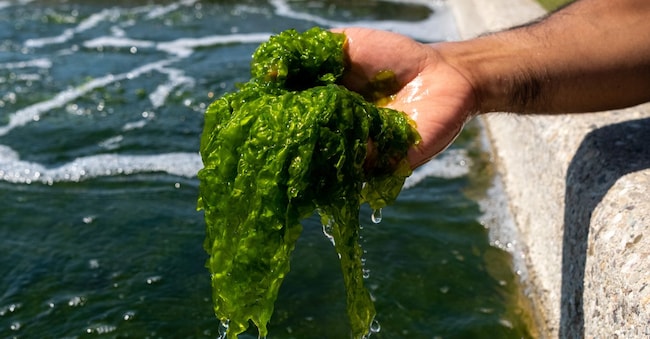
L’agricoltura sostenibile del futuro si farà sott’acqua. Le alghe sono ricche di proteine, sequestrano il carbonio e possono essere coltivate in mare senza bisogno di fertilizzanti o pesticidi. Sono già un alimento base in Giappone, Corea e Cina, ma quasi ignorate in Occidente. In uno studio pubblicato a su Nature, si dimostra che la sostituzione del 10% dell’attuale dieta umana globale con le alghe libererebbe circa 110 milioni di ettari di terra, il doppio della superficie della Francia. Del resto, sono già ubique sulle nostre tavole senza che ce ne accorgiamo, sotto forma di carragenina, un emulsionante naturale impiegato in alimenti, cosmetici e farmaci. Nestlé le usa anche per creare versioni vegetali di gamberetti e uova, mentre alcune varietà, aggiunte ai mangimi per bovini, possono ridurre la quantità di metano – un potente gas serra – emesso dalle mucche. Vengono utilizzate come fertilizzanti e ora si stanno addirittura sperimentando nuovi materiali a base di alghe per il packaging.
A market doubling in three years
This combination of ecological properties is also attracting the attention of investors in Europe and the United States, so much so that according to the research company Fortune Business Insights, the global algae market is expected to double to USD 25 billion by 2028, with Asia's position, which now dominates it at 97%, shrinking. European policy is trying to ride the wave: 'Now is the time to fully exploit the potential of algae as a renewable resource in Europe,' the EU Commission declared in a document calling for an increase in European production, with support for start-ups and simplification of rules. Seaweed for Europe, a coalition of some 30 European macroalgae producers, aims to increase from the current 300,000 tonnes to 8 million tonnes in 2030.
Low temperatures
In Europe, projects in the North Seas and on the Atlantic are growing, as macroalgae prefer low temperatures and in fact many crops along the coasts of Asia are suffering from the greenhouse effect, which heats up the surface layers of the sea and prevents the cooler, nutrient-rich deep waters from rising. Of the 57 start-ups born in the world between 2023 and 2024, according to Phyconomy, the industry bible, 15 are in Europe - including Norway, the UK, the Netherlands and France - compared to 12 in North America. The rest are in Asia, Oceania, Latin America and Africa.
Il progetto più interessante, in Europa, è quello lanciato al largo di Scheveningen. A 18 chilometri dalla costa olandese, sotto le gigantesche turbine del parco eolico offshore Hollandse Kust Zuid, al riparo dal traffico navale, si trova la North Sea Farm 1, una piantagione di alghe di 5 ettari. Fa parte di un esperimento pionieristico che combina l’energia eolica con l’agricoltura oceanica e quest’estate ha prodotto il suo primo raccolto. A differenza delle coltivazioni di alghe costiere, che devono affrontare una dura concorrenza con le altre attività umane per conquistarsi uno spazio, la collocazione offshore offre più libertà, ma comporta anche sfide tecniche e finanziarie. “E’ un progetto molto più impegnativo”, spiega Eef Brouwers, direttore generale dell’organizzazione no-profit North Sea Farmers, che ha sviluppato la piantagione, anche grazie a un finanziamento di 2 milioni di euro dal Right Now Climate Fund di Amazon. “Il mare è più agitato ed è più profondo, quindi serve p
Ireland protagonist
The country with the largest plantations in Europe, to date, is Ireland, where the Dutch The Seaweed Company cultivates Atlantic wakame, laminaria and ulva for human consumption on 50 hectares of sea. The company is a European leader in seaweed cultivation, thanks to the industrialisation of processes and collaboration with the food industry, which is beginning to integrate seaweed into its products. In Italy there is the seaweed Ulisse, cultivated on the Romagna coast as part of the Nodes project, led by the University of Pollenzo, but in general spirulina, a microalga used in supplements and cosmetics, is cultivated in a controlled environment in greenhouse tanks or photobioreactors.

